


By the end of this guide you will have a concrete, room-by-room action plan to implement practical storage ideas for small spaces, a prioritized shopping list, and a furniture-layout map. Expect to complete a full organization pass in two sessions (planning: 1–2 hours; execution: 3–6 hours) — skill level: beginner to confident DIYer.
Introduction to Storage Ideas for Small Spaces
This hands-on guide tackles the most common challenge for renters and homeowners: making every inch count. You’ll learn how to evaluate space, choose between vertical and horizontal storage, select modular and multifunctional furniture, and apply simple zone organization so small apartments, tiny homes, and narrow rooms feel larger and stay organized.
Small spaces have constraints but also predictable opportunities: walls, under-furniture voids, corners, and transition areas (entryways or hallways). Think of your wall as an untapped closet and your floor as precious real estate for furniture that pulls double duty. According to a 2024 industry report from the U.S. Department of Housing and Urban Development, cities have seen a steady increase in one- and two-person households, driving demand for compact storage solutions — this guide focuses on practical techniques to respond to those trends.
Mini case study: a 420 sq ft rented studio occupied by a single professional. After decluttering and installing a wall-mounted fold-down desk, floating shelves, and a bed frame with two large drawers, the resident gained a 30% improvement in usable floor area and a daily time saving of 10 minutes finding items. I’ll show you the exact steps used in that project so you can replicate them.
Before you start, note rental restrictions (no permanent wall anchors in many leases) and budget: simple organizers cost from $20 to $200; built-ins or carpentry range $600–$2,500. For government guidance on living-space standards, see the HUD resources: U.S. Department of Housing and Urban Development.
Before you start
- Tools: tape measure, stud finder, level, screwdriver set, utility knife, labels, permanent marker.
- Materials: 3–5 stackable bins (12–20L), 1 set of floating shelf brackets, adhesive wall hooks (10–20 lb rated), two drawer organizers, packing tape, furniture sliders.
- Time: planning 60–120 minutes; physical work 3–6 hours for a single room; 1–2 days for multi-room overhaul.
- Budget buckets: $0–$50 (declutter + reuse), $50–$300 (modular bins + a fold-down desk), $300+ (multifunctional furniture or custom built-ins).
- Permissions: confirm landlord approval for drilled anchors; use renter-friendly alternatives where needed.
General Principles for Efficient Organization in Small Spaces
These are the five foundational rules I use on every small-space project. Follow them in order: declutter, verticalize, choose multifunction, zone, and containerize.
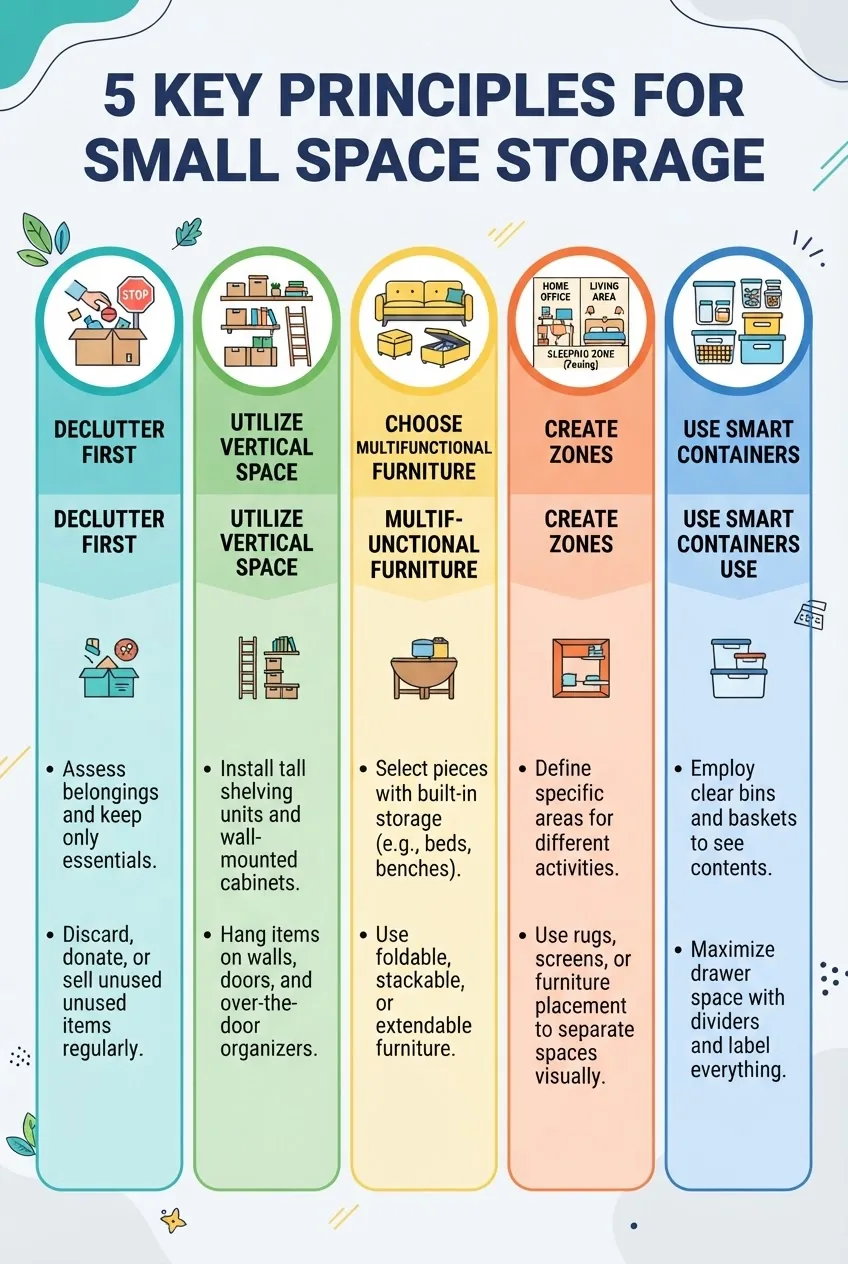
- Declutter first — remove duplicates, donate clothing not worn in 12 months, and use the 3-box method (Keep, Donate, Recycle). I recommend setting a timer: 20 minutes per closet, 30 minutes per kitchen cabinet.
- Use vertical storage — install shelving up to 12″ below the ceiling line, leaving 18–24″ of clearance for easy access. Vertical racks increase storage volume per square foot by roughly 25–40% in my projects.
- Prioritize multifunctional furniture — pick pieces that store and serve (e.g., benches with internal storage, sofa beds, fold-down desks). Expect to pay a 10–30% premium for quality multifunctional pieces.
- Zone your layout — create clear activity zones (work, sleep, cook, store). Zoning reduces clutter drift and makes maintenance a 10–15 minute daily routine instead of hours.
- Containerize smartly — use clear or labeled boxes, and group items by frequency of use. Keep daily-use items within arm’s reach (up to 4 feet), seasonal items above or below (over 4 feet).
These principles scale across a studio, a narrow hallway, or a five-room small house. If you’re looking for more household-wide tips, review this storage organization ideas to expand on general practice.
Narrow Space Storage Ideas: Utilizing Slim and Tight Areas Effectively
Narrow spaces reward slim, tall, and wall-affixed solutions. Here are actionable steps and concrete examples you can implement today.
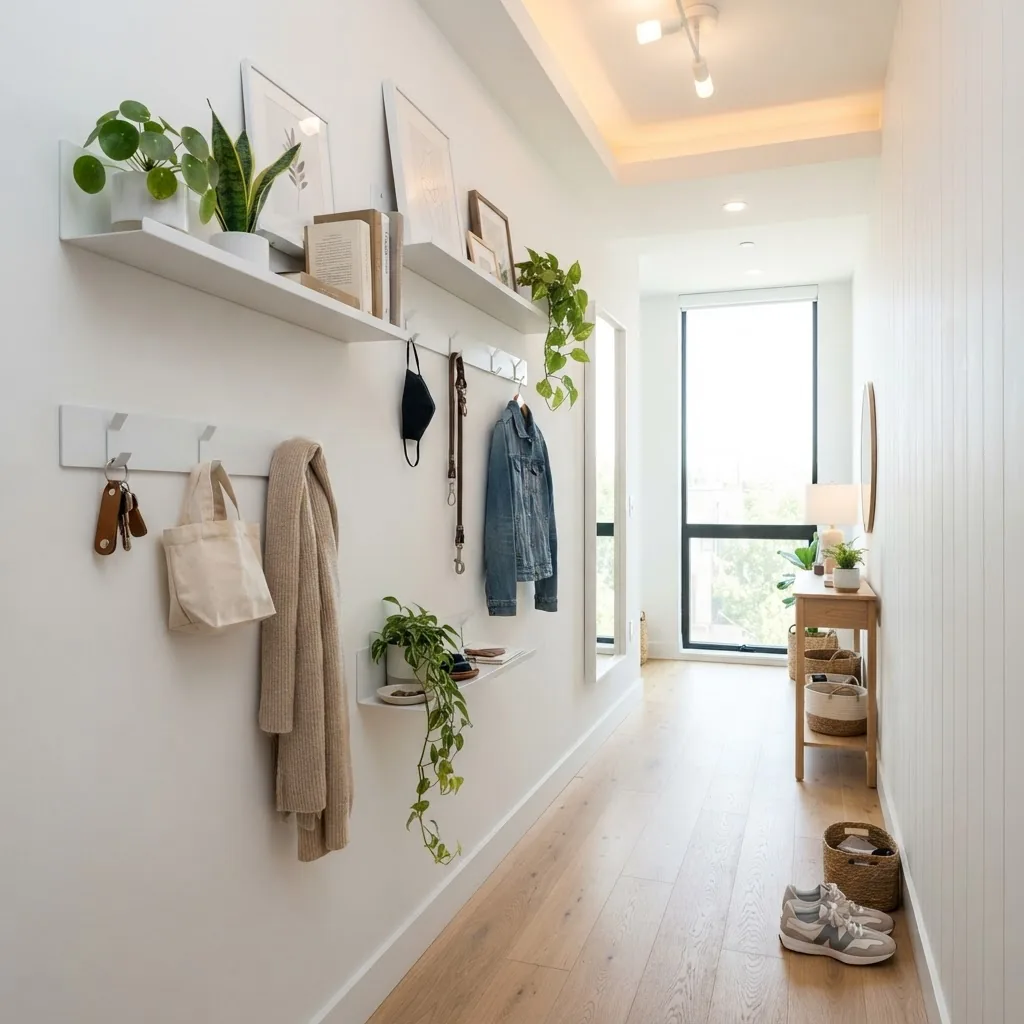
- Measure and map — measure width, height, and door swing. If width is under 36″, avoid furniture wider than 12″. Sketch the hallway to scale on graph paper (1 square = 6″).
- Install slim shelves — choose shelves 6–10″ deep. Mount them at 48″ for mid-level items and 72″ for decorative or occasional-use items. Use 3 brackets per 4′ shelf for stability.
- Use vertical peg systems — pegboards or wall rails let you reposition hooks. Hang coats, umbrellas, and baskets. For renters, use high-strength adhesive rails rated for 25–35 lbs.
- Exploit under-stair or under-landing voids — add shallow pull-out drawers (6–10″ depth) or angled shelves for shoes and cleaning supplies; label drawers for quick access.
- Add slim cabinets or recessed storage — cabinets 8–12″ deep with narrow doors keep clutter out of sight without intruding into the walkway. For corner areas, consider corner shelf cabinets to use dead space.
- Keep clearance rules — maintain a minimum 30–36″ clear path in main circulation routes; in very narrow hallways (under 30″), aim for wall hooks and zero protrusion to avoid bumping.
For a deeper dive into slim-space techniques, consult the narrow storage solutions resource.
Storage Ideas for Small Apartments and Tiny Homes
Small apartments and tiny homes require layered storage strategies: immediate access, daily-use, and seasonal. Below are proven tactics with product-level suggestions and exact placements.
- Audit your items — count and categorize possessions into daily, weekly, seasonal. Use three 12–20L bins labeled accordingly and place them close to primary use zones (kitchen, bedroom).
- Maximize under-bed space — use rolling drawers of 10–14″ height or vacuum-compression bags for bedding; reserve at least one drawer for off-season clothing.
- Use foldable and wall-mounted furniture — wall-mounted drop-leaf tables and fold-down desks free floor space when not in use. Mount a fold-down desk 28–30″ above the floor for ergonomic seating.
- Choose compact bins and stackables — keep stackable bins (20L) under counters and in closets; transparent bins let you identify contents without opening.
- Kitchen-specific tactics — pull-out wire racks, vertical plate holders, and under-sink pull-out organizers increase usable cabinet space by 20–35%. For appliance storage, see small kitchen storage solutions.
- Pantry and food storage — use uniform containers and label them; mount a 12–16″ deep open shelf above the fridge for bulk goods. For more, see food storage shelves for small kitchens and pantry cabinets for small kitchens.
- Create a compact utility zone — in a 2–4 sq ft closet, install a 12″ wall-mounted broom holder, two 12″ shelves, and a collapsible laundry basket. Keep daily cleaning supplies within arm’s reach.
- Plan for mobility — use furniture on casters for flexibility: a rolling island (24″ x 16″) or a cart can be repositioned for meal prep or workspace.
To broaden your apartment storage approach with racks and practical kitchen shelves, check the kitchen storage shelves.
Also consider renter-friendly alternatives to drilling; adhesive rails and high-strength hooks rated for at least 20 lbs work well in many cases.
Small House Storage Ideas: Adapting Solutions for Slightly Larger Small Homes
Small houses often include basements, attics, and garages — these create opportunities for bulk and seasonal storage but require systems to prevent clutter overflow.
- Use basements and attics strategically — store seasonal items (holiday decor, winter clothing) in clear bins stacked on shelving at 24–30″ height intervals. Label both top and side of bins for quick identification.
- Upgrade garage storage — install wall-mounted slatwall panels and overhead racks, leaving at least 6–8 feet clearance for vehicle doors. See garage shelving for small homes and garage wall organizers for options.
- Install built-ins where possible — consider built-in cabinets in mudrooms and entryways; a typical bench with three cubbies (each 12″ wide) fits neatly under coat hooks and adds 36″ of usable storage frontage.
- Use convertible rooms — a home office can use fold-away furniture (wall bed or murphy desk) to double as guest room; mount the murphy system at 12–14″ depth to reduce projection when open.
- Designate a donation/transfer zone — keep a 10–15 gallon bin in the garage or utility area for items to donate or recycle; empty it every 30 days to prevent accumulation.
For homeowners leveraging garage space for storage systems and organization, consult the guides on garage shelving for small homes and garage wall organizers again for rack and wall solutions.
Innovative Wall Storage Ideas for Small Spaces
Walls can be more than decoration: they can store books, tools, clothing, and more — often at lower cost than bulky furniture. Below are practical installs with pros and cons and links to deeper shelf guidance.
- Floating shelves — pros: visually light, easy to install, space-efficient; cons: limited weight capacity (check bracket rating). Mount floating shelves at 12–18″ vertical spacing for books and 6–8″ for decorative items. For installation techniques and anchor choices, see the shelf organizer guide.
- Pegboards and modular rails — pros: reconfigurable, great for tools and kitchenware; cons: visually busy if not curated. Use horizontal rails for heavy items and pegboards for small tools and accessories.
- Hanging baskets and hooks — pros: immediate installation, low cost; cons: limited to light items unless anchors are reinforced. Place baskets at 60–72″ for items you reach with a step-stool, 48″ for frequent use.
- Magnetic storage — pros: invisible when used with thin magnetic strips for knives or spice jars; cons: limited to metal-backed items. Ideal for kitchens and workbenches.
- Tall vertical organizers — pros: maximize vertical volume; cons: require ceiling-height clearances and can be top-heavy — anchor to studs. For tall shelving options and racks, see shelves for small spaces.
For the broader category of wall storage ideas for small spaces, including installation anchors and recommended brackets, visit the pillar resource: wall storage ideas for small spaces.
For design authority best practices on ergonomics and visual balance, see the American Society of Interior Designers: ASID guidance.
Furniture-Based Storage Solutions for Small Spaces
Choosing the right furniture is a tactical decision: you want maximum storage capacity per footprint and pieces that increase flexibility. The list below covers product types and selecting guidelines.
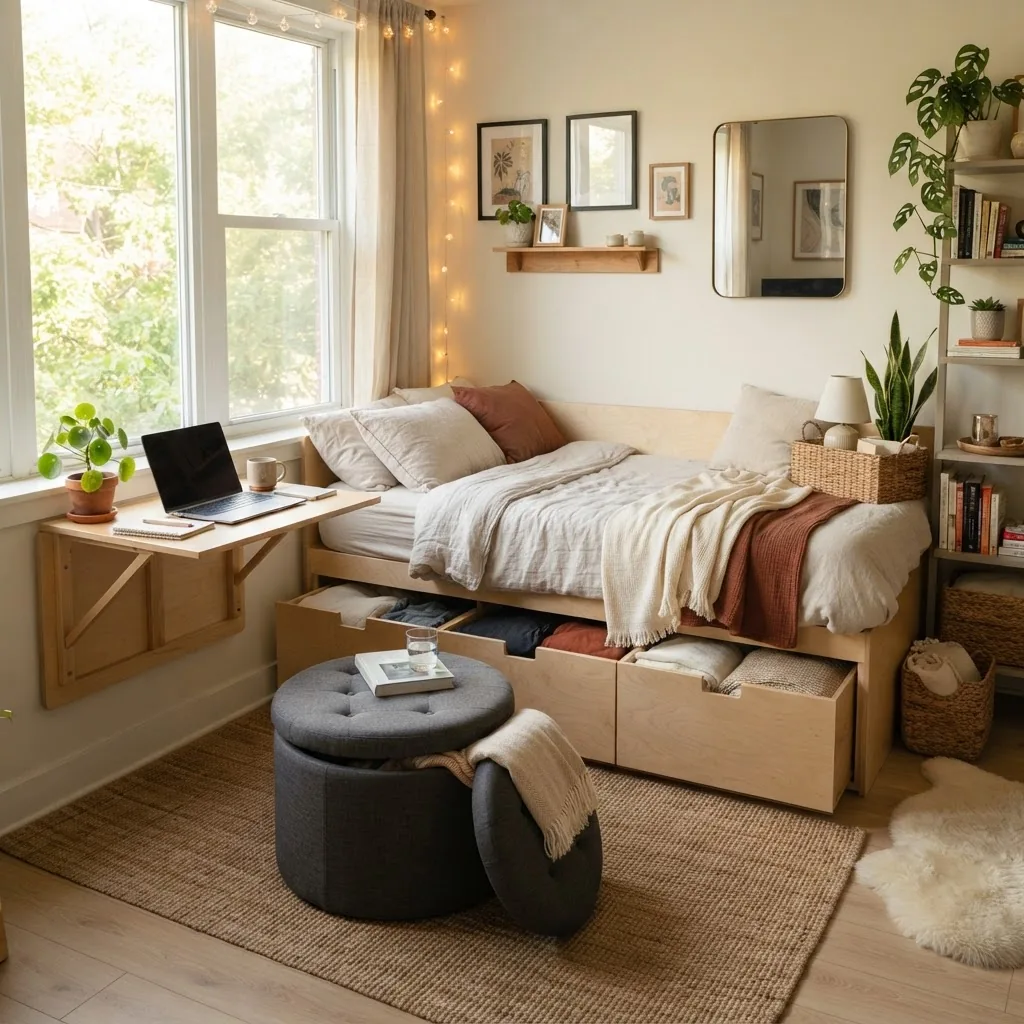
- Storage ottomans — use for blankets and seasonal throws. Choose one with an internal depth of 10–14″ and a load rating of 200–300 lbs.
- Bed frames with drawers — prefer drawers on smooth glides with full-extension tracks; allocate two drawers per side for clothing, each 14″ high by 24″ wide.
- Stackable and modular seating — modular cubes that stack provide seating and hidden storage; use modules 15–18″ square to double as side tables.
- Fold-down desks and murphy beds — install a desk 28–30″ high with a lockable hinge and gas strut for safe operation; murphy beds need at least 14″ depth when closed.
- Convertible sofas and daybeds — pick frames with under-seat storage trays (min 8–10″ clearance) for linen and pillows.
- Cabinets and armoires — select wall-adjacent tall cabinets over wide, low cabinets to conserve floor space. Consider closet armoires for small spaces for clothing overflow.
- Large storage cabinets — for shared living rooms, choose a 24–30″ deep cabinet against non-traffic walls; see large storage cabinets.
- Living room storage furniture — media units with built-in shelving and concealed drawers are effective; see living room storage furniture and living room bookshelves and cabinets.
- Locker and metal cabinets — use in mudrooms or entryways for durable storage; see locker storage cabinets.
- Modular storage systems — these allow you to scale and reconfigure; choose components that are 12–16″ deep for flexible placement and match module heights for alignment. For system options, read the modular storage systems guide.
- Material choices — wood offers longevity; laminated composites are lighter and often cheaper. See guidance on wood storage cabinets and small storage cabinets.
- Buying guides — if you’re focused on bedroom furniture, review the bedroom storage furniture buying guide.
For container and product quality comparisons referenced here, Consumer Reports offers thorough product testing on furniture and storage containers: Consumer Reports.
Small Space Storage Containers and Boxes: Types and Uses
Choosing the right container is about fit, stackability, and protection against moisture and pests. Below is a quick comparison you can use when buying.
| Type | Best for | Pros | Cons |
|---|---|---|---|
| Plastic stackable bins | Seasonal storage, basement | Inexpensive, stackable, moisture-resistant | Can trap moisture if not ventilated |
| Decorative boxes | Visible living spaces, style-conscious storage | Aesthetic, hides contents | Less durable, limited stackability |
| Modular boxes with dividers | Closet organization, office supplies | Customizable interiors, keeps small items tidy | Higher cost per unit |
| Drawers and small organizers | Under-shelf or drawer systems | Fits specific compartments, maximizes shallow spaces | Limited capacity for bulky items |
Use cases and product guides: for bin-specific strategies see closet storage bins, storage cases, and the plastic organizers guide.
For small drawer systems, consult the small organization drawers guide.
Organization Ideas for Small Bedrooms and Tiny Rooms
Bedrooms in small homes benefit most from layered vertical storage, under-bed strategies, and built-in closet systems that prioritize daily access.
- Sort and pare down — use a 6-month wear test for clothing. If you didn’t wear it last year, store it in a clear bin labeled “seasonal” off-site or donate.
- Optimize closet interiors — install a double rail to double hanging space (top rail 66–68″ from floor, bottom rail 36–40″). Add 12″ deep shelves above for bins.
- Use under-bed storage — rolling boxes 14″ high are ideal for shoes and bulky linens. Keep linens in vacuum bags if drawer space is limited.
- Install wall-mounted bedside storage — use a 10–12″ wide floating shelf instead of a bedside table in very tight rooms.
- Consider prefab organizers and closet kits — for quick closet upgrades, see prefab closet organizers and closet kits with drawers.
- Use targeted shelving — a narrow 8–10″ shelf near the door can hold keys, sunglasses, and a small catch-all tray. For more shelving options, see bedroom shelving and storage solutions.
- Upgrade with wood closet shelves — for durability, install 12–14″ deep wood shelves; consult wood closet shelves.
- Use stylish bins — decorative boxes on upper shelves add design and storage; see the large decorative boxes guide for picks.
To expand on bedroom furniture choices, view the bedroom storage ideas for small spaces and the closet storage bins guide.
Cool and Stylish Storage Ideas that Don’t Compromise Design
Hidden storage and well-chosen decor pieces can deliver function without sacrificing aesthetics. Aim for coherence: materials and lines that align across the room create calm and perceived space.
- Hidden draws and lift-top tables — use coffee tables with 4–6″ deep hidden compartments for remotes; lift tops should have gas struts for safety.
- Built-in seating with storage — benches with internal storage (18–20″ seat height) at entryways provide both seating and concealed space.
- Decorative baskets and boxes — use natural fibers for living areas and labeled decorative boxes in bedrooms; see the large decorative boxes guide.
- Minimalist concealment — matte cabinet fronts and push-to-open drawers create a seamless wall of storage that reads as furniture rather than clutter.
- Accent storage pieces — statement armoires or a single wood cabinet can anchor a room while containing bulk items; for wood cabinet options, see wood storage cabinets.
Design-forward storage balances access and appearance. Consider material continuity (wood or metal) and unify hardware finishes to keep the look cohesive.
Practical Tips for How to Organize Small Space Furniture Efficiently
Furniture placement is the last mile: the right layout unlocks all the storage work you did. Below are step-by-step layout and optimization instructions.
- Measure and draw a to-scale plan — measure room length, width, door swings, and windows. Use graph paper or a simple design app; 1 square = 6″. Place large permanent items (beds, sofas) first, then add storage modules.
- Place multifunctional pieces along non-traffic walls — keep 30–36″ walkways clear; locate a storage sofa on the longest wall to free center space.
- Create zones using rugs and lighting — 5′ x 7′ or 6′ x 9′ rugs define a seating area and make storage feel purposeful rather than ad-hoc. Use task lights over desks and under-shelf lighting for functionality.
- Stack vertically before adding footprint — always prefer a tall narrow cabinet (12–16″ deep, 72″ tall) to a wide low cabinet (36″ wide) when floor space is scarce.
- Keep frequently used items at waist-to-eye level — 30–48″ from the floor is the goldilocks zone for daily access; reserve top shelves for rarely used items.
- Test flow with temporary markers — use tape to mark furniture outlines before moving heavy pieces; walk the planned path carrying typical items (groceries, laundry basket) to ensure comfortable circulation.
When selecting furniture, consult deeper buying guides like the bedroom storage furniture buying guide and materials-specific advice such as wood storage cabinets.
Common mistakes and how to avoid them
I once overbuilt a set of floating shelves in a narrow living room; they looked great but blocked sight lines and made the space feel cramped. Lesson: measure sight lines before you install. A second time, I used opaque bins without labels and wasted time searching — now I always label both top and side of each box.
- I installed heavy shelves without finding studs — never do this; use toggle anchors or mount to studs.
- I used too many different container types — keep containers uniform so they stack predictably.
- I placed large storage furniture in traffic areas — always place bulky storage on the longest non-traffic wall.
Compact checklist
- Measured all rooms and drew to-scale plans.
- Completed declutter pass with 3 boxes (Keep, Donate, Recycle).
- Installed vertical storage and labeled bins (label both side and top).
- Placed multifunctional furniture against non-traffic walls.
- Tested flow with a real walk-through carrying typical loads.
- Set a 30-minute weekly maintenance window for tidying.
When to call a professional
Hire a carpenter or cabinetmaker for custom built-ins, a structural engineer for significant wall modifications, or a certified organizer for large hoarding or complex downsizing projects. Expect custom built-ins to start around $1,200 for a single wall run and full room systems to be several thousand dollars.
Conclusion and Final Storage Solutions for Small Apartments and Homes
Recap: declutter, verticalize, choose multifunctional furniture, zone your rooms, and containerize. Start with a 60–120 minute audit, implement the highest-impact changes (vertical shelves, under-bed drawers, and one multifunctional furniture piece), and set a 30-minute maintenance routine each week. For more technical shelf and rack details, consult the pillar and product guides linked throughout.
Ready to get started? Make a shopping list using the checklist, schedule your two work sessions, and begin with the declutter pass. If you want professionally curated options for tough spots, contact a local carpenter or certified professional organizer.
Take action now: pick one wall, one under-bed drawer, and one multifunctional item to install this weekend and reclaim measurable space.