


aesthetic room ideas you can complete in a weekend: by the end you’ll have a clear color palette, layered lighting, curated accessories, and a photographed before-and-after to share. Time required: 4–16 hours depending on scope; skill level: beginner to intermediate DIYer with basic tools.
Before you start
- Tools: measuring tape, level, basic drill/screwdriver, staple gun, craft knife, painter’s tape.
- Materials: sample paint swatches (3–5), 2–4 throw cushions, a 3m LED strip, string fairy lights (3–5m), one medium potted plant, command hooks, storage bins.
- Consumables: 1 small can of accent paint (250–500 ml), mounting hardware, adhesive hooks, fabric glue, basic craft supplies for DIY projects.
- Preparation: clear a 1.5m working area, charge camera or smartphone for photos, set aside 4–6 hours for initial styling session.
Understanding the Aesthetic Room Ideas Trend
This section explains what people mean by an “aesthetic” room and why the trend has grown. Design-savvy readers will get a working definition, how visual harmony is created, and which style influences are driving popularity now.
What “aesthetic” means: in decor, “aesthetic” describes a coordinated collection of visual cues—color palette, textures, lighting and motifs—that together produce a consistent room vibe. Think of it as a visual identity for a room, much like a brand identity for a product.
The rise of image-first platforms, moodboard culture, and short-format video has pushed the demand for rooms that photograph and feel cohesive. According to a 2024 industry report, many homeowners—particularly Gen Z and millennials—prioritize photogenic spaces when redecorating. This has influenced not just accessories but choices around lighting, texture and layout.
Visual harmony is achieved through three core levers:
- Color coordination: a dominant color, a secondary tone, and 1–2 accent colors produce balance. Use paint swatches and test samples to avoid mismatched undertones.
- Texture layering: soft fabrics (plush throws, faux fur), natural materials (wood, rattan), and a few metallic or glass accents for contrast.
- Lighting design: combining ambient, task and accent lights (soft warm bulbs and LED strips) to shape mood and highlight focal points.
Style influences are diverse: from minimalism’s clean lines to cottagecore’s cozy florals, vaporwave’s neon nostalgia, and modern Japandi’s quiet naturalism. You don’t need to adopt a single aesthetic fully—mixing influences (for example, a minimal layout with cottagecore textiles) yields personal, contemporary results.
Design term defined: Layering — stacking different textures, scales, and finishes (e.g., linen curtains, chunky knit blanket, velvet cushion) so the room reads as intentional rather than one-note.
Transition: With the trend context clear, next we break down the essential pieces that create a cute room decor aesthetic.
Key Elements of Cute Room Decor Aesthetic
Below are the recurring elements styling experts use to achieve a cute, approachable aesthetic in bedrooms, studios and small living spaces. Each item includes practical examples and quick tips.
- Soft pastel color palettes — choose one dominant soft tone (e.g., dusty pink, mint, lavender), a neutral (cream, warm white, beige), and one accent (soft gold, muted terracotta). For bright options see bright and vibrant bedroom color ideas.
- Plush textures and cozy fabrics — combine a velvet cushion, a chunky knit throw (1.5–2 kg weight per 120×150 cm throw suggested), and a faux-sheepskin rug (60×90 cm) to create softness underhand and underfoot.
- Whimsical accessories — small figurines, ceramic vases, framed prints with soft subjects. For inspiration on small pieces see little and small decorations for cute rooms.
- Soft lighting — string fairy lights (3–5 m, 10–50 warm white LEDs per meter) around a headboard or shelving, plus a warm-toned bedside lamp (2700K, 300–600 lumens) for reading and ambience.
- Playful wall art and posters — use a mix of 3–5 frames in the same finish (white or light wood) arranged in a relaxed grid. Frame sizes: 8×10″, 11×14″, 16×20″ to balance scale.
- Decorative plants and florals — one medium potted plant (30–45 cm pot height) plus two smaller succulents for scale; faux florals are acceptable when natural light is limited.
- Small-scale furniture — rounded nightstands (ø35–45 cm) and low-profile shelving keep proportions cute and not oversized.
- Mirror placement — a standing mirror (minimum 120×45 cm) angled to reflect natural light increases perceived space while serving as a styling element.
- Personalized trinkets and displays — curated desktop trays (20×12 cm), photo ledges, or a pinboard to show polaroids, ticket stubs and art.
- DIY accents — simple projects like painted terracotta pots, custom photo collages or a handmade macramé hanger add uniqueness (materials list: cotton cord 3–4 mm, wooden dowel 25–30 cm).
- Cute room themes and decorating ideas — for thematic sets and more inspiration see cute room themes and decorating ideas.
- Bright accents — don’t shy away from one saturated element (a bright pillow or chair) to lift pastels—see bright and vibrant bedroom color ideas for palettes.
Transition: Now that you understand the elements, let’s look at style-driven bedroom layouts and concrete inspirational combinations.
Inspiring Aesthetic Bedroom Ideas for Every Style
This section covers bedroom layouts, statement walls, bedding choices and mood lighting across popular aesthetics. For deeper bedroom-specific inspiration see modern and stylish bedroom decorations.
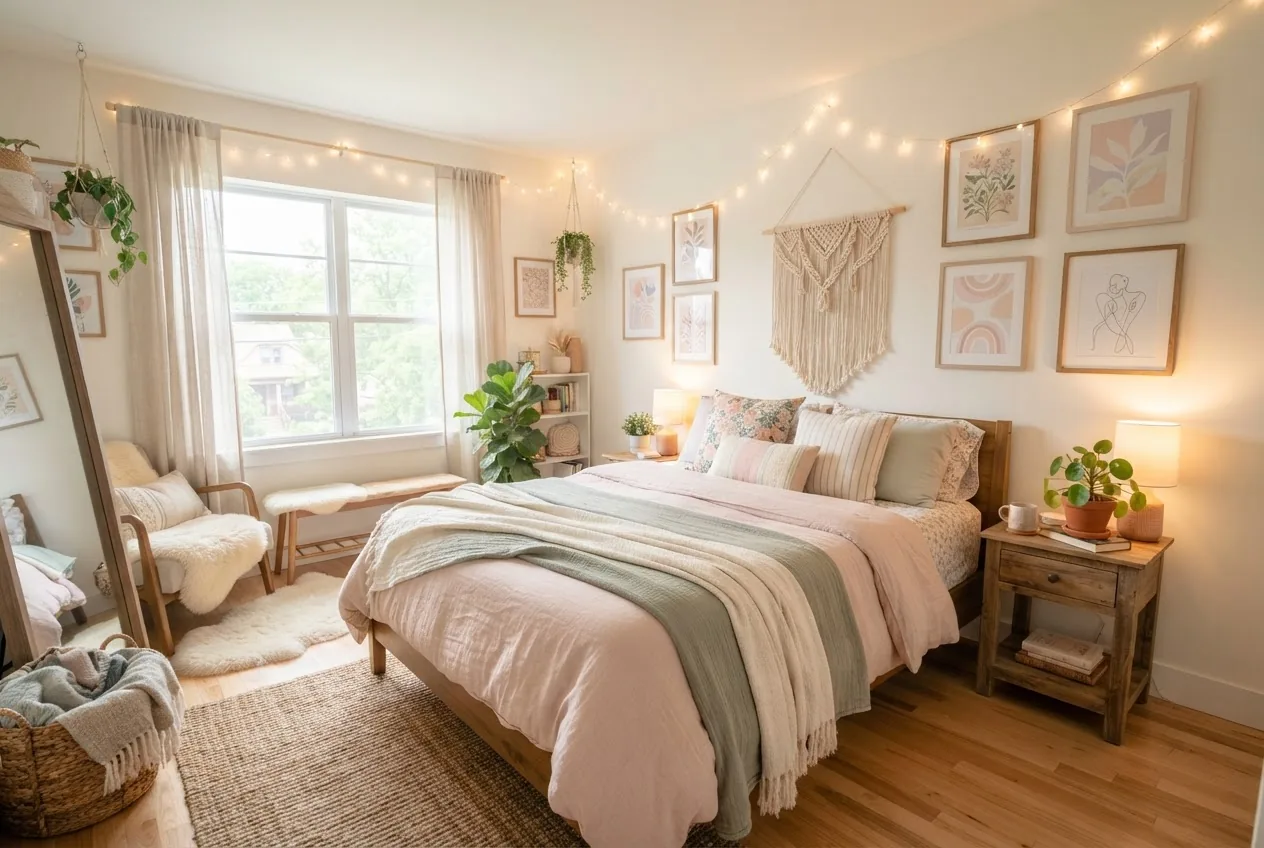
Minimalistic aesthetic
Layout: single focal wall, low platform bed (20–30 cm mattress base height), narrow bedside table (35×35 cm). Bedding: crisp white linen with a textured beige throw (130×200 cm). Lighting: slim wall sconce (2700K, 300 lumens) on each side. Keep decor under 7 items to sustain minimalism.
Vintage / Retro aesthetic
Layout: a statement headboard (metal or tufted), layered rugs (one 160×230 cm textured kilim topped by a 120×180 cm soft rug), and a small mid-century dresser. Wall art: framed vintage posters in warm tones. Add an amber glass lamp (2200–2500K) for golden warmth.
Cottagecore / Cozy aesthetic
Layout: soft floral bedding, a painted dresser in muted sage, open shelving with ceramic pitchers and dried florals. Use a string of fairy lights above the headboard and two woven baskets for storage. For neutral elegance, see modern and elegant beige bedroom decor.
Modern / Scandinavian aesthetic
Layout: light wood finishes, white walls, and a single accent color (navy or moss green). Bedding: high-thread-count cotton in muted tones, layered with a textured throw. Add a slim floor lamp (2700–3000K, 1000 lumens) and a plant in a concrete pot.
Vaporwave / Retro-tech aesthetic
Layout: one neon accent (LED strip on shelf), pastel gradient art, glossy finishes and a few geometric objects. Use cool-toned LED light strips (4000–6000K) sparingly for accent—not as primary reading light.
Eclectic mix
Combine scale and texture: a modern bed frame, a vintage rug, and new woven lighting. Balance palettes by keeping two consistent neutrals, then rotating one dramatic color per season. For more eclectic guidance, check the site’s broader list of related articles like Decorative Objects and Eclectic Decor (internal navigation suggested).
Transition: after picking a style, the next section gives a procedural approach to actually make your room aesthetic—with a full step-by-step makeover infographic.
How to Make Your Room Aesthetic: A Step-by-Step Guide
This hands-on guide gives a sequential process: declutter, select a style, pick a palette, layer textures, install lighting, accessorize and photograph your finished room. Follow the timings and quantities given for efficient execution.
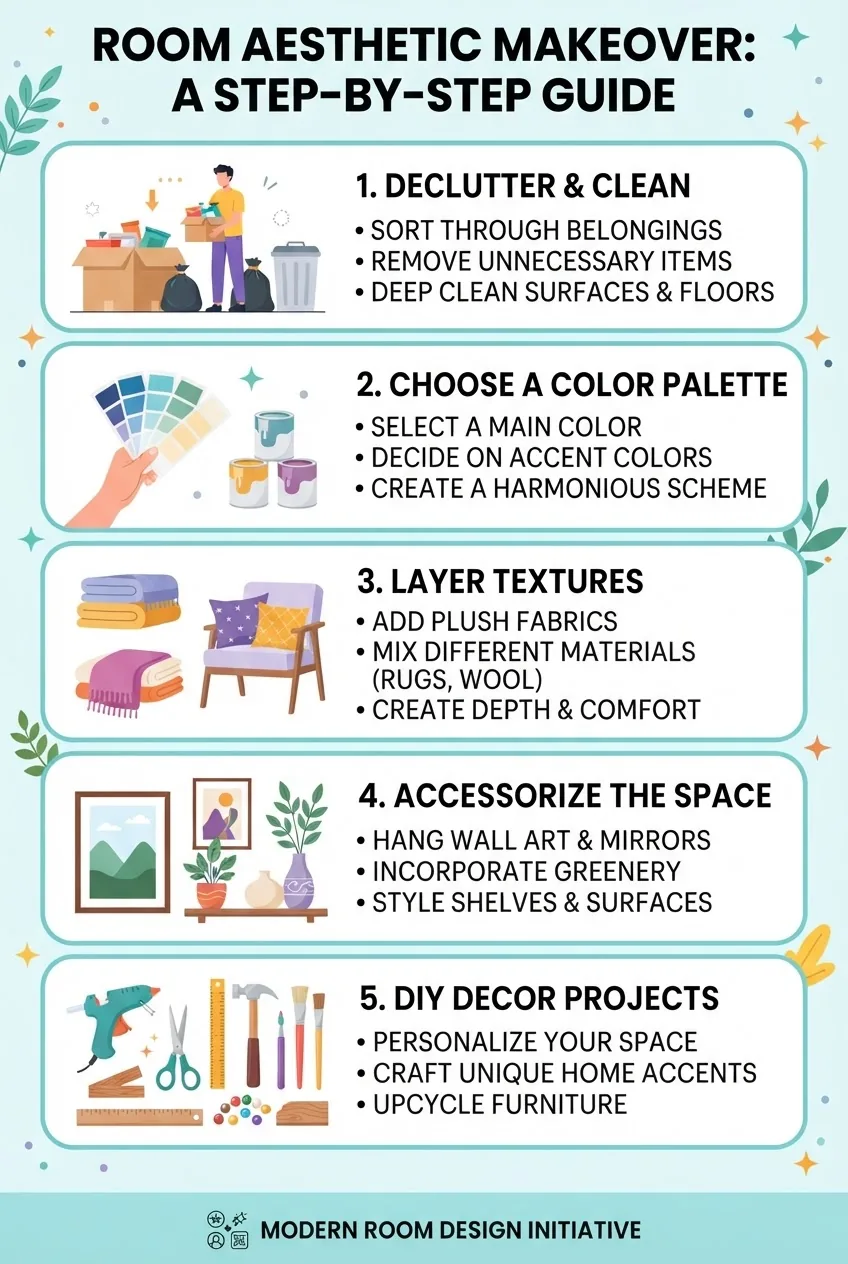
- Clear and measure (2–3 hours) — Empty surfaces: remove everything from shelves, desk and nightstand. Measure your room: wall widths, ceiling height, window placement. Note three key measurements: bed-to-wall clearance (30–45 cm), walkway width (minimum 60 cm), and dresser depth (max 45 cm in small rooms).
- Declutter and zone (1–3 hours) — Sort items into Keep / Donate / Store / Trash. Use 40 L storage bins for seasonal items; label each bin. Keep surfaces to 3–6 curated items to avoid visual clutter.
- Choose a style and palette (1–2 hours) — Pick one main style influence and three colors: dominant neutral, secondary tone, and accent. Test 3 paint swatches in natural light for 48 hours before committing. Save palette sample images to your phone for purchasing.
- Plan lighting layers (1–2 hours selection, 1–3 hours install) — Purchase: one warm ambient fixture (2700K–3000K), two task lights (400–600 lumens per eye-level reading lamp), and one accent LED strip (3–5 m). Install LED strips with adhesive channel; keep transformer near an outlet and hide wiring with cord concealers.
- Select furniture & position (2–4 hours) — Choose functional pieces that match scale: low bedframes for small rooms, vertical shelving for tall ceilings. Leave 30–45 cm clearance at bed sides and at least 60 cm walkways. Anchor furniture with rugs: choose one rug at 60–80% of bed width for a balanced look.
- Layer textiles (1–2 hours) — Bedding: base sheet, duvet or coverlet, one textured blanket (130×200 cm), and 2–4 cushions of varying sizes (45×45 cm, 30×50 cm body pillow). Curtains: floor-length, 2–2.5 times window width for fullness.
- Install art and focal points (1–2 hours) — Arrange 3–5 frames in a grid or salon cluster; use paper templates to test layout. Hang art so the center is roughly 145–150 cm from the floor (eye level). For larger pieces, use two anchors for stability.
- Accessorize thoughtfully (1–2 hours) — Add 3 tabletop objects max: one plant, one object with texture (ceramic or woven), one light source. Place mirrors to reflect light rather than clutter. Keep cords bundled and hidden.
- DIY personal touches (2–6 hours) — Small projects: hand-painted planters (30–45 minutes per pot including dry time), macramé hangers (2–3 hours), or a custom photo collage (2–4 hours). Use acrylic paint, painter’s tape and sealant for durability.
- Photograph and tweak (30–60 minutes) — Take morning and evening photos. Adjust lighting color temp (2700K–3000K for warmth) and move one object at a time between photos to see the visual difference. Save final images for reference and social sharing.
- Advanced: create storage that shows (varies) — Use wicker baskets (dimensions 35x25x20 cm) and decorative boxes to keep things tidy. Label shelves with a neutral tag system for quick maintenance.
- Reference further resources — For a curated list of accessories and items that extend this guide, consider this deeper collection on modern and unique room decor ideas.
- Optional: small affordable renovations — Replace handles on drawer units (10–15 minutes per drawer), apply peel-and-stick wallpaper to an accent wall (2–4 hours for 2×2.5 m wall). For more budget renovation inspiration see affordable and DIY bedroom renovation ideas.
Common mistakes and how to avoid them
Written from practice: I once bought a “perfect” pastel paint based on a swatch without testing; in morning light it read green and clashed with my textiles. Solution: always test a 10×10 cm painted patch and observe it at different times across 48 hours. I also tended to over-accessorize shelves—now I limit items to an odd number (3 or 5) per shelf to maintain balance. When installing LED strips, I previously positioned them without planning the power route; now I map outlets and use cable concealers to avoid visible wires.
Checklist — verify your work
- Dominant, secondary and accent colors selected and tested.
- Lighting layers installed: ambient + task + accent.
- Textures layered across bedding, floor and seating.
- Artwork hung at ~145–150 cm center height and photographed.
- Storage implemented with labeled bins and decorative boxes.
- One DIY personal touch completed.
When to call a professional
Hire a professional when structural changes are required, for electrical rewiring beyond plug-and-play lighting, or for accurate color consultation if large-scale paint jobs (over 20 m²) are planned. For safety checks related to wiring and fixtures, call a licensed electrician when load exceeds 15A for added circuits.
Transition: once you’ve made your aesthetic, periodic refreshes keep it current. Below are ideas for trendy updates without major overhauls.
Trendy Room Decor Ideas to Refresh Your Space
Current decor trends combine sustainability, tech-enabled ambience and bold accents. Below are trend-forward ideas with examples and where to source them. For seasonal or bold updates, also consider creative and bold interior decor ideas.

- Statement furniture — swap one piece: an accent chair in a statement color or shape. Choose a chair with seat height 42–46 cm to match average sofa height. This is a high-impact, low-effort change.
- Eco-friendly decor — use reclaimed wood shelves, organic cotton textiles and low-VOC paints. According to a 2024 industry report, demand for sustainable materials rose substantially in interiors markets; refer to industry trend coverage for suppliers: Houzz Trend Reports.
- Tech-enhanced lighting — smart bulbs with tunable white (2700–6500K) allow seasonal color changes. Limit smart bulb main light to 800–1,100 lumens for medium rooms and use dimming schedules for circadian-friendly lighting.
- Accent pieces — geometric shelving, tactile ceramics and sculptural vases. Introduce one unexpected texture like hammered metal (small vase 10–15 cm high) to add visual contrast.
- Art rotation — swap prints seasonally or hang a gallery rail to change arrangements in minutes. Keep frames consistent to maintain cohesion.
- Green corners — create a plant cluster with three heights: trailing plant (hanging at ~150 cm), medium tabletop plant (30–45 cm), and floor plant (90–120 cm).
- Micro-makeovers — update hardware, replace lampshades, or swap cushion covers seasonally for quick refreshes under $100.
Transition: next, a curated list of essential accessories you’ll return to again and again when styling an aesthetic room.
Essential Accessories and Decor Items for an Aesthetic Room
Curated examples and safety-minded tips for wall art, mirrors, plants, throw pillows, rugs and decorative storage that consistently deliver an aesthetic look.
| Item | Why it works | Suggested size/qty |
|---|---|---|
| Wall art & posters | Create focal points and express theme | 3–5 frames; 8×10″, 11×14″, 16×20″ |
| Mirrors | Increase perceived space and light | Full-length 120×45 cm or round Ø60–90 cm |
| Plants | Add life, texture and soft color | 1 floor plant + 2 tabletop |
| Throw pillows & rugs | Layer comfort and color | 2–4 pillows; rug 60–80% of bed width |
| Decorative storage | Keeps surfaces tidy and stylish | Wicker baskets 35x25x20 cm; labeled bins |
Lighting safety and purchase tips: follow national electrical guidance when using hardwired fixtures and low-voltage LED strips. For technical standards, refer to the National Electrical Manufacturers Association: NEMA. Use certified power supplies and avoid daisy-chaining non-rated transformers.
For standout pieces and where to buy them, explore unique and trendy room accessories.
Transition: finally, a plan for maintaining and adapting your aesthetic over time without starting from scratch.
Maintaining and Updating Your Aesthetic Room Over Time
Keep your space fresh with light swaps, seasonal touches and simple organization methods. These tips assume ongoing attention of 30–90 minutes per week plus a larger refresh each season.
- Weekly maintenance: 15–30 minutes — tidy surfaces, rotate one decorative object, wipe dust from shelves and bulbs.
- Monthly refresh: 30–60 minutes — rotate cushions, swap candle scents, deep-clean textiles (wash cushion covers on gentle cycle at 30°C).
- Seasonal updates: 2–4 hours — exchange textiles (summer linen to winter velvet), update wall art or introduce seasonal florals.
Quick seasonal ideas: for fall, add layered throws in warm hues and a few faux autumnal branches; read more on seasonal front decor in seasonal autumn decorating ideas. To create cozy fall vibes inside the room see cozy fall decor inspiration.
Budget-friendly swaps (under $50): change pillow covers, add a single new plant, replace lampshade, or reframe a print. Bigger budget updates include a new rug (from $150) or a statement chair ($250+).
For small apartment living, borrow strategies from compact-living guides: modular storage, multipurpose furniture, and warm textiles—see warm and cozy apartment decor ideas.
Essential influences and resources
To keep choices informed by professional trends and academic insight, consult industry trend reports and design psychology research. For trend reporting see Houzz Trend Reports and similar industry coverage. For psychological insights into color and wellbeing consult peer-reviewed literature hosted on PubMed Central: NCBI PMC.
Before you finish: photograph your before-and-after with consistent camera placement: tripod at 1.2 m high, lens covering same focal width; take shots at morning and evening light to show the difference.
Common mistakes and how to avoid them
From my hands-on experience: over-layering small spaces is common—I used to add too many cushions and trinkets which flattened visual depth; correcting that meant removing 30–40% of surface items and increasing plant height variety. Another repeated error: neglecting outlet placement when planning LED strip routes—measure twice, route cables once, and always use rated transformers.
When to call a professional
Call licensed tradespeople for hardwired lighting installations, structural modifications, complex wallpapering on plastered walls, or if you require electrical circuit changes. For wallpapering over 20 m², a professional installer will typically complete the job in a day with better seam matches and fewer material waste losses.
Compact finishing checklist
- Paint swatch observed 48 hours in natural light.
- Lighting layers implemented (ambient + task + accent).
- At least one DIY item completed and photographed.
- Three storage containers labeled and placed.
- Before-and-after photos (tripod, same height, morning/evening).