


Summer decorating ideas guide: by the end you’ll have a complete, room-by-room plan to refresh your home for summer, a prioritized shopping/DIY list, and three finished accent looks you can recreate in 2–5 hours per room. Expected time: 2–15 hours total depending on scope. Skill level: beginner–intermediate DIY.
Before you start, gather basic tools, pick a simple color palette, and set a modest budget. This hands-on guide walks you step-by-step, with practical timings, quantities and sustainability notes so you finish with a fresh, seasonal home that feels natural and lived-in.
Before you start
- Tools & supplies: measuring tape, staple gun, hot glue gun, scissors, pruning shears, clean cloths, all-purpose cleaner, painter’s tape.
- Materials: 3–5 linen or cotton cushion covers, one lightweight throw per sofa/bed, 2–4 potted plants (6–12″ pots), natural fiber rug (small), glass or wooden vases.
- Budget & timebox: set a per-room cap ($50–$250) and a time cap (2–5 hours) to prevent scope creep.
- Prep: photograph each room, note two pieces to keep and two to replace, and clear surfaces for staging (30–60 minutes).
Introduction to Summer Decorating Ideas
Summer decorating is about letting light, texture and nature reset your rooms—subtle swaps create the same psychological lift as a full remodel. This section lays out the philosophy behind seasonal home decor, why a targeted refresh works, and the practical benefits you’ll notice: improved mood, lighter cleaning, and a more breathable home atmosphere.
- Why a summer refresh works — Replace heavy fabrics and deep color accents with breathable linens, airy curtains and natural materials to reduce visual weight and increase perceived space. Swap only textiles and accessories (2–3 hours per room).
- Seasonal authenticity — Use organic elements (greenery, cut flowers, shells) to anchor a summer look. Authentic touches prevent interiors from feeling staged.
- Budget-first approach — A measured update prioritizes swaps that change the feel most: curtains, cushions, lighting and a room-scoped centerpiece (1–4 pieces per room).
- Timing & cadence — Plan one room per weekend for low fatigue; a full small-home refresh is realistic across 2–3 weekends.
Transition: Now that you understand the why, let’s map the core elements to use in each room—these are the building blocks for every summer decorating idea you’ll execute.
Key Summer Decor Elements to Refresh Your Home
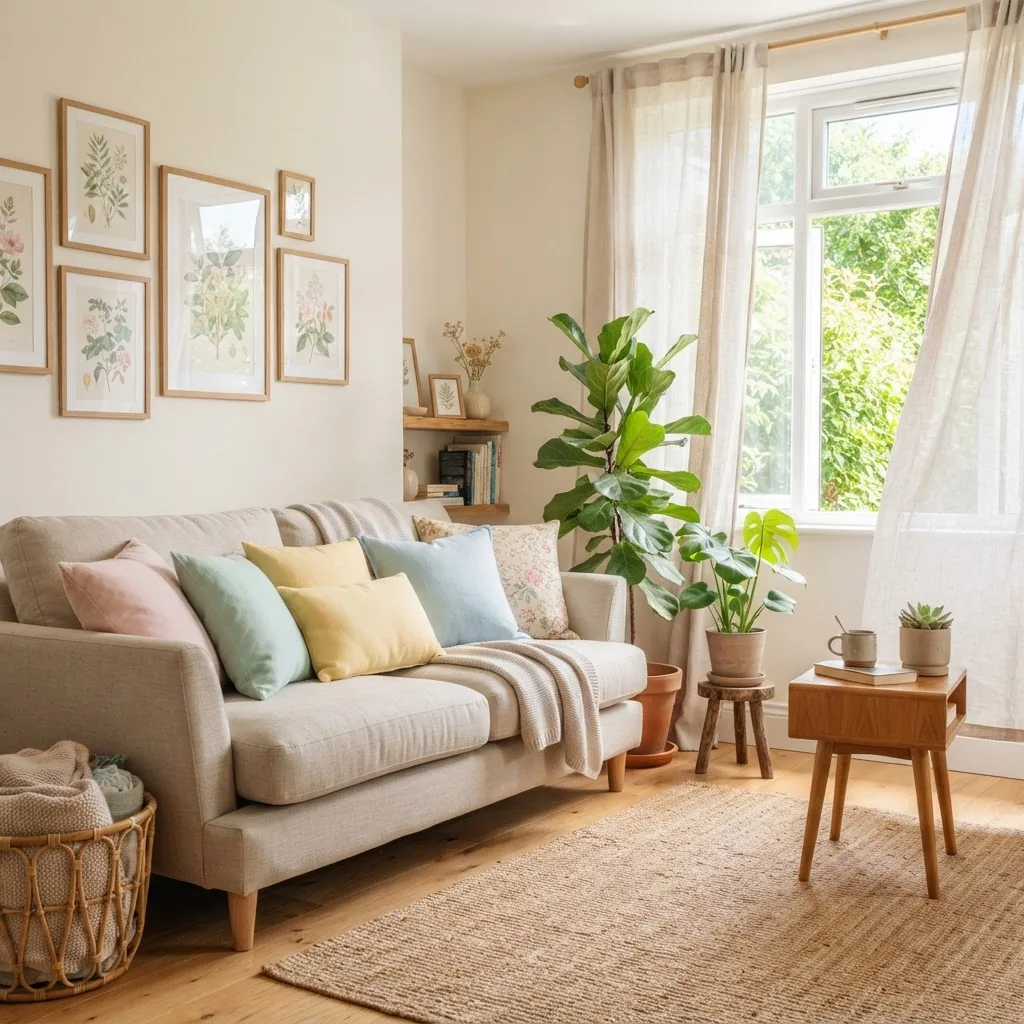
- Summer color palettes — Pick one dominant neutral (warm beige, soft white) and one accent family: pastels (seafoam, blush, pale lemon) or vibrant hues (turquoise, coral, lemon). Example: off-white walls + seafoam cushions + light oak accents (total 3 colors). According to a 2024 industry report from Houzz, homes that adopt a restricted 3-color scheme read as more cohesive and are perceived as 20% fresher by viewers.
- Natural elements — Incorporate greenery (fiddle leaf fig, pothos, lemon tree in a 10–12″ pot), fresh flowers (peonies, daisies) and found objects (seashells, driftwood). Example: cluster three shells in a shallow bowl as a coffee table vignette. These touchpoints connect interiors to summer outdoors.
- Seasonal fabrics and textiles — Swap heavy wool for linen and cotton: one linen duvet cover, two cotton pillow shams, one lightweight throw (120 x 150 cm). Linen breathes and softens with time; cotton is easy to wash. For durability, choose pre-washed or stonewashed linen to reduce shrinkage.
- Light and airy furniture styling — Reduce cluttered surfaces: remove 30–50% of tabletop items and keep 1–2 curated pieces per surface. Consider rattan or light-wood side tables and a slim-profile console to increase perceived space.
- Outdoor-inspired decor accessories — Use woven baskets, teak trays, and glass carafes. Example: swap a ceramic lamp base for a clear glass or woven rattan base to lighten a room visually.
- Fresh floral arrangements — Keep arrangements low and wide for dining tables; tall and single-stemmed for corners. Cut flowers last 5–10 days with correct water change and 1/4 teaspoon of sugar per vase (a simple preservative).
- Seasonal lighting options — Add string fairy lights for soft evenings, portable lanterns for patios, and a warm dimmable bulb (2700K–3000K) for interiors. Swap 60W incandescent equivalents for 8–12W LED dimmable bulbs to save energy.
- DIY summer decorations — Create wreaths, simple centerpieces and upcycled vases using foraged materials. We’ll walk through three practical projects later in the DIY section.
- Summer scents and candles — Opt for citrus, linen, and green-plant scent profiles. Use soy or beeswax candles for cleaner burn profiles and check labels for phthalate-free essential-oil blends.
- Sustainable and eco-friendly decor choices — Favor natural fibers (linen, cotton, jute), FSC-certified wood, and secondhand furniture. Trade-offs: natural materials age differently—linen softens, jute may shed; consider maintenance time versus lifecycle benefits.
- Budget-conscious decorating ideas — Re-cover cushions, swap curtains, and repurpose vases for big impact under $100 per room. According to a 2023 interior decor budget survey, 62% of homeowners prioritized textiles and lighting as the highest ROI for perceived refresh.
Transition: With these elements in your toolkit, the next section applies them room-by-room with concrete steps and styling choices you can execute today.
Room-by-Room Summer Decorating Ideas
Living Room Summer Decor Ideas
The living room benefits most from brighter textiles, a lighter rug, and a focal greenery piece. Start small and change what you sit on and look at first—throw pillows, curtains and a coffee table vignette.
- Swap heavy drapery for light linen or semi-sheer cotton curtains. Choose panel lengths that puddle 1–2 cm for a soft look. Timing: 1.5–2 hours per window to measure and hang.
- Refresh cushions with two pastel or bright covers per sofa (45 x 45 cm and 30 x 50 cm lumbar). Use a mix of textures: one linen, one cotton with a woven pattern. Place cushions asymmetrically—3 on a three-seat sofa: left, right and a central lumbar.
- Introduce a statement plant — a 90 cm fiddle leaf or 60 cm palm in a light woven basket placed in a corner. Water weekly and rotate 90 degrees every two weeks for even growth.
- Lighten the rug — swap dense wool for a low-pile jute or flatweave cotton rug sized at least 60–90 cm larger than the seating footprint so front legs sit on the rug for coherence.
- Create a summer coffee table vignette — one shallow bowl with shells or citrus, one low vase with a single floral stem, and a stacked book. Keep negative space—leave 30–40% of table surface empty.
Transition to style pairings: pair summer looks with complementary trends for variety and inspiration.
trendy and cute decor styles can be layered over summer palettes—think pastel pattern accents or playful woven textures that retain airiness.
When you plan transitions, keep one storage box labeled “seasonal switch” with two throws, four cushions, and one decor box so the move to cozy fall decorating tips later is seamless.
Bedroom Summer Decorating Tips
Bedrooms should feel breathable and cool. Focus on bedding, window treatments, and minimal bedside styling to reduce visual weight and encourage restful sleep during longer days.
- Choose light bedding — one linen or percale cotton duvet cover (queen size example: 240 x 220 cm) and two cotton pillowcases. Wash new linen before use to soften fibers (30°C gentle cycle, tumble low or air dry).
- Install summer curtains — use breathable cotton voile or linen in a light neutral; mount the rod 15–20 cm above the window to enlarge the perceived height.
- Keep surfaces minimal — clear bedside tables to one lamp, one small vase with a single stem, and one book. Remove excess ornamentation to reduce dust and allergens.
- Add strategic greenery — a small potted herb (lavender or rosemary) near a sunny window to add scent and soft texture. Note allergy disclaimer below.
For contemporary approaches, explore modern and stylish bedroom decorations that pair muted palettes with summer fabrics.
If you prefer a neutral, elegant aesthetic, consider cues from modern and elegant design styles—they translate well into summer through light textiles and layered textures.
Kitchen and Dining Area Summer Decorations
Kitchens and dining areas are natural places for seasonal cheer—fresh fruit, lighter table linens and rearranged open shelving do most of the work.
- Create a summer table setting — use a cotton runner, three mismatched white plates, two pastel napkins, and simple stemware. For a 6-person table, use one low centerpiece (20–25 cm high) so sightlines remain clear for conversation.
- Display fresh fruit — one wooden bowl with lemons and limes or peaches acts as both decor and snack. Rotate weekly; wash fruit before consumption.
- Switch dishware — swap heavy stoneware for light ceramic or white porcelain for a cleaner table canvas; mix with a single fun accent (blue salad plates) to lift the palette.
- Open shelving styling — show one shelf with stacked white dishes, a small herb pot, and two glass jars. Leave 30% open space to avoid a cluttered look.
Bathroom Summer Refresh Tips
Bathrooms are ideal for small, high-impact swaps—light towels, scent, and natural textures make bath time feel like a summer spa.
- Swap towels — two lightweight cotton or linen-blend towels per person (70 x 140 cm). Choose light hues: sand, pale blue or white. Store extras in a woven basket for texture.
- Introduce natural soaps — display 2–3 artisanal bar soaps with frankincense, citrus or herbal notes on a wooden soap dish to add visual interest and scent.
- Add coastal accessories — a small driftwood mirror frame or a jar with shells can bring in soft coastal elements without a kitschy look.
Outdoor Patio and Porch Summer Styling
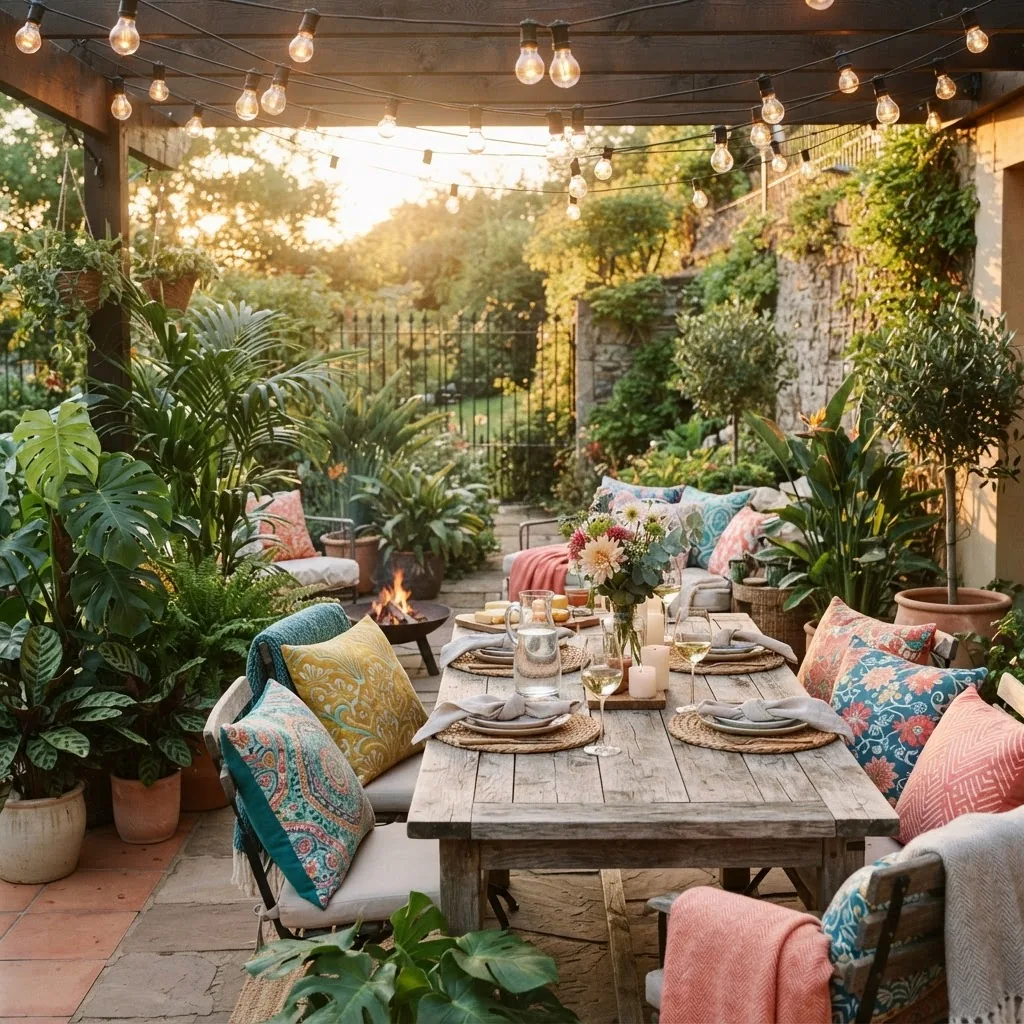
Outdoors is where summer styling really sings—mix durable textiles, layered lighting, and planters to create an all-day space.
- Choose outdoor cushions — use UV-rated cushion covers; for a 3-seat bench use three cushions (50 x 50 cm) and two lumbar pillows (30 x 50 cm). Spot-clean per manufacturer instructions and store indoors overnight.
- Add lantern lighting — hang two string lanterns or install solar lanterns spaced 1.5–2 m apart for even glow. Use warm LEDs for atmospheric evenings.
- Group potted plants — create a 3-plant cluster: one tall, one medium, one trailing in sizes 30–60 cm. Use terracotta or glazed ceramic pots with saucers and an outdoor drip tray.
- Staging the table — for four people, set a central bowl with cut citrus and three small votives; add placemats and lightweight napkins for a relaxed, resilient table setup.
Transition: Now that room-level plans are clear, roll up your sleeves for practical DIY projects to personalize your summer styling.
DIY Summer Decorations and Seasonal Craft Ideas
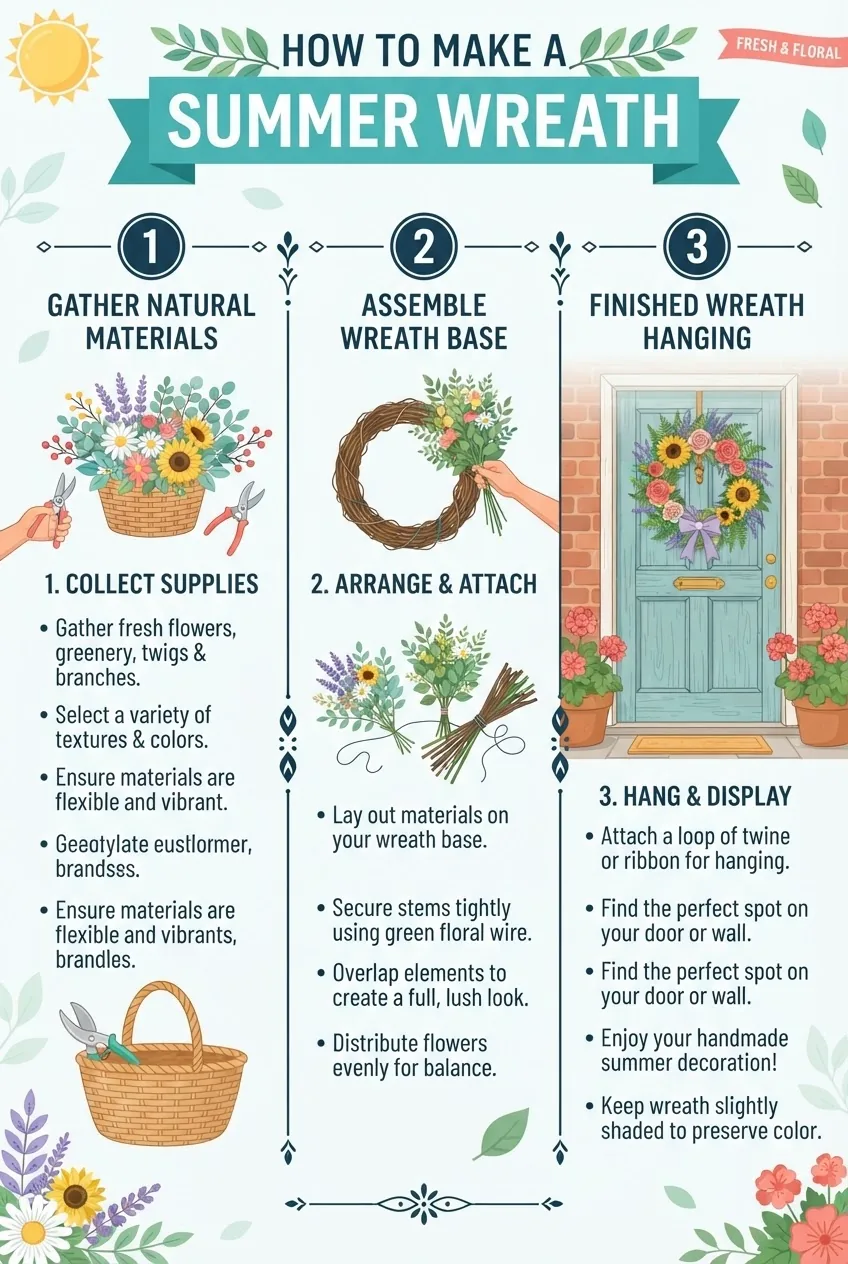
These three hands-on projects are beginner-friendly, budget-conscious, and scaleable by material choice.
- Make a seasonal wreath (45–75 minutes)
- Materials: 30 cm grapevine or wire wreath base, 12–15 stems of mixed greenery (eucalyptus, fern), 6–8 small fresh or dried blooms, floral wire, pruning shears.
- Step 1 — Layer greenery: cut 10 cm sprigs, arrange in the same direction around the base and secure with floral wire every 6–8 cm.
- Step 2 — Add blooms: tuck and wire small flowers into gaps; keep the cluster on one side for a modern asymmetric look.
- Step 3 — Finish: trim stray stems, hang with twine. Maintain fresh wreaths by misting weekly; dried variants last months.
- Tip: use a 60:40 foliage-to-flower ratio for a balanced summer wreath.
adorable little and small decorations complement wreaths—use matching palette accents on a console table.
- Create a beachy centerpiece (30–45 minutes)
- Materials: 1 shallow wooden bowl (30 cm), 10 mixed shells, 3 pillar candles (7 cm diameter), one stabilizing tray mat.
- Step 1 — Layer shells in the bowl to create a base, place pillar candles spaced evenly and secure with hot glue if necessary.
- Step 2 — Surround candles with small pebbles or sand (200–300 g) to stabilize; never leave candles unattended—keep 10 cm clearance from flammable materials.
- Tip: use battery-operated candles when safety or breeze is a concern.
- Upcycle glass bottles into vases (20–40 minutes)
- Materials: 3 assorted glass bottles, sandpaper, natural twine, labels (optional), paint (optional).
- Step 1 — Clean and remove labels; sand any rough spots. Wrap the neck with twine and tie with a small knot.
- Step 2 — Arrange single-stem blooms or herbs in each bottle; group them in odd numbers (3) on a windowsill.
- Tip: add a coin-sized weight (stones, pebbles) inside for stability in windy outdoor spots.
Transition: With these DIY projects finished, refine atmosphere through scent and lighting to complete the summer mood.
Incorporating Summer Scents and Lighting for Ambience
Scent and light shape perception dramatically. Use them thoughtfully to create an inviting summer ambience without overpowering the room.
- Select scent profiles — citrus (lemon, bergamot), green (cut grass, basil), and linen (cotton/ozone) are classic summer notes. For evening, add softer floral musk blends. According to a 2023 wellbeing study, citrus and green scents can improve perceived energy in interiors—refer to health expert guidance when using concentrated oils.
- Choose safe candles — use soy or beeswax candles with cotton wicks, unscented or naturally fragranced. Avoid paraffin candles in tightly sealed rooms. For children or pets, prefer flameless LED candles.
- Diffuse responsibly — if using essential-oil diffusers, run for 15–30 minutes maximum in well-ventilated rooms and avoid strong oils around infants, pregnant people, and allergy sufferers. For pet safety and allergy concerns, consult health resources such as AAAAI for guidance.
- Layer lighting — combine ambient (dimmable ceiling lights), task (reading lamps at 300–500 lux at eye level) and accent (string lights, lanterns). Use color temperature 2700K–3000K for evenings and 3000K–4000K for bright daytime tasks.
- Outdoor lighting — install solar string lights with at least 1000 mAh battery capacity for 6–8 hours of evening runtime; stagger bulbs every 1.5 m for even coverage.
Transition: You can accomplish much without spending a lot—next are practical budget strategies and exact swaps that save money but preserve style.
Budget-Friendly Summer Decorating Tips
- Prioritize textiles over furniture — swapping curtains and cushions changes the feel faster and cheaper. Estimated cost: $30–$150 per room. For example, 3 linen cushion covers (~$18 each) + one lightweight throw (~$35) = ~$89.
- Repurpose what you have — move a decorative bowl from the bedroom to the dining table; rotate art between rooms. I often repurposed framed botanical prints to make a living room gallery without buying new art.
- Shop secondhand — source one larger item (side table or light fixture) from thrift or online marketplaces for $50–$120. Refurbish with a light sanding and a water-based varnish for longevity.
- DIY where it counts — make wreaths and centerpieces (materials $10–$30). For a bedroom headboard refresh, wrap an existing headboard with a new linen slipcover—measure twice, cut once; expect 2–3 hours and $40–$80 in fabric.
- Use seasonal sales — target end-of-season clearances for outdoor cushions and solar lighting; mark price thresholds (e.g., buy if ≥30% off) to avoid overspending.
- Affordable lighting swaps — replace bulbs with LEDs (~$3–$12 per bulb). Dimmable models are slightly more expensive but add flexibility and long-term savings.
- Budget checklist — set a $150 cap per room, allocate 40% to textiles, 30% to plants and accessories, 30% to lighting or one statement item.
affordable and DIY decor ideas in bedroom renovations can cut costs when refreshing sleeping spaces for summer.
Transition: If sustainability matters to you, follow the next section for materials, certifications and practical trade-offs between beauty and ecological footprint.
Sustainable and Eco-Friendly Summer Home Decor Ideas
Sustainability in home decor is about choices: materials, manufacturing, and end-of-life. Choose items that age gracefully and reduce waste while delivering the summer look you want.
- Choose natural fibers — linen, organic cotton and hemp are breathable and biodegradable. Linen requires less frequent washing; cotton is more forgiving for stains. Example: a pre-washed linen duvet set for a queen bed typically lasts 8–12 years with proper care.
- Look for certifications — buy FSC-certified wood, GOTS (Global Organic Textile Standard) textiles, and OEKO-TEX labeled fabrics to reduce exposure to harmful chemicals. For broader guidance on sustainable products check EPA resources.
- Prioritize durability — choose pieces you can repair: solid-wood side tables with replaceable legs, or cushions with zip covers for washing and re-stuffing. The trade-off: higher upfront cost but longer life and lower lifetime footprint.
- Buy secondhand first — refinishing an existing piece saves resources and often imparts a richer patina. I once re-sanded and oiled a $35 thrifted coffee table to pair with new summer textiles—final cost <$70, result unique and durable.
- Zero-waste decor hacks — use glass jars, repurposed fabrics and leftover wood for planters or trays. For packaging, keep a bin for reusing boxes and paper when accepting deliveries.
- Plant selection for sustainability — pick native or low-water plants to reduce irrigation needs; combine one larger specimen (6–12 L pot) with smaller 1–3 L accent plants to maximize visual impact while minimizing water use.
Transition: Before you finalize rooms, learn from common practitioner mistakes so you don’t repeat them—I’ve included errors I see often and how to avoid them.
Common mistakes and how to avoid them
I’ve re-styled dozens of rooms and these missteps pop up repeatedly—here’s how I avoid them now.
- I once overbought patterns and the room felt busy—now I limit patterns to one piece per seating cluster and keep two neutrals to rest the eye.
- I used scented oil too heavily and a guest had headaches—I now diffuse for 15 minutes only and always warn guests; if someone is sensitive, I switch to unscented soy candles.
- I chose plants by looks not light tolerance and three died—now I match plant selection to available light: low-light (pothos), medium (fiddle leaf), bright (succulents).
- I packed everything away at season change and lost cohesion—now I rotate one anchor piece between rooms to maintain continuity across seasons.
Final checklist and when to call a professional
Use this checklist to verify your summer refresh and know when to bring in trade help.
| Task | Done |
|---|---|
| Swap curtains for linen or cotton | ☐ |
| Replace 2–4 cushions per seating area | ☐ |
| Add at least one live plant per main room | ☐ |
| Update lighting with dimmable LEDs or string lights | ☐ |
| Complete one DIY project (wreath, centerpiece or vase) | ☐ |
When to call a professional: hire an electrician for rewiring, a carpenter for structural furniture changes, or a licensed pest/plant specialist if you suspect infestations or plant disease. Call a professional if you plan permanent changes like built-in shelving or replacing windows—these require permits and specialized skills.
Conclusion and Seasonal Decorating Inspiration Recap
You now have a practical pathway: pick a three-color palette, swap heavy textiles for linen and cotton, add greenery and sustainable materials, and finish with layered lighting and subtle scents. Start with one room, follow the time and budget caps, and expand. For ideas when seasons change, review autumn decorating ideas to plan smooth transitions.
Final CTA: choose one room this weekend, gather materials from the checklist, and complete your first summer refresh—post a before/after photo to track progress and inspiration.