


Autumn decorating ideas front door: by the end of this hands-on guide you’ll have a complete plan and step-by-step build for a styled, weather-ready fall entryway you can install in 2–6 hours (simple refresh) to 1–2 days (full porch makeover). Skill level: beginner to intermediate — no professional carpentry required.
Before you start you’ll do a 10–20 minute site check (measure, note light and wind exposure) and gather basic tools. This guide teaches selection, styling across five distinct looks, DIY projects with materials lists, sustainability swaps, and maintenance tips.
Before you start
- Tape measure (measure door height and porch step depth)
- All-weather zip ties, exterior-rated adhesive hooks (hold 5–15 lb), 3″ screws and wall anchors for masonry
- Hot glue gun, floral wire, wire cutters, pruning shears
- Small saw or pruners for real stems; sandpaper for distressed wood
- Weatherproof spray (clear matte) and fabric sealant for outdoor textiles
- Seed packets or potted seasonal plants (mums, pansies) chosen for your USDA zone
- Optional: cordless drill, exterior paint touch-up kit, outdoor-rated string lights
Why Autumn Front Door Decorating Matters
A styled entryway sets curb appeal and creates a seasonal welcome that says “this home is cared for.” Beyond aesthetics, thoughtful front door décor improves first impressions and outdoor ambiance while increasing your home’s perceived value at resale. Decorating the entry is a focused effort with high visual return: a well-styled porch offers an immediate seasonal statement without renovating the whole facade.
Use entry styling to extend interior design themes outward — this helps cohesion between inside and out. For a toolkit that reads across rooms, see Ideas Home Accessories Guide for Modern and Unique Room Decor.
Transition: now that you understand why a fall front door matters, let’s look at the specific pieces that make a cohesive autumn entry.
Essential Autumn Decorating Elements for the Front Door
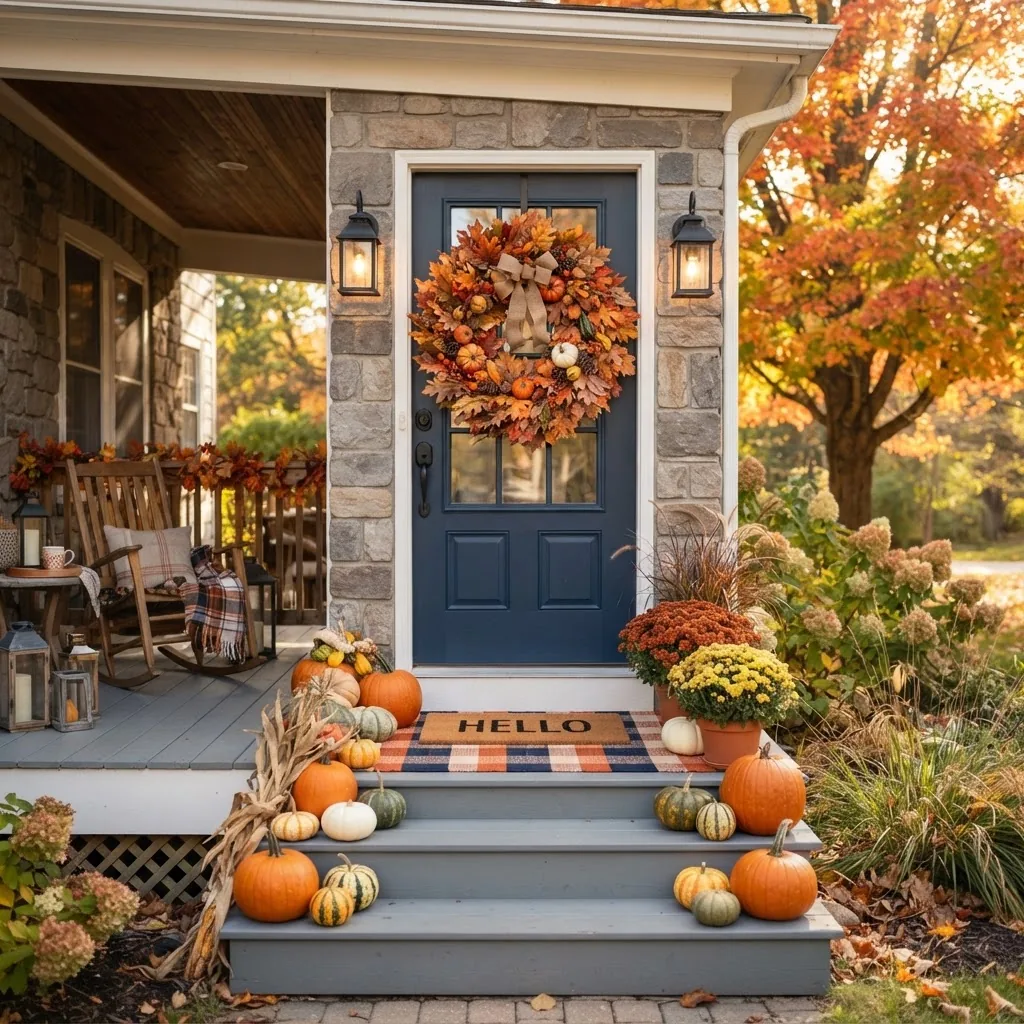
- Autumn wreaths — natural or artificial wreaths set tone. Choose a 22–28″ wreath for standard doors; use lightweight grapevine bases for easy hanging. Natural dried leaf wreaths last 2–6 weeks exposed to elements; synthetic blends last the season and are reusable.
- Fall color palette — layer primary tones (burnt orange, cranberry red, mustard yellow) with earth-tone anchors (taupe, olive, brown). For a modern approach use one saturated accent (e.g., deep rust) with two neutrals.
- Seasonal front door hardware/upgrades — swap a standard knob for an oil-rubbed bronze or matte black handle; add a kickplate or brass house numbers to elevate the look (budget: $20–$150).
- Outdoor lighting for fall ambiance — warm 2700K string lights, lanterns with LED candles, or motion-safe sconces. Aim for layered lighting: 1 overhead, 1-2 accent (lanterns/plinths).
- Pumpkins and gourds — mix sizes: 1 large (16–24″ circumference), 2–4 medium, and a handful of small accents. Use faux pumpkins in heavy-rain climates; real ones last 2–4 weeks outdoors depending on weather.
- Door mats and runners — choose all-weather coir or rubber-backed mats in fall prints or solids. Runners on covered porches should be outdoor-rated polypropylene (resists mildew).
- DIY autumn decorations — garlands, painted pumpkins, and repurposed crates. Keep easy-to-follow projects (30–90 minutes) that use natural materials like pine cones and branches.
- Sustainable and eco-friendly decor options — reusable wreath frames, reclaimed wood planters, compostable natural fillers. Swap spray paints for natural stains when possible.
- Porch planters and seasonal flowers — chrysanthemums, pansies, ornamental cabbages; pick containers with drainage and frost tolerance for your zone. According to a 2023 horticultural report, hardy mums planted in containers perform best in cooler fall zones (report type: horticultural industry report).
- Textiles for outdoor use — water-resistant blankets and fade-resistant pillows made from solution-dyed acrylics; store textiles during storms and overnight to extend life.
- Style anchors: rustic vs. modern — decide early: rustic uses layered textures and reclaimed materials; modern relies on restrained palettes and negative space. This choice guides every element you select.
- Safety/weather considerations — secure tall items against wind, place battery-operated candles in ventilated lanterns, and choose non-slip mats. Follow local weather guidelines for wind thresholds when stacking props (e.g., remove lightweight decor above 35 mph).
- Budget-friendly decorating tips — prioritize statement items (wreath, lighting, one planter) and rotate smaller accents year-to-year; thrift crates and paint can cut costs to under $50 for large visual impact.
- Coordination with home exterior colors/styles — use contrast or tonal matching: a deep green door pairs with warm rust accents; a white facade benefits from saturated pumpkins and dark hardware.
Transition: with the essentials covered, these style-specific examples show how to assemble the elements into distinct, achievable looks.
Stylish Autumn Front Door Decorating Ideas by Style

Below are five practical style directions with exact components, suggested color palettes, and step-by-step placement tips so you can pick one and execute it.
Rustic Farmhouse Autumn Door Decor
The rustic farmhouse look centers on texture, warm neutrals, and handcrafted accents. Key items: a grapevine wreath with dried wheat, stacked wooden crates, burlap ribbons, and matte black lanterns. Use reclaimed wood planters (24″ x 12″) filled with hardy mums and ornamental grasses.
- Place two crates stacked on one side of the door, lowest crate on the ground, the top crate offset 2–3″ inward. Attach a 26″ grapevine wreath with floral wire to the door.
- Group pumpkins by size on and around the crates: large at the back, medium in front, small to fill gaps.
- Add a burlap-wrapped planter with a 12″ chrysanthemum. Anchor the arrangement with a lantern and a battery candle (set to auto 6–8 hours nightly).
Styling note: distress painted items with 120-grit sandpaper to reveal warm wood undertones; avoid overloading—leave 6–8″ walkway clearance.
Modern Minimalist Fall Front Door Ideas
Minimalism uses simple forms and restrained color. Think a single sleek wreath in one saturated hue, symmetrical metal planters, and a small stack of matching monochrome pumpkins.
- Select a wreath 20–24″ wide made from preserved eucalyptus or matte metal elements in rust or black.
- Use two identical metal planters (14″ diameter) placed symmetrically 18–24″ from the door center; plant with evergreen topiary or boxed heather for structure.
- Limit accents to 3 items per side (planter, one medium faux pumpkin, and one LED pedestal light) to preserve negative space.
Material trade-off: choose powder-coated metal planters for durability; if you prefer wood look, use composite planters rated for outdoor use.
To explore matching interior aesthetics, see trendy and aesthetic fall styles.
Boho and Eclectic Autumn Decorations
Boho mixes layered textiles, macramé accents, warm jewel tones and eclectic planters. Use patterned kilim runner, mismatched ceramic pots, and a wreath with pampas grass and dried roses.
- Layer a low-maintenance kilim-style outdoor runner (3′ x 6′) parallel to the door and set planters asymmetrically.
- Create a pampas-and-rose wreath (28″) using floral wire and hot glue; protect with a light spray sealant for one-time outdoor use.
- Mix textures with a woven basket, a painted gourd, and string lights woven into foliage (LED, 50-lumen, 2700K).
Traditional and Classic Fall Front Door Style
This look relies on symmetry and historic motifs: classic wreaths with ribbons, flanking urns with seasonal plants, and warm brass hardware. Ideal palette: deep red, gold, and hunter green.
- Install a 24″ traditional wreath accented with ribbon tails 18–24″ long tied at 45°.
- Place matching urns (16–18″ diameter) on either side filled with boxwood, mums, and a touch of ornamental corn stalks for height (36–48″).
- Polish hardware or install brass numbers for a cohesive, elevated touch.
Cozy Cottage and Natural Themes
Cottage style emphasizes natural materials and layered, welcoming accents: a mixed-leaf wreath, woven baskets, small logs, and wildflower planters. Colors skew to honey, leaf green, and soft rust.
- Group low, rounded planters with trailing ivy and pansies (plant depth 8–12″).
- Use a hand-tied leaf wreath (24–26″) and drape a knit or woven blanket over a bench, storing textiles overnight in a sealed bin.
- Anchor the vignette with a small stack of split logs (3–4 pieces) or a reclaimed wooden stool topped with a pumpkin.
Transition: pick your style and then use the DIY section to build key elements affordably and sustainably.
DIY and Budget-Friendly Front Door Decorating Ideas for Fall
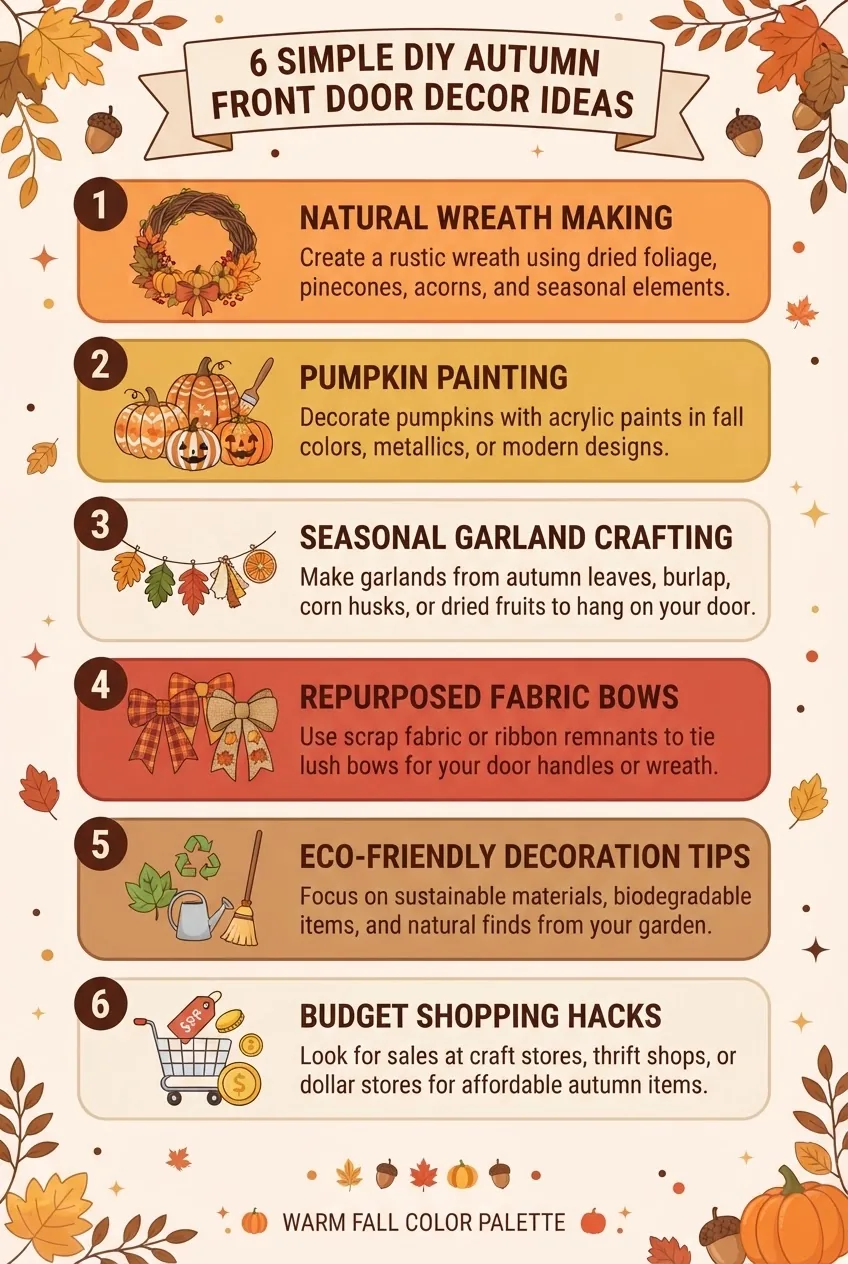
These projects are hands-on, low-cost, and require common tools. Each project includes materials, time estimate, and exact steps.
-
Make a natural leaf wreath — Materials: 18″ wire wreath frame, floral wire, 1–2 dozen large dried leaves or preserved eucalyptus bundles, scissors; Time: 45–75 minutes.
- Attach base bundles: wire 3–4 small bunches to the frame, overlapping by 1–2″.
- Layer leaves in the same direction, securing each layer with 12″ floral wire at 3 points around the frame.
- Finish with a small bow using leftover burlap or ribbon; seal with a light coat of matte spray if exposed to rain.
-
Painted pumpkin trio — Materials: 3 faux pumpkins (small, medium, large), acrylic primer, matte spray, painter’s tape; Time: 30–60 minutes plus dry time.
- Prime pumpkins with a single coat and let dry 20–30 minutes.
- Mask geometric shapes with tape for a modern look; paint two coats allowing 10–15 minutes between thin coats.
- Seal with matte spray for outdoor use and place on an elevated stump or crate for visibility.
-
Seasonal garland from foraged materials — Materials: twine, small pinecones (12–20), dried small leaves, hot glue gun; Time: 45 minutes.
- Collect small pinecones and dry leaves; bake at low heat 10 minutes to remove pests.
- Glue items onto twine at 6–8″ intervals and hang along a porch rail or intertwine with string lights.
-
Repurposed fabric bow wreath — Materials: 18″ foam or wire base, old sweaters/blankets (cut into 2″ strips), needle and thread; Time: 60–90 minutes.
- Cut strips and tie or loop them into the base, creating a dense texture; leave a 12–18″ tail for a bow if desired.
- Secure with quilting thread and hang using an exterior hook rated to hold at least 5 lb.
-
Budget lighting vignette — Materials: 1 string of 50 LED micro-lights (battery pack), 2 outdoor-rated lanterns; Time: 20–30 minutes.
- Place lanterns on steps or beside planters; weave micro-lights through a garland or wreath and set timer for 4–6 hours nightly.
-
Eco-friendly swap kit — Materials: reclaimed wood crate, reusable faux pumpkins, compostable filler (dried corn husks, straw); Time: 30–60 minutes.
- Assemble the crate base, add compostable filler and top with faux pumpkins for a reusable display you can change season-to-season.
Practical sourcing and inspiration: pair these projects with adorable and small decor ideas and check affordable home decorating ideas for more budget techniques.
Transition: sustainability matters when you do multiple projects. The next section compares long-term materials and eco options.
Sustainability and Long-Lasting Materials for Autumn Front Door Decor
Choosing durable, reusable materials reduces waste and saves money over seasons. Compare typical options: natural dried elements (compostable, biodegradable) last 2–6 weeks outdoors; preserved/preserved-synthetic blends last a full season if stored properly; fully synthetic items (resin pumpkins, polyester garlands) can last multiple seasons.
Recommendation: when possible use a reusable base (metal or grapevine wreath frame), swap seasonal fillers (dried leaves vs faux sprays) each year, and store items in labeled bins. For plants, follow horticultural recommendations: Royal Horticultural Society planting guides (external source type: botanical society guidance) recommend hardy container selections for autumn planting tailored to climate zones.
For weatherproofing and safety, consult official guidance on securing outdoor decorations: refer to government safety recommendations such as those from the National Weather Service or local building code advisories — for example National Weather Service (external source type: weather and safety agency) for wind and storm alerts. For sustainable product certifications and consumer guidance, see the EPA’s resources and sustainable living frameworks at EPA (external source type: government/environmental authority).
Material picks by priority:
| Material | Durability | Sustainability Notes |
|---|---|---|
| Powder-coated metal planters | High | Reusable for years; recyclable where facilities exist. |
| Preserved eucalyptus/leaf wreaths | Medium | Biodegradable but short-lived; compost after use. |
| Faux resin pumpkins | Very high | Reusable for seasons; not compostable. Choose recycled-resin when available. |
Transition: sustainability choices affect maintenance. Next, practical maintenance tips keep decor looking fresh all season.
Practical Tips for Maintaining Your Front Door Decor During Fall
- Check fastenings weekly: inspect hooks, wire ties, and zip ties every 7 days; tighten or replace if corroded — replace exterior adhesive hooks if they fail a 5 lb pull test.
- Store textiles overnight: remove throws and pillows during heavy rain; store in a sealed plastic bin for each season to prevent mildew.
- Protect plant roots from frost: move potted plants onto insulation tiles when night temps hit within 5°F of expected frost.
- Use battery-operated candles: they eliminate open-flame risk and run 6–12 hours depending on battery and LED output; keep replacement batteries on hand.
- Repaint or touch hardware before winter: sand and seal any exposed wood and reapply a clear exterior sealer each 12–18 months for long-term protection.
- Remove perishable items before storms: bring real pumpkins and floral arrangements indoors when severe weather is forecast — local alerts from the National Weather Service are recommended (source type: weather agency).
- Clean surfaces monthly: sweep mats, brush debris from planters, and rinse salt or road spray from low-sitting decor.
- Time your lighting: set timers for dusk-to-bedtime (approx. 6–8 hours) to preserve battery life and reduce wear on strings.
Transition: proper maintenance keeps your look consistent; now coordinate your entry with the rest of the exterior for a unified seasonal story.
Coordinating Front Door Decor With Porch and Exterior Home Elements
Coordination is about scale, color, and repetition. Repeat one or two accent colors from the door across planters and porch textiles to pull the exterior together. For example, if your wreath is deep rust, add a rust throw pillow in a nearby bench and place a small rust-painted pumpkin on a side table.
Balance is key: anchor heavy visual items (urns, stacked pumpkins) on the same side to close sight-lines, or mirror them for formality. Consider the architectural style: colonial homes benefit from symmetrical urns; craftsman porches look best with textured natural baskets and plants in staggered heights.
For ideas on aligning interior warmth with your exterior, explore cozy autumn living room decor. This helps you extend one or two motifs (color, texture) from inside to the porch for cohesive seasonal styling.
Other internal resources: check decorative objects and accessory guides for complementary accents — for instance, Decorative Objects Guide for Modern and Unique Home Accents and Decoration Cozy Guide for Comfortable and Inviting Home Decor.
Transition: knowing what to do is useful — knowing what to avoid speeds execution and prevents costly mistakes.
Top Mistakes to Avoid When Decorating Your Front Door for Autumn
- Overdecorating: too many focal points reduces impact; keep a dominant element and secondary accents (limit to 3 focal pieces).
- Ignoring weather: using perishable items in exposed areas shortens life and creates mess — move perishables before storms.
- Color clashes: avoid more than three competing colors; use repeats to create cohesion.
- Poor material choice: indoor textiles and paper decor will degrade quickly outdoors — choose outdoor-rated items.
- Safety hazards: unsecured tall items can topple in winds; anchor with 2–3 points of contact for items taller than 2.5 ft.
Transition: once you know the do’s and don’ts, you’ll want to shop smart; below are reliable places to find materials and decor.
Where to Buy Popular Autumn Front Door Decor and Materials
- Local garden centers and nurseries — best for hardy seasonal plants and planting advice tailored to your climate; horticultural societies often recommend local centers (source type: botanical society guidance).
- Craft stores and seasonal pop-ups — great for supplies (wreath frames, ribbons, paints) and bulk faux pumpkins; compare prices across stores before buying multiples.
- Online retailers — for specialty planters, durable faux pumpkins, and lighting; read product reviews for fade and weather performance.
- Thrift stores and flea markets — ideal for reclaimed wood, crates, and unique planters; refinish or seal pieces as needed.
- Specialist sustainable shops — for recycled-resin decor and certified sustainable textiles; check for third-party certifications or material disclosures.
Transition: next, a practical hands-on sequence and troubleshooting based on experience will get you from plan to finished porch quickly.
Hands-On Step-by-Step Front Door Makeover (Core Execution)
This numbered sequence is the action plan to complete a full autumn front door makeover in a single weekend (4–8 hours) or in staged 1–2 hour sessions for busy schedules.
- Assess and measure your entryway (30–45 minutes): record door height, step depth, and porch width. Note sunlight exposure and dominant wind direction. Decide whether items will be exposed overnight — this determines material choices.
- Choose a style and palette (20–30 minutes): pick one of the styles above. Limit your palette to 2 accent colors + 2 neutrals. For example: rust + mustard + olive + taupe. Write choices on a small checklist.
- Select the focal piece (30–60 minutes): choose a wreath (22–26″) or statement planter as your main anchor. If building a wreath, follow the DIY wreath steps in the DIY section (45–75 minutes). If buying, order or source one with 1–3 day shipping/availability to match your schedule.
- Build base layers (30–60 minutes): position large items: planters, crates, or benches. Heel planters inward 2–3″ from door flow so they read as welcoming rather than obstructive. Plant with mums/pansies or place faux pumpkins.
- Add mid-scale accents (20–40 minutes): add medium pumpkins, lanterns, and a runner. Keep pathway clearance at least 30–36″. For stairs, place accents on alternating steps to keep flow.
- Install lighting (15–30 minutes): set up string lights or lantern batteries and test timers. Use warm 2700K LEDs for cozy light. Place lights 6–12″ back from the edge to avoid glare.
- Layer textiles and small details (15–30 minutes): add pillows and a folded throw to a bench or stool; secure lightweight textiles with hidden clips to prevent wind lift. Tie ribbons and bows no longer than 24″ to avoid tripping hazards.
- Finalize and secure (15–20 minutes): check all fastenings, tuck electrical wires out of reach, and test door clearance. Perform a 10-second stability check on tall items (apply lateral pressure to ensure secure anchoring).
- Document and store a plan (10 minutes): photograph the setup and note which items are reusable. Store perishable materials inside overnight or before predicted storms. Label storage bins with contents and season.
Common mistakes and how to avoid them
I once used real mums at the base of an exposed porch and woke to them split and soggy after two nights of heavy rain; now I place perishable plants in sheltered spots or use faux alternatives for exposed displays. I also used an adhesive hook rated for indoor use and it failed — now I always choose exterior-rated hooks (5–15 lb rating) for wreaths and test them with a 5 lb pull before hanging.
Another mistake I made: layering too many colors. I tightened my palette to three colors and the porch instantly looked calmer and more intentional.
Quick Checklist (verify before you finish)
- Door clearance > 36″ unobstructed walkway
- Wreath hung with exterior-rated hook (tested 5 lb pull)
- Planters have drainage and are insulated if frost expected
- All textiles stored overnight or secured
- Lighting set to timer 4–8 hours nightly
- Perishables removed before forecasted storms
- Photos and storage labeling completed
When to call a professional
Call a pro if you plan structural changes (installing permanent lighting tied to household wiring), need masonry anchors installed, or want custom carpentry for built-in benches/planters. Also contact a landscape professional for permanent planting beds if you’re altering drainage patterns or planting large shrubs.
Final transition: armed with style choices, DIY projects, and maintenance routines, you can create an entryway that reads as a seasonal welcome and lasts through fall weather.
Top resources and purchase checklist
- Local nursery (ask for hardiness and frost dates) — best for live plants
- Craft supply store — wreath frames, ribbon, glue
- Home improvement store — exterior-rated hooks, screws, sealants
- Online marketplaces — for specialty planters and faux decor (read UV/fade ratings)
Conclusion: choose one style, secure a reusable base (wreath frame or crate), and invest in one weatherproof element (planter or lighting). With the steps above you can achieve high-impact curb appeal in a weekend while keeping materials and maintenance manageable. Ready to get started? Gather your tools from the “Before you start” list and pick a style to begin your first 2-hour refresh.