


By the end of this hands-on guide you’ll have a complete plan to choose, test and apply modern lounge room paint schemes that suit your light, scale and furniture; expect 2–3 days of active work (plus 48 hours drying) and a beginner-to-intermediate DIY skill level. This lounge room colour ideas guide is written so you can act confidently, whether you test one wall or repaint the whole room.
Before you start
- Tools: 9–12cm paint roller, 4–6cm edging brush, 25mm angled sash brush, 1.5× length paint tray, painter’s tape, 120–180 grit sandpaper, filler, putty knife.
- Materials: primer (1 x 10L covers ~100m² ceiling/walls), topcoat paint (estimate 1 x 10L per 60–80m² depending on porosity), drop cloths, clean rags.
- Measurements: measure room perimeter and wall heights; calculate m² = perimeter × height; add 10% for waste.
- Apps and references: pick a colour visualizer (see walkthrough below), and have sample pots for at least 3 tones.
- Time blocking: plan 2 coats plus primer—allow 4–6 hours per coat for an average 4×4m lounge, longer in low temperatures.
Transition: start by understanding what modern paint colours mean for lounge rooms so your choice becomes a design foundation rather than an afterthought.
Introduction to Lounge Room Colour Ideas
This introduction sets the scene: modern lounge rooms favor calm foundational tones, one or two accent statements, and finishes chosen for handling light and wear. Use these interior paint color ideas as the architectural backdrop — paint is the room’s clothing, setting the mood before cushions and art arrive.
Key inspirations for lounge room colour ideas include tonal layering (three tones across walls, trim and a focal wall), muted pastels paired with warm neutrals, and deep moody hues used sparingly. According to a 2024 industry report from the PANTONE Color Institute, designers are balancing saturated accents with grounded neutrals to create liveable, photogenic lounges.
Practical starting points: pick one dominant base (neutral or soft color), one accent (deeper or brighter), and one trim/ceiling hue. Keep samples on the actual wall near windows and lighting to judge shifts through the day. This guide focuses strictly on lounge room palettes and combinations — not bedrooms or kitchens — so you’ll get targeted, practical paint ideas you can implement quickly.
Transition: with a clear starting mindset, let’s define what “modern” paint choices look like and see example palettes you can copy.
Understanding Modern Interior Paint Colors for Lounge Rooms
Modern interior paint colors for lounge rooms emphasize understated sophistication—muted, slightly desaturated hues, warm greys, earthy taupes and statement blues or terracottas. A modern palette usually contains a primary wall colour, a complementary accent and a trim/ceiling shade that’s either brighter white or a coordinated tone.
Example palettes (use these as templates—sample on your wall before committing):
- Soft Warm Neutrals: Warm beige base, creamy off-white trim, deep mushroom accent. Great for modern and elegant design styles where texture (linen, brushed metal) matters. modern and elegant design styles
- Muted Pastel & Timber: Dusty blush walls, pale grey trim, walnut-toned furniture for Scandinavian-adjacent lounges.
- Deep Jewel Contrast: Slate blue main walls, soft stone trim, mustard or burnt orange accent pillows for energetic contrast.
- Greige Grounding: Greige walls, off-white ceiling, black window frames and rattan accessories for a contemporary feel.
Colour psychology note: green hues encourage calm and balance; blues decrease stress and read as sophisticated; warm terracottas and ochres create warmth and sociability. According to a 2024 interior design trend report from the PANTONE Color Institute, natural, nature-inspired palettes are increasing in client preference year-over-year.
Practical examples: a 4×4m lounge with north-facing windows benefits from warmer neutrals (raise warmth by adding 2–3 Mireds in paint choice), while a south-facing lounge can embrace cooler mid-tone blues without feeling cold. For open-plan areas, use subtle tonal variations across zones to maintain flow.
Transition: below are the specific trending colours for 2024 you can copy or adapt for your lounge room.
Top Trending Lounge Room Paint Colors for 2024
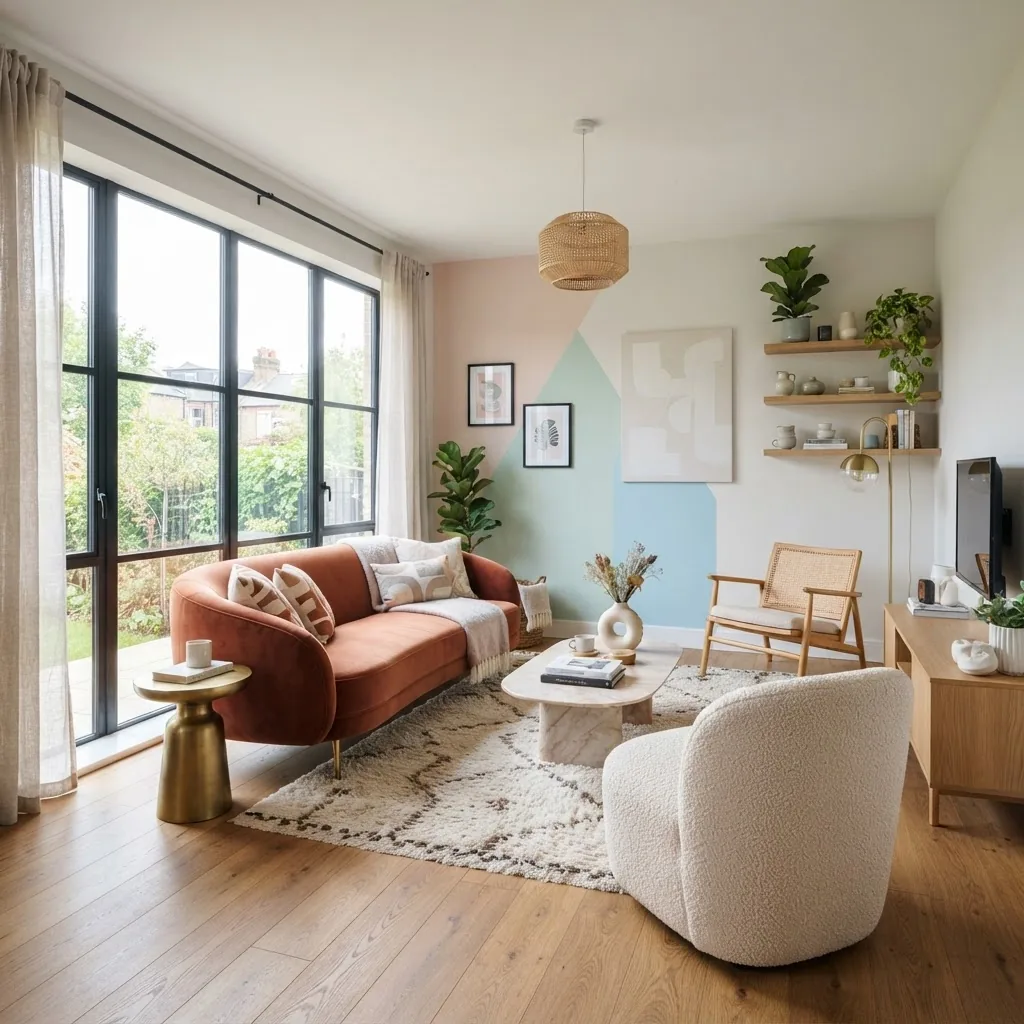
The following list highlights 10 trending lounge room paint colours with a short primer on why they work and how to use them. For styling inspiration that pairs these hues with furnishings, see related guides to trendy and cute decor styles and bolder ideas for colorful living room ideas.
- Soft Mushroom Grey — A warm grey with brown undertones; excellent as a full-room base for textured upholstery and wooden floors.
- Muted Sage Green — Calm, natural and versatile; use on 3 walls with a pale ceiling to create a serene lounge that reads modern and lived-in.
- Warm Greige — The modern neutral: pairs with brass accents, leather and organic textiles for an approachable contemporary look.
- Deep Slate Blue — Works best as an accent or feature wall behind the sofa; pairs with ochre and walnut for a dramatic, modern contrast.
- Terracotta Clay — Warm, earthy and sociable; use in moderation on a single wall or in a cozy reading nook to add tactile warmth.
- Dusty Blush — Soft and modern when desaturated; great for creating a subtle layered palette with stone greys and soft whites.
- Rich Olive — A muted green-brown that reads luxe with black trims and natural-fibre accessories.
- Muted Mustard — Bold as an accent (armchair or pillow wall) but surprisingly contemporary when balanced with mid-grey walls.
- Soft Chalk White — A warmer white for ceilings and trims that prevents glare; ideal for minimalist modern schemes.
- Charcoal Accent — Use sparingly for trims, window walls or a media wall to ground lighter palettes and add depth.
Transition: once you’ve seen the trending shades, the next section walks through choosing the right colour for your specific lounge.
How to Choose the Right Lounge Room Paint Color
Choosing the right lounge room paint color is a methodical process: evaluate light, scale, existing finishes, color psychology and your intended mood. Follow the step-by-step infographic and checklist below to make a confident selection.

- Assess light first: Observe the room at 9am, 1pm and 6pm; note natural light direction (north/south/east/west). North light is cool—add warmer paints; south is warm—you can safely use cooler mid-tones. According to a 2024 interior sunlight study summary, natural light shifts cause the largest perceived colour shift in the first hour after sunrise and before sunset.
- Measure scale: For rooms under 12m², lighter tones increase perceived volume—choose paints with light reflectance value (LRV) above 55. For rooms above 20m², consider a medium-tone base (LRV 30–50) to avoid feeling clinical.
- Decide mood: Use green/blue for calm and restorative spaces, warm ochres and terracottas for convivial lounges. If you want a social, energetic lounge choose warm mid-tones; for a relaxed cinematic room opt for deep muted tones.
- Test samples correctly: Apply 60 × 60cm swatches in multiple spots; view at day and night with your lamps. Paint sample pots are cheap insurance—leave samples up for 48 hours before deciding.
- Factor in finishes and maintenance: Choose satin/eggshell for washable walls in homes with kids or high traffic; matte or flat hides imperfections but is harder to clean (see finishes section).
- Consider continuity in open-plan: Select a base neutral across sight-lines and use accents to define the lounge rather than changing base colours abruptly.
- Reference complementary decor: Match undertones (warm/cool) with your largest furniture pieces—leather, timber, rugs. For more furniture and accessory pairing ideas see guides on modern and stylish room decorations. modern and stylish room decorations
Transition: understanding colour selection is only half the job—finish choice affects appearance and durability. Read on.
Popular Paint Finishes and Their Impact on Lounge Room Design
Finishes change perceived depth, reflectivity and ease of cleaning. Here’s a clear comparison so you can pick the right one for your lounge room.
| Finish | Appearance | Best Use | Pros / Cons |
|---|---|---|---|
| Flat / Matte | Non-reflective, velvety | Low-traffic lounges, feature walls | Hides imperfections / Harder to clean |
| Eggshell | Soft sheen | Most lounge walls | Balanced look / Moderate washability |
| Satin | Low-medium sheen | High-traffic areas, trim | Durable and washable / Reveals flaws if poorly prepped |
| Semi-gloss / Gloss | High sheen | Woodwork, doors, feature trims | Extremely washable / Reflective and shows brush marks |
Trade-off tip: in rental or family homes, choose satin for lower walls and eggshell for upper walls to balance cleanability and matte depth. For an ultra-lux matte look on feature walls, choose a washable matte product from reputable brands and follow recommended primer systems (consult the paint manufacturer’s technical data sheet).
For industry standards and safety guidance on paint formulations see the American coatings industry body for quality and safety standards. Paint and Coatings Association pages.
Transition: now that finishes are settled, let’s explore creative colour combinations and accent wall strategies you can use immediately.
Creative Lounge Room Colour Combinations and Accent Walls
Accent walls and tonal layering are the easiest ways to inject style without a full repaint. Use accent walls to highlight architectural features or to create zones in open-plan lounges.
- Three-step tonal layering: Main wall (mid-tone), trim (one or two shades lighter), accent wall (two shades darker). This creates depth with cohesion.
- Half-wall paint: Paint the lower third of the wall in a darker durable finish (satin) and the upper two-thirds in matte; adds visual interest and protects scuffs.
- Feature ceiling: Paint the ceiling one tone lighter or darker than walls for subtle drama in rooms with high ceilings.
- Frame with trim: Paint picture-frame moulding or recessed panels in a contrasting colour to make art and shelves pop.
- Bold niche: Paint window reveals and a small niche in terracotta or deep green to create a framed focal point.
- Colour-blocked fireplace wall: Use a deep charcoal or slate blue around the fireplace, offset with warm wood tones and metallics for a cozy focal zone—works well for cozy fall decorating tips. cozy fall decorating tips
Practical placement rules: choose an accent wall facing the room’s main entry or directly behind the primary seating area. Keep large furniture in neutral tones if the accent is saturated, or echo the accent in small accessories for cohesion.
Transition: with combinations planned, here are step-by-step practical painting techniques to achieve professional-looking results.
Practical Tips for Painting Your Lounge Room Like a Pro
The following how-to steps show exact timings, tool sizes and quantities to paint an average 4×4m lounge with 2.4m ceilings. I include a short DIY case study and an app walkthrough so you can test colours confidently.
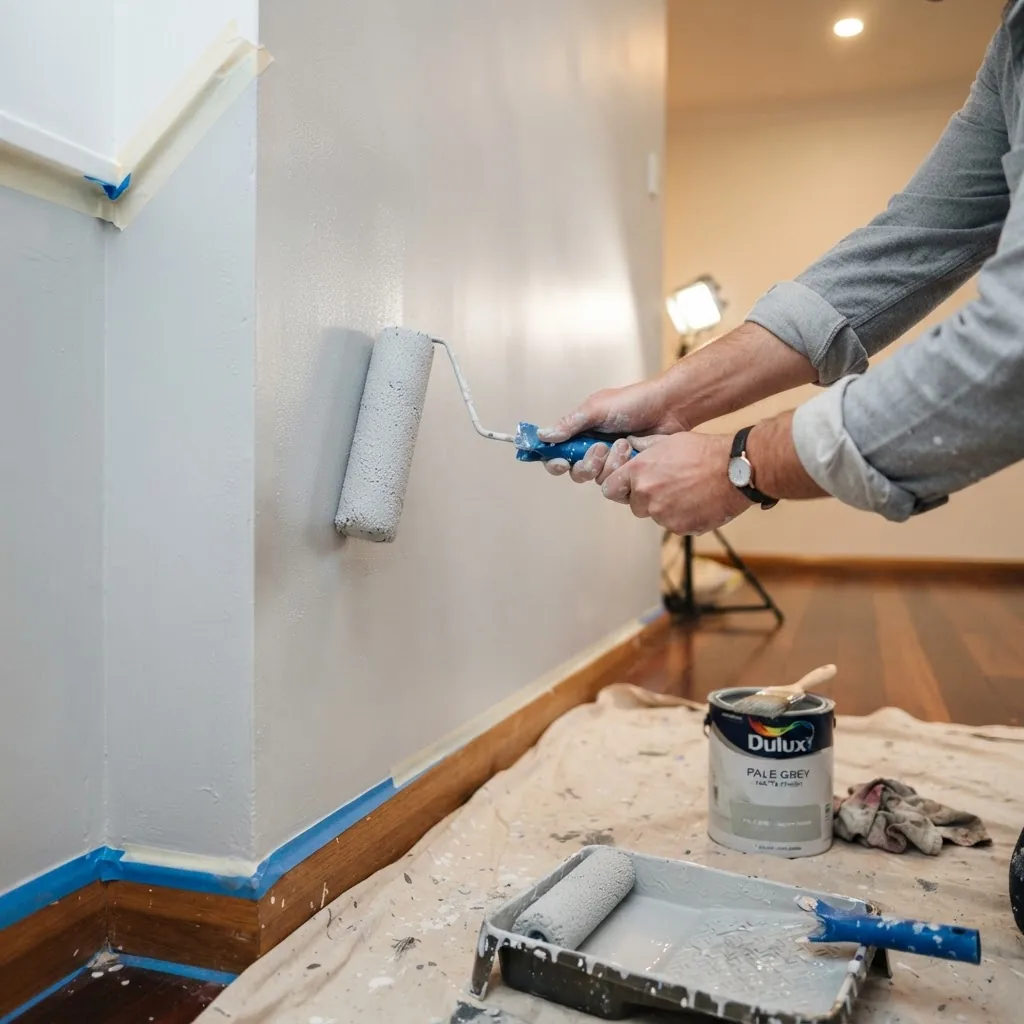
- Measure and order paint: Calculate surface area: walls m² = perimeter × height − windows/doors area (~2m² per large window). For a 4×4m lounge with 2.4m ceilings: perimeter 16m × 2.4m = 38.4m². Allow 10% waste => 42m². One 10L of mid-range emulsion covers ~70m² per coat; buy two coats worth: ~10L is sufficient for two coats in most cases. When in doubt, buy a little extra sample 1L for touch-ups.
- Prep surfaces properly: Fill holes with lightweight filler, sand with 120–180 grit, wipe with tack cloth. Prime repaired patches and porous plaster with a primer-sealer; primer drying time typically 2–4 hours at 20°C. If changing from a dark to light colour, apply an opaque primer or a tinted undercoat.
- Protect and tape: Apply painter’s tape to skirting, window frames and ceiling lines; lay drop cloths and secure with tape. Remove switch plates and outlet covers for a clean finish.
- Cut in edges first: Use a 25mm angled sash brush to cut a 50mm band along ceilings, corners and trim before rolling. Work in 1.8–2m sections to keep edges wet for rolling.
- Roll with technique: Use a 9–12mm nap roller for most walls; 12mm on slightly textured walls. Load roller evenly, apply in a “W” pattern and fill in without overworking; allow 3–4 hours drying between coats at 20°C and 50% RH. If humidity is higher, extend drying to 6 hours.
- Apply two thin coats: Two thin coats outperform one thick coat. Aim for full coverage on coat two; avoid over-rolling when the paint starts to skin over (usually after 10–15 minutes exposure to air).
- Edge and touch-up: After final coat cures 4–6 hours, remove painter’s tape at 45° angle. Touch up any pinholes within 24 hours using a small sash brush and leftover paint.
- Clean and cure: Wait 48 hours before moving furniture back; full cure often takes 7–14 days—avoid heavy cleaning during the first week.
- Use a visualiser app: Walkthrough: open a paint brand visualiser or a universal app; upload a photo of your lounge, mark boundaries and apply 3 test swatches. I recommend sampling 2–3 nearby shades and viewing them at 9am/3pm/8pm to capture light variance. This small test prevents costly repainting later.
- Case study (practical): I once helped a homeowner who painted a north-facing lounge a cool mid-blue and found it read icy at dusk. We repainted using the same hue but warmed it with a +2 Mired additive and paired it with warm wood tones, solving the problem without a full hue swap. Lesson: test, then warm/cool adjust before replacing the colour entirely.
Seasonal tip: for guided fall refreshes and painting schedules aligned with cooler weather, see seasonal inspiration on autumn decorating ideas.
Transition: once painted, integrate your new colour with furniture and accessories to complete the room.
Integrating Lounge Room Paint Colors with Furniture and Accessories
When the paint is your room’s foundation, furniture and accessories become the finishing language. Use proportion, texture and complementary hues to create balance.
Start with large items: sofas, rugs and media units. If you chose a saturated accent wall, keep the sofa neutral (soft grey or tan) and echo the accent with a cushion or throw. For neutral walls, use furniture as colour anchors—an armchair or rug in the accent tone brings the palette together.
For curated accessory ideas and finishing touches, build a layered plan: base layer (paint + floor), mid layer (furniture and rugs), top layer (art, cushions, plants). After styling you may want more accessory-specific ideas; explore the pillar guide for accessory pairings and styling directions. modern and unique room decor
Small accents matter: add curated little and small decorations — vases, candlesticks, trays — to pick up subtle undertones from the wall. little and small decorations
Transition: before you sign off and start rolling, read these commonly made mistakes and how to avoid them—learned from hands-on experience.
Common mistakes and how to avoid them
I’ve seen several repeat errors on site: here’s what went wrong and how I fixed it.
- Wrong light assessment: I once selected a cool grey for a north lounge and the space looked cold—fix: test swatches across the day and add warmer undertones if needed.
- Insufficient priming: I skipped primer on a patched wall and the final coat showed patches—fix: always prime repairs and porous plaster with a sealer.
- Over-rolling the second coat: I overworked the second coat and caused streaking—fix: use two thin coats, keep roller loaded evenly and avoid reworking skinned paint.
- Ignoring finish trade-offs: I recommended matte in a family lounge; scuffs appeared quickly—fix: choose satin for durability where children and pets are active.
Practical checklist
- Measure walls and order 10% extra paint.
- Buy sample pots and paint 60×60cm test patches in 2 locations.
- Prime patched areas and allow 2–4 hours drying.
- Use 25mm sash brush + 9–12mm nap roller; apply two thin coats.
- Allow 48 hours before moving furniture; full cure 7–14 days.
- Keep 250–500mL of final paint for touch-ups and note the batch number.
When to call a professional
Hire a professional painter if you need plaster repairs >0.5m², complex wall textures, colour-matching across multiple rooms, or if timelines are tight (commercial deadlines). Professionals can also apply specialist finishes (venetian plaster, high-gloss lacquer) safely and faster.
Transition: final design integration and a few additional trust notes to finish.
Integrating Lounge Room Paint Colors with Furniture and Accessories
(This section expands practical styling advice focused on cohesion.) After painting, use these styling strategies for a magazine-ready lounge.
- Anchor with texture: A wool rug, linen sofa or woven basket read well against muted walls and add tactile interest.
- Metal finishes: Choose one metal tone (brass or black) to maintain clarity—mixing more than two tends to look busy.
- Repeat colours: Pull one accent colour through cushions, art and a small accessory to tie a room together visually.
- Scale coordination: Match the visual weight of furniture to wall colour: heavy dark walls need lighter or slimmer furniture silhouettes to avoid visual crowding.
For more accessory ideas and finishes that pair with the painted scheme, consult the full accessories guide on creating modern and unique room decor. modern and unique room decor
To complement paint with smaller accents, explore curated little and small decorations to add finishing touches without clutter. little and small decorations
Transition: a short list of mistakes to avoid will save time and paint.
Mistakes to Avoid When Choosing Lounge Room Paint Colors
- Choosing based on a single photo—always test on the real wall.
- Ignoring undertones—compare paint cards under your lighting.
- Going too dark in small rooms—use reflective trims or lighter ceilings.
- Skipping primer when changing from dark to light—expect more coats otherwise.
- Not accounting for finish—matte hides imperfections but mattes less washable.
Transition: final recap and inspiration to help you start confidently.
Conclusion and Final Colour Inspiration for Your Lounge Room
You now have a structured plan: assess light and scale, test swatches, pick finishes and apply two thin coats with correct tools. Modern lounge room colour ideas tilt toward nature-inspired neutrals, muted pastels and one curated accent—paint chosen this way becomes the backbone of your living space.
Quick inspiration: if you want a calm lounge choose muted sage + warm greige; for drama try deep slate blue + soft chalk trims; for sociable warmth choose terracotta accents on a warm beige base. For authoritative trend context consult the PANTONE Color Institute 2024 overview. PANTONE Color Institute
Sustainable choice note: prefer low-VOC or water-based emulsions, and verify standards with national regulators—see environmental guidance on indoor VOCs. EPA indoor air quality guidance
Ready to start? Gather your test pots, pick one palette above and apply a 60×60cm sample in two locations. If you want a tailored plan, save this guide and follow the checklist before buying paint. Final CTA: begin by choosing one test colour and ordering sample pots today.