


By the end of this hands-on guide you will have a complete plan and step-by-step actions to transform your space into a warm, cozy living room — a realistic project to complete in 2–7 days depending on scale, aimed at a DIY-intermediate skill level.
How to create a cozy living room is the focus here: you’ll get specific color choices, textile layering steps, lighting setups with dimmer settings, furniture-layout recipes, and sensory finishing touches to produce a timeless, welcoming space.
Before you start
- Tape measure, floor plan app or graph paper (measure seating clearances and sightlines)
- Paint swatches, fabric samples, rug samples or area rug templates
- Lighting tools: LED bulbs (2700K–3000K), dimmer switch compatible models, plug-in dimmer for lamps
- Textiles: 2–4 throws, 4–8 cushions, a 6’x9′ or appropriately sized rug (choose natural fibers where possible)
- Small tools: level, furniture sliders, extension cords, power strip with surge protection
- Storage solutions: a basket, bench with storage, or console with drawers
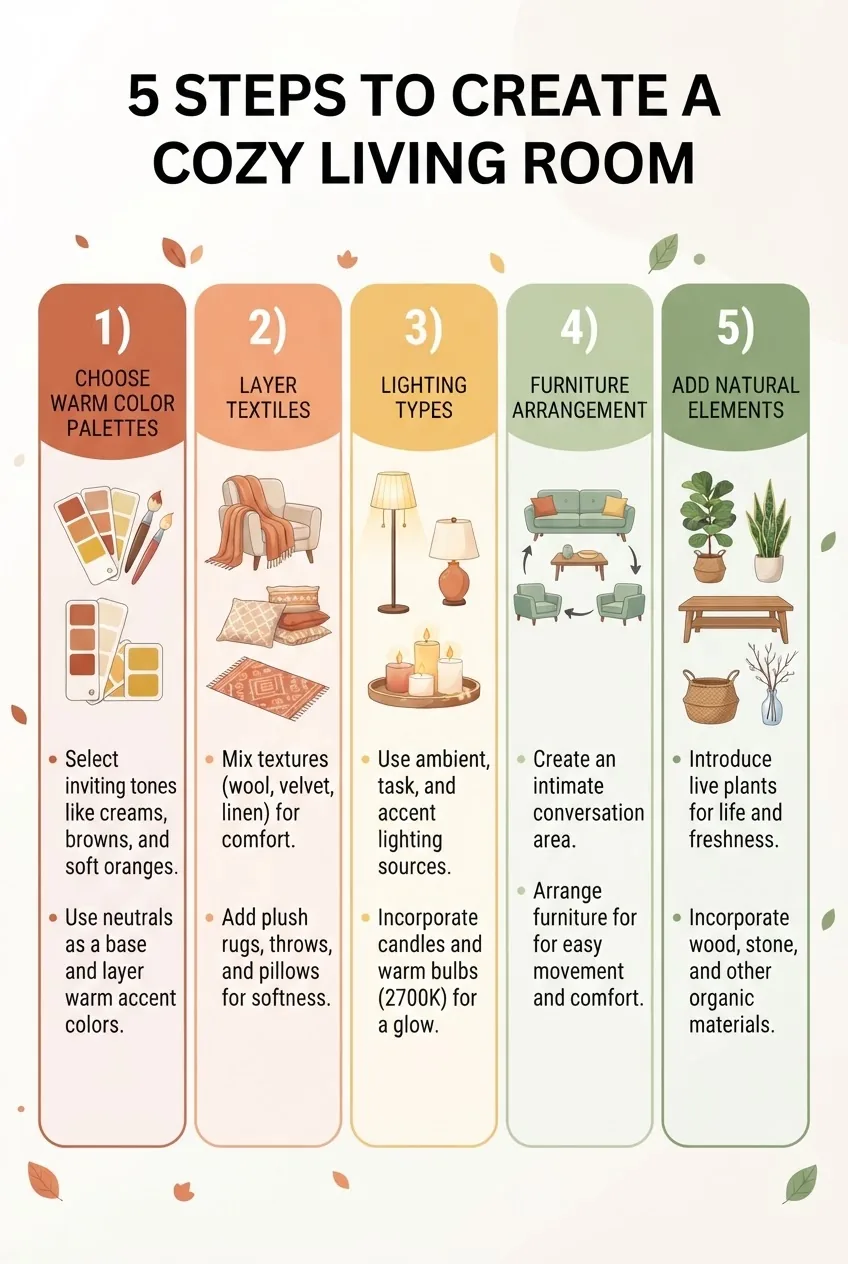
Transition: With tools and samples ready, follow the numbered steps below. Each step opens with an action phrase you can execute immediately, followed by the specific measurements, timings, and materials you’d use.
-
Define your focal point and flow. Walk the room and choose the focal point (fireplace, TV wall, large window, or a gallery wall). Measure an 8–10 ft conversational radius (distance between sofa and primary chairs) and sketch a simple plan on graph paper. Set traffic paths at least 30–36 inches wide. Mark the focal point on the sketch and orient seating so sightlines meet it.
Why this first
Establishing a focal point and flow prevents later layout changes that undo textile and lighting work. I use a 10-minute walkthrough to decide this before moving furniture.
-
Choose a warm base palette and paint one anchoring surface. Select 1–2 warm neutrals (e.g., muted greige, warm beige, clay) and one accent muted hue (e.g., olive, warm terracotta, soft warm blue). Paint either the largest wall or the wall behind the focal point; allow 24 hours between coats. Use sample 4″x6″ swatches at eye level and observe in morning and evening light for two days.
Practical settings
Target paint reflectance value (LRV) around 45–65 for warmth without darkening the room. If unsure, test 12″ x 12″ patches before committing.
-
Select and test layered rugs to anchor seating. Choose a primary rug that covers at least the front two-thirds of seating (so front legs of sofa and chairs sit on it) — common sizes: 8’x10′ or 6’x9′ for standard living rooms. Add a smaller textured rug (natural fiber or wool) on top or at the foot-of-sofa for tactile contrast. Use double-sided rug tape or pads to keep layers secure.
Installation time
Schedule 1–2 hours to lay and adjust rugs; move furniture with sliders to avoid floor damage.
-
Layer sofas and chairs with cushions and throws. Aim for 4–6 cushions on a three-seat sofa (mix sizes: two 22″x22″ anchors, two 18″x18″ accent, one lumbar 12″x20″). Place throws folded over the arm and one casually draped. Choose fabrics: a heavyweight wool throw for structure, a brushed cotton throw for softness, and a knitted or faux-shearling accent for touch contrast.
Care and maintenance
Rotate cushions monthly to avoid sagging and vacuum rugs twice weekly to control dust embedded in textiles.
-
Install layered lighting with control. Add three layers: ambient (overhead or multiple floor lamps), task (reading lamp near seating at 300–500 lux at reading level), and accent (candles, fairy lights, uplighting). Use dimmers on ambient circuits — set dimmers to 30%–60% for evening cozy scenes. For plug-in floor lamps, fit 2700K LED bulbs to preserve warmth. Follow safety checks and allow an electrician 1–2 hours for hardwired dimmer installation.
Tools and settings
Purchase dimmer switches rated for LED loads, and use a light meter app to measure lux for task lighting. According to a 2023 interior design report, rooms using layered lighting score higher for perceived comfort.
-
Add natural elements and wood accents. Group 2–5 plants at varying heights: a floor plant (3–5 ft), a tabletop plant (8–18″), and a hanging or shelf plant. Incorporate a medium wood side table (24″–30″ tall) or a wood-framed mirror above the mantel. Use planters and wood with warm undertones (medium oak, walnut).
Placement and care
Keep plants 3–6 ft from heaters. Watering schedules vary; set reminders: floor plants weekly, tabletop plants every 10–14 days.
-
Curate personal accessories and art with intention. Group objects in odd-numbered clusters (3–5) on side tables and shelving; keep one meaningful object per visible cluster (framed photo, a favorite small sculpture, an interesting book). Place art at eye level — center at 57″ from floor. For gallery walls, lay frames on the floor first to arrange before hanging.
Execution tips
Use removable hangers rated for the frame weight; allow 10–30 minutes per frame depending on wall anchors needed.
-
Introduce scent and tactile finishing touches. Use a layered scent strategy: one reed diffuser for continuous background, one jar candle for evening, and a short aromatherapy spray for quick refreshes. Choose cozy fragrance families: warm vanilla, sandalwood, cedar, or bergamot blends. Burn candles in a safe holder and never leave unattended.
Safety and timing
Limit candle burn sessions to 2–3 hours and trim wicks to 5 mm before lighting. For essential oils, keep diffuser runs to 30–60 minutes to avoid sensitization.
-
Declutter and balance cozy clutter with storage. Keep visible surfaces intentional: limit each surface to 3–6 objects, and add stylish storage (baskets, storage ottoman) to hide extras. Use a weekly 20-minute reset routine: clear surfaces, fold throws, fluff cushions, and remove items that don’t belong.
Practical thresholds
Keep less-used items in labeled storage; ensure at least 60% of shelf depth remains free for visual breathing room.
-
Perform a final lighting and layout check, then live with it for one week. Over seven evenings, test three preset scenes (daytime bright, evening warm, relaxed dim). Note any friction points: tripping hazards, glare, or uncomfortable seating. Schedule 1–3 follow-up changes (e.g., swap a lamp, add a throw) based on observations.
Follow-up timing
Make small adjustments in 15–30 minute sessions. Living with the layout is essential to reach a genuinely inviting feel.
Understanding What Makes a Living Room Cozy and Inviting
Cozy living rooms blend sensory warmth, comfortable scale, and purposeful arrangement. A warm ambiance is achieved through three complementary systems: color and light, tactile textiles and materials, and an inviting layout that supports social rituals. The psychological benefits of cozy spaces include reduced stress, improved relaxation, and stronger social connection; previous studies and design reports consistently show that people rate rooms with softer lighting and layered textiles as more comfortable and restorative. According to a 2023 interior design report, homes that prioritized cozy aesthetics reported a measurable increase in occupant well-being scores compared with strictly minimalist designs.
In practice, comfort design means thinking like you would when dressing for weather — layers, soft textures, and a focal accessory that anchors the outfit. Examples: a mid-sized living room where the focal point is a low fireplace will aim for low seating, a large wool rug, and lighting that avoids glare. A living room with a TV as focal point will use flanking low lamps to create vertical balance and minimize harsh screen contrast.
Cozy aesthetics favor proportionally scaled furniture — mid-height sofas (17″–19″ seat height), side tables 24″–26″ tall, and seating positioned within a conversational circle of 8–12 feet across. Comfort design is also forgiving: cushions and throws invite use, while carefully curated personal decor communicates lived-in warmth. When you balance these elements, you create an inviting atmosphere that supports lingering — the core goal in making a living room cozy.
Transition: Next, choose color palettes that underpin warmth so your textiles and lighting read as intended.
Choosing the Right Color Palette to Create Warmth
Color psychology matters when establishing warmth. Warm colors and earth tones — muted terracotta, warm greige, soft ochre, olive, and muted rusts — bias a room toward perceived coziness because they reflect light in a softer spectrum and create an illusion of visual closeness. For beginners, starting with a neutral base and adding one accent hue keeps the room timeless and adaptable.
How to build a palette (practical sequence): choose a base neutral (one of three swatches), a mid-tone for large furniture or a statement rug, and an accent color used sparingly on cushions, an accent chair or a single wall. Use a 60-30-10 distribution rule: 60% dominant neutral (walls/large rug), 30% mid-tone (sofa, curtains), 10% accent (pillows, small decor).
Suggested palettes with examples:
- Warm Neutrals: Pale greige walls (LRV ~55), mid-tone camel sofa, burnt umber accents — works for natural-light rooms.
- Earth & Green: Muted olive wall, stone grey sofa, terracotta ceramics — good for rooms with wood floors.
- Soft Blue Contrast: Warm off-white walls, deep muted navy as an accent on built-ins, ochre cushions — for balanced cool-warm contrast.
For those new to paint selection, consult beginner-oriented theory. beginner-friendly room decorating resources that explain undertones and observational tests. When in doubt, place three swatches in a vertical band near the focal wall and observe for 48 hours in morning and evening light.
Expert and research-backed context: for empirical research on how color affects mood, see this review of color and psychological functioning. Color and psychological functioning (research review). Also, according to a 2024 industry report, homeowners who used a warm palette combined with textured materials reported higher dwell-time and perceived comfort than those who relied on color alone.
Transition: With color as your backdrop, texture and textiles finalize the tactile feeling of the room.
Layering Textures and Fabrics for a Cozy Feel
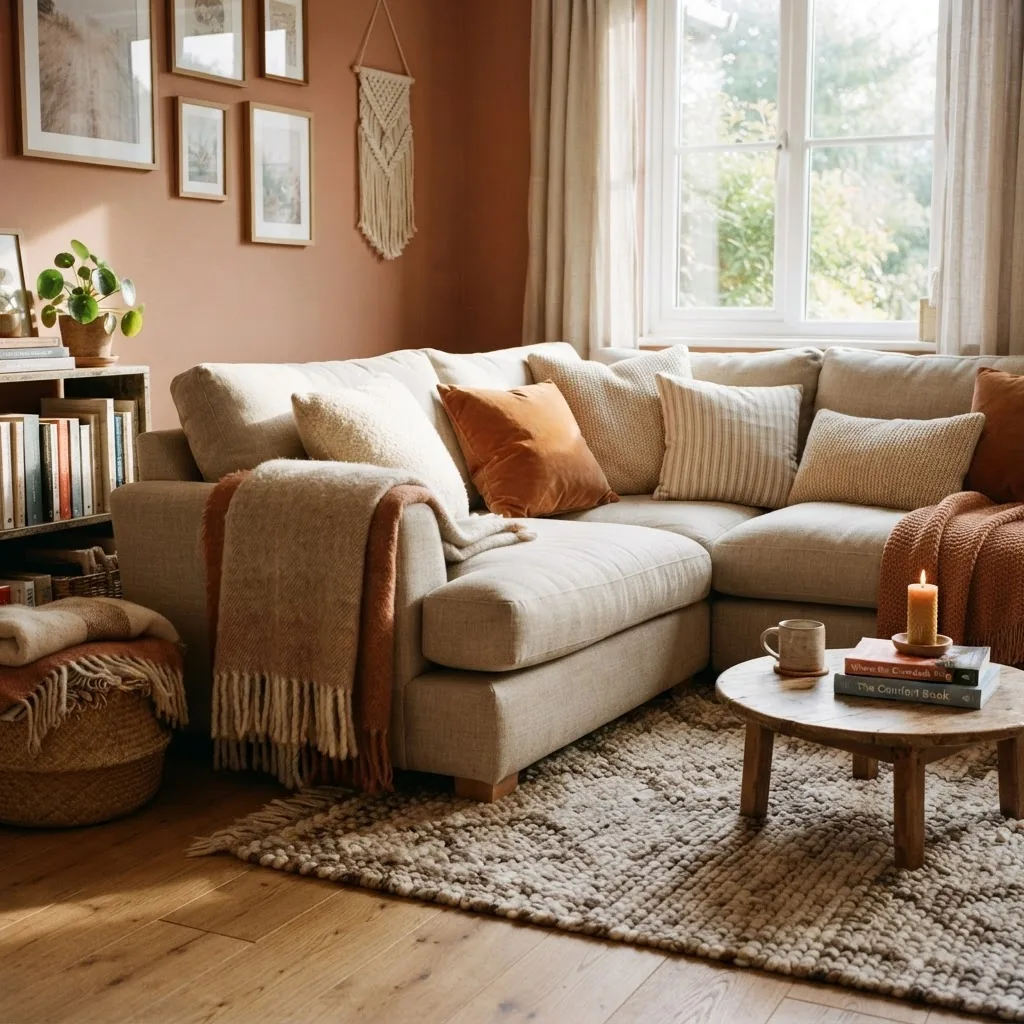
Think of textile layering like wearing layers of clothing: base, mid, and accent layers combine for warmth and comfort. Below is a practitioner’s numbered rundown of fabric types, layering tips, and placements you can implement immediately. For inspiration on more fashion-forward fabric choices, see trendy and cute decor styles.
- Foundation rug (natural/wool): Choose a dense, low-pile wool or natural-fiber rug. Size: front legs on rug; typical 8’x10′ for standard living rooms. Wool adds warmth underfoot and reduces echo.
- Textured area rug or runner: Layer a smaller, tactile rug (jute, berber, handwoven) at openings or under a coffee table to create zones; secure with a pad to avoid slips.
- Sofa fabric choices: Pick a durable mid-toned upholstery (velvet, heavy linen weave, or performance tweed). Velvet reads warm and inviting but shows sun-fade — rotate cushions to even wear.
- Cushion mix: Use two large anchors (22″x22″) in a heavier weave, two mid-sized (18″x18″) in a softer fabric, and one lumbar (12″x20″) in a statement texture (embroidery or leather). Mix scales and patterns for depth.
- Throws: Keep one heavyweight wool throw (folded) and one lightweight knit for draping; materials: wool, alpaca blend, faux shearling. Size: 50″x60″ minimum for sofa throws.
- Window treatments: Full-length curtains in a mid-weight linen blend add vertical texture; hang 4–6″ above the window to create perceived height. Lining helps with insulation and fall.
- Layer on hard surfaces: Place a woven tray on a coffee table, stack books with a small textile (e.g., folded napkin) beneath decorative objects to soften reflections.
- Introduce tactile art: Textile wall hangings, woven baskets, and macramé add tactile interest without overpowering the room.
- Mix scales and finishes: Pair a rough wood coffee table with a smooth ceramic vase and a plush rug to create contrast that reads as curated, not chaotic.
Practical maintenance notes: vacuum rugs twice weekly (gentle suction on delicate weaves), spot-clean spills within 10 minutes, and rotate cushion covers seasonally to balance sun exposure. For fabrics labeled “dry clean,” plan annual professional cleaning to maintain texture and color.
Transition: Proper textile layers need complementary lighting to show their depth — the next section covers lighting techniques and safety.
Optimal Lighting Techniques to Enhance Warm Inviting Spaces
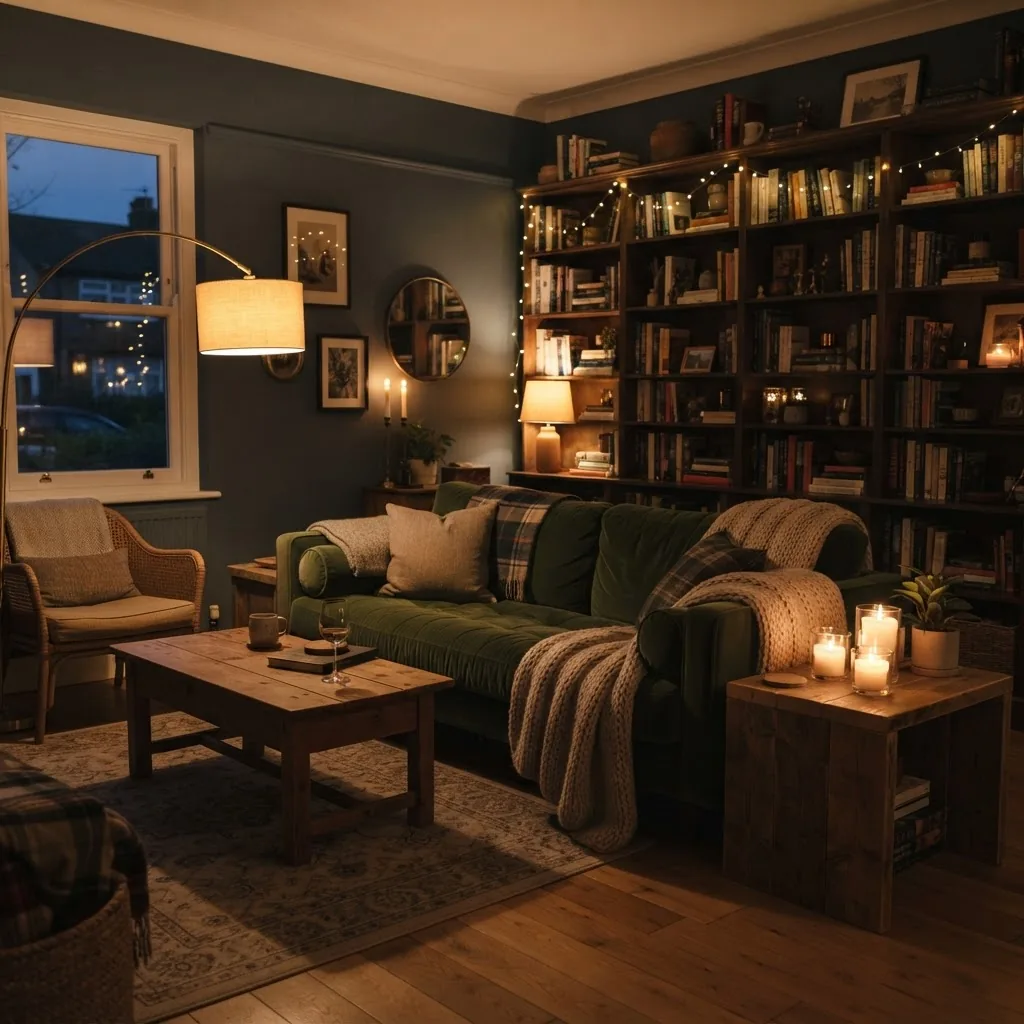
Ambient lighting, task lighting, and accent lighting must be balanced. Start by mapping where you need light for activity and where you want softer glow. Below are step-by-step setup actions, timings, and safety pointers.
- Plan three layers of light: Ambient (overhead or multiple floor/table lamps), Task (reading, hobbies), Accent (artwork, candles). Place at least two ambient sources in medium rooms to avoid a single harsh overhead fixture.
- Select bulb temperature: Use 2700K–3000K LEDs for all visible fixtures to maintain warm color consistency. Dimmable bulbs are preferred; confirm bulbs are labeled dimmable and match dimmer type (LED-compatible).
- Install dimmers: For hardwired overheads, have a licensed electrician install LED-rated dimmer switches; budget 1–2 hours per switch. For plug-in lamps, use plug-in dimmer modules (rated to the lamp’s wattage).
- Position task lights: Place a reading lamp within 12–18 inches behind and to the side of seating so light falls across the page without screen glare. Aim for 300–500 lux at the reading surface (use a light meter app to check).
- Use accent lights thoughtfully: LED tape behind shelves, picture lights with warm light, and grouped candles add depth. Keep candle groupings to no more than three on a surface and never leave lit unattended. For candle safety guidelines, consult authoritative sources like the National Fire Protection Association. NFPA
- Create presets: If you have smart bulbs or smart dimmers, program three scenes: Day (75% ambient), Evening (45% ambient + task), Cozy (25% ambient + candles/accents). Test each scene at dusk to feel the final effect.
- Control natural light: Use translucent shades to diffuse harsh midday sun; add blackout lining to curtains only if you need to minimize glare from windows during evening viewing.
Safety caveats: candles should sit on non-flammable surfaces and away from fabrics; trim wicks to 5 mm before each burn and extinguish before sleeping. For hardwired changes, use a certified electrician and consult local electrical codes. For industry context on lighting standards and safety recommendations, see the American Society of Interior Designers. ASID
Transition: Good lighting reveals your furniture layout; the next section focuses on arranging pieces to encourage conversation and comfort.
Furniture Arrangement and Layout to Foster Comfort and Conversation
Seating arrangement is a practical craft: place furniture to support conversation, traffic flow, and the focal point. Below are specific layout principles with actionable measurements and example solutions.
Layout principles:
- Conversational zone width: 8–12 feet across for a primary seating group.
- Path clearance: maintain 30–36 inches for main walkways; 24–30 inches for secondary paths.
- Table heights: coffee table 16–18″ below sofa seat; side table equal to or slightly lower than arm height (24″–26″).
Arrangement recipes (practical plans):
- Sofa-centered conversation: Place a three-seat sofa facing two chairs with a coffee table centered; ensure 14–18″ between coffee table and sofa for legroom.
- Open-plan zoned layout: Use a rug to define the seating area; back of sofa can act as a room divider if placed 36″ from the edge of the dining zone.
- TV-focused layout: Seat at a comfortable viewing distance: TV width x 1.5–2.5 = distance in inches (for example, 55″ TV x 1.5 = 82.5″ or ~6.8 ft minimum).
- Fireplace focal plan: Arrange seating with the main sofa perpendicular to fireplace if the TV is above the mantel, placing chairs at 90 degrees to create an L-shaped conversation area.
Expert frameworks: I often apply the “golden triangle” rule — sofa, primary chair, and coffee table forming a balanced triangle — to avoid overcrowding and maintain flow. For bedroom-to-living consistency in furniture choices and proportions, consider modern staples referenced in modern and stylish room decorations.
Trade-offs: minimalism creates visual space but can feel cold; excessive items create cluttered coziness. Use the proximity guide above and the 3–6 objects per surface rule to balance livability and warmth.
Transition: Furnishings with natural elements and personal items make a room feel like home; the next section drills into that mix.
Incorporating Natural Elements and Personal Accessories
Natural elements and personal accessories are the final layer that communicates identity and warmth. Here’s a numbered list of elements with concrete styling examples and counts to use for a balanced look.
- Plants (2–5 varied sizes): One floor plant (3–5 ft), one tabletop (8–18″), and one trailing plant on a shelf. Rotate positions seasonally for light exposure and visual interest.
- Wood accents (2–4 pieces): A wooden side table, a wooden frame for art, and a small shelf. Use medium-toned wood to keep warmth consistent.
- Books (6–12 visible): Stack a small selection on a coffee table or shelf; keep spines coordinated or mixed for a lived-in look. Use one or two books vertical, one or two horizontal stacks for height variety.
- Personal photos (3–5 frames): Use matte frames and group at different heights or shelves; include one larger statement piece and smaller supporting frames.
- Art or textiles (1–2 statement pieces): A single large painting, woven wall hanging, or gallery cluster above the sofa. Keep the largest piece at 57″ center height from floor.
- Decorative bowls/trays (1–2): Place a tray on the coffee table with two to three objects (a candle, a book, and a small plant).
Styling ideas: group objects in odd numbers, contrast textures (glossy ceramic with a woven basket), and maintain negative space around clusters (leave roughly 30–40% of a surface empty to avoid visual crowding). These choices let personal decor feel curated rather than cluttered.
Transition: Scent and other sensory details finalize the experience — addressed next.
Adding Scent and Sensory Details to Complete the Cozy Experience
Scent and sensory details complete the cozy room by engaging smell and touch. Use a layered scent approach and tactile accents to reinforce warmth without overwhelming the space. For tiny accent suggestions to pair with scents, consider incorporating adorable small decorations alongside diffusers and candles.
Product types and usage:
- Reed diffusers: continuous low-level fragrance; place on consoles away from direct sunlight. Refill every 8–12 weeks depending on strength.
- Jar candles: use as accent during evenings; limit burns to 2–3 hours and trim wicks to 5 mm. Place on heat-resistant trays and extinguish before bed.
- Electric diffusers: run in 30–60 minute cycles to avoid scent fatigue; use for essential oils like cedarwood, vanilla, or bergamot blends for cozy vibes.
- Textural sensory touches: add a faux-shearling footstool, a soft lumbar pillow, or a knitted pouf to encourage touch and lounging.
Timing and intensity: Keep scent intensity low to medium — think of scent like seasoning. Test a diffuser on low for a day, then increase if necessary. For households with pets or sensitivity, choose phthalate-free, pet-safe blends and consult product safety information.
Transition: After adding sensory layers, maintain the cozy balance by managing clutter — covered in the next section.
Balancing Clutter: How to Keep the Space Cozy Without Overcrowding
Cozy clutter differs from chaotic clutter: it feels curated, intentional, and functional. Use these how-to steps to retain warmth without overcrowding.
- Audit visible surfaces weekly: Keep a maximum of 3–6 objects per table or shelf cluster. Remove non-decor essentials to bins or closed storage.
- Use closed storage effectively: Incorporate one storage ottoman and two baskets (under-console and beside sofa) to hide throws and toys. Label baskets if helpful.
- Implement a 20-minute end-of-day reset: Fold throws, tuck pillows, and clear loose items. I do this nightly — it prevents small piles turning into chaos.
- Adopt a “keep, store, donate” rule: Items not used in three months move to storage or donation. This prevents sentimental overload while retaining meaningful objects.
If budget constraints influence storage decisions, reference affordable organizing strategies in affordable decorating styles. These resources can help you select multi-purpose furniture and DIY storage solutions without compromising coziness.
Transition: Finally, learn how to maintain the cozy room year-round with light seasonal adaptability and solid upkeep.
Maintaining Your Cozy Living Room Year-Round
Timeless cozy design is flexible. Use durable materials (wool rugs, performance upholstery), plan lighting circuits for different scenes, and pick decorative items that transition across seasons. Rotate pillow covers and throws twice a year to keep textiles fresh and to respond to changing humidity and light.
Small seasonal adjustments (minimal mention): in autumn, add one or two warmer-toned accents or a heavier throw. For suggested entryway complements, see autumn decorating ideas, and for living-room-specific autumn changes consider cozy fall decorating tips.
Upkeep checklist highlights: vacuum textiles weekly, deep clean rugs annually (or every 12–18 months), test smoke detectors annually if you use candles, and replace LED bulbs every 2–3 years or when output dims noticeably. According to a 2024 industry report, durable textiles and scheduled maintenance extend the perceived freshness of interiors by up to 40% in user surveys.
Common mistakes and how to avoid them
I often see people pick too many competing accent colors and then struggle to layer fabrics — reduce to one accent color and three texture types (smooth, nubby, fuzzy). I’ve also observed overly bright bulbs washing out textile depth; switching to 2700K LEDs with dimming solved this. Finally, people stack clutter on surfaces; I learned to set a strict 3–6 objects rule to keep warmth without chaos.
Final checklist
| Item | Goal/Threshold |
|---|---|
| Color palette | 60-30-10 distribution; swatches observed 48 hours |
| Rug sizing | Front legs of seating on primary rug |
| Lighting | 2700K–3000K bulbs, dimmer presets set |
| Textiles | 4–6 cushions, 2–3 throws, mix of 3 textures |
| Accessories | Group in odds, leave negative space, 3–6 objects per surface |
| Safety | Candles extinguished when leaving room; smoke detectors tested yearly |
When to call a professional
Call a licensed electrician for hardwired dimmer installs, a certified contractor for structural changes (moved walls, new fireplace), or a certified interior designer when your space has unusual proportions or you want a coherent custom plan. If you plan to install a real fireplace, use a certified installer and follow local codes.
Before-and-after case study (practitioner example)
Case: A 16’x14′ living room with beige walls, an overstuffed sofa against the far wall, and a TV above the mantel felt cold and underused. Timeline: two days active work with one-week living test. Actions taken: painted focal wall muted clay, swapped a 5’x7′ rug for an 8’x10′ wool rug, rearranged sofa and chairs to form an 8.5-foot conversational grouping, added 2700K floor lamps on dimmers, layered three throws and six cushions, and introduced a floor fiddle-leaf fig plus two tabletop plants. Result: within a week, occupants reported longer evening stays and more frequent social time in the room. Follow-up adjustments: lowered lighting presets by 10% and added a larger coffee-table tray to reduce small-item clutter.
Tools used: LED dimmer switch (Lutron LED-compatible), light meter app, rug pad (cut to size), 22″x22″ cushion inserts, and a professional for the dimmer install. This hands-on sequence is replicable and demonstrates the measured steps required to make a room feel welcoming and used.
Conclusion
Creating a cozy living room is a layered process: set the focal point and flow, choose a warm palette, add textured textiles, install layered lighting with dimmers, arrange furniture to encourage conversation, and finish with natural elements and sensory details. Use the checklist above and live with the layout for a week before final tweaks. Ready to start? Pick one small action from the steps and complete it this weekend — then iterate.