


By the end you will have a practical, room-by-room plan and two finished DIY projects that show how to refresh a home for under $200 per room; this guide assumes beginner to intermediate DIY skill and about 8–20 hours spread across 1–2 weekends. Read on for hands-on, step-by-step home decorating ideas on a budget that emphasize thrift, upcycling and durable cost choices.
Introduction to Home Decorating Ideas on a Budget
This hands-on guide gives you a clear roadmap for inexpensive home updates: planning, sourcing, quick DIYs and styling rules you can apply across living areas. It blends inspiration with exact quantities, typical price ranges, and sourcing hacks so you can act immediately. According to a 2024 industry report from a major home renovation survey, homeowners prioritized small-budget cosmetic upgrades over full remodels, showing demand for affordable home decor ideas and inexpensive home decor ideas that deliver high perceived value.
Value proposition: follow the numbered steps below and you’ll create cohesive, affordable looks that read like curated design rather than “budget”. I’ll show cost breakdowns, safety and durability trade-offs, and how to choose paint and textiles for long-term style.
Next: practical planning so your limited dollars stretch the furthest.
Planning Your Budget-Friendly Home Decorating Project
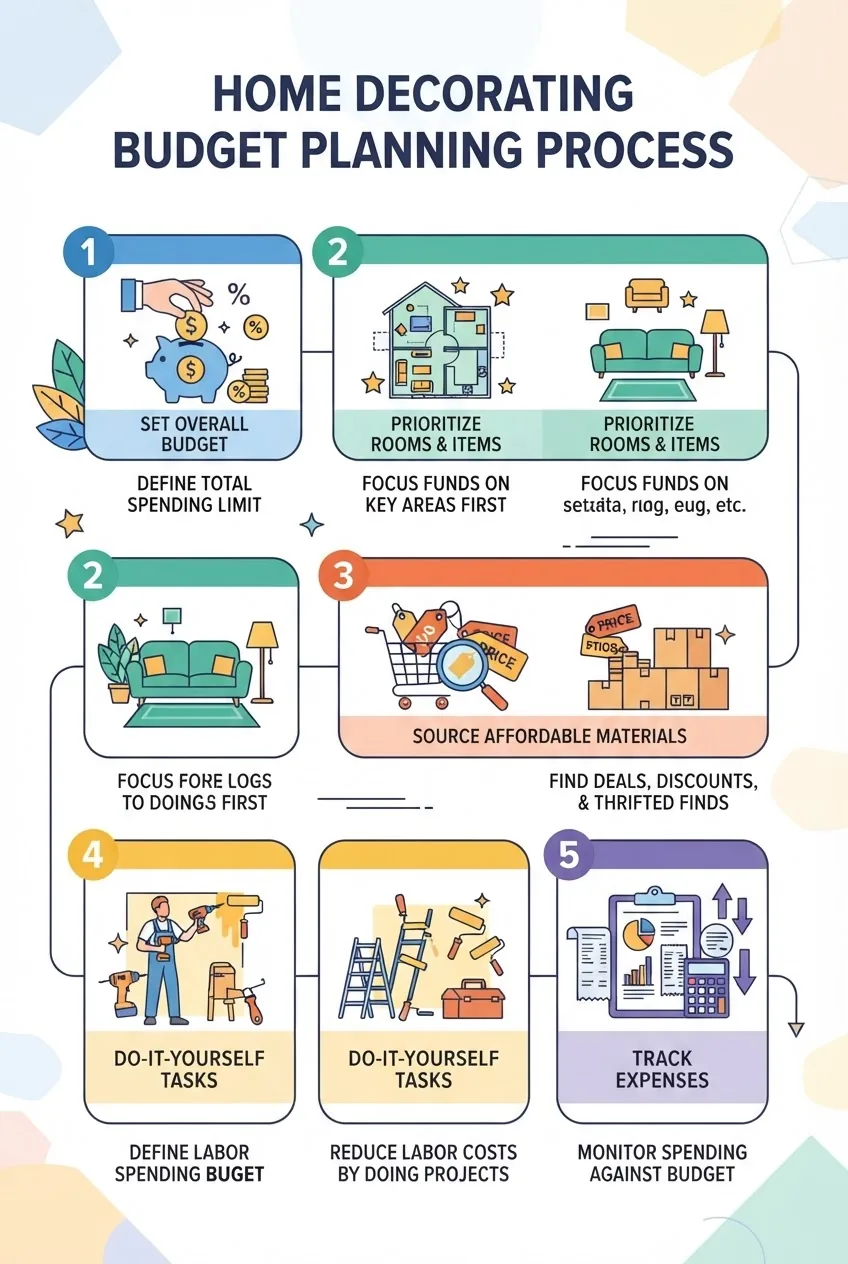
Good results start with a clear plan. Use the steps below as your project skeleton: set a hard total budget, rank rooms and items, build a simple cost-tracker, and pick 2 DIY tasks you can finish in a weekend. For budgeting guidance, consult official consumer budgeting advice from the Consumer Financial Protection Bureau: consumer budgeting guidelines.
-
Set a realistic overall budget and time frame.
Decide a total that you will not exceed. Example: $600 total for a two-room refresh (living room + bedroom) equals roughly $300 per room. Break that into categories: paint & supplies (30%), textiles & soft furnishings (25%), lighting & small furniture (25%), decor & plants (10%), contingency (10%). Track in a simple spreadsheet or notebook. According to a 2023 U.S. Consumer Budget Survey from a government source, small household spending on non-essentials rose as DIY interest increased—plan accordingly.
-
Prioritize rooms and high-impact items.
Rank rooms by usage and visibility. High-impact, low-cost items: paint an accent wall ($25–$40 per gallon), swap old lighting ($30–$120), update throw pillows ($15–$40 each). Prioritize one focal point per room (e.g., wall art, rug, or a lighting upgrade) and leave secondary items for later.
-
Map out sourcing and timeline: thrift, discount, and DIY mix.
Decide how much you’ll buy new vs. secondhand vs. DIY. Example timeline: Weekend 1 — painting and lighting; Weekend 2 — soft furnishings, styling, and small upcycles. For safety and budgeting, consult government consumer safety advice at consumer budgeting guidelines.
-
Create a simple cost tracker and contingency plan.
Use a table with columns: Item, Source, Estimated cost, Actual cost, Notes. Keep a 10% contingency. Record shipping or thrift restoration costs to compare true price-per-item. If a piece requires repair, add estimated repair time (e.g., 2–3 hours sanding/priming) and materials ($8–$20).
-
Decide on a cohesive affordable style and palette.
Pick 1–2 primary colors and 1 accent. Neutrals + one saturated accent create depth at low cost. Use affordable color schemes and inexpensive paint techniques—like a single accent wall or painted trim—to make a big visual change for $25–$80 per room.
Quick planning transition: with priorities set, move into specific room ideas and where to allocate money and effort.
Affordable Home Decor Ideas for Every Room
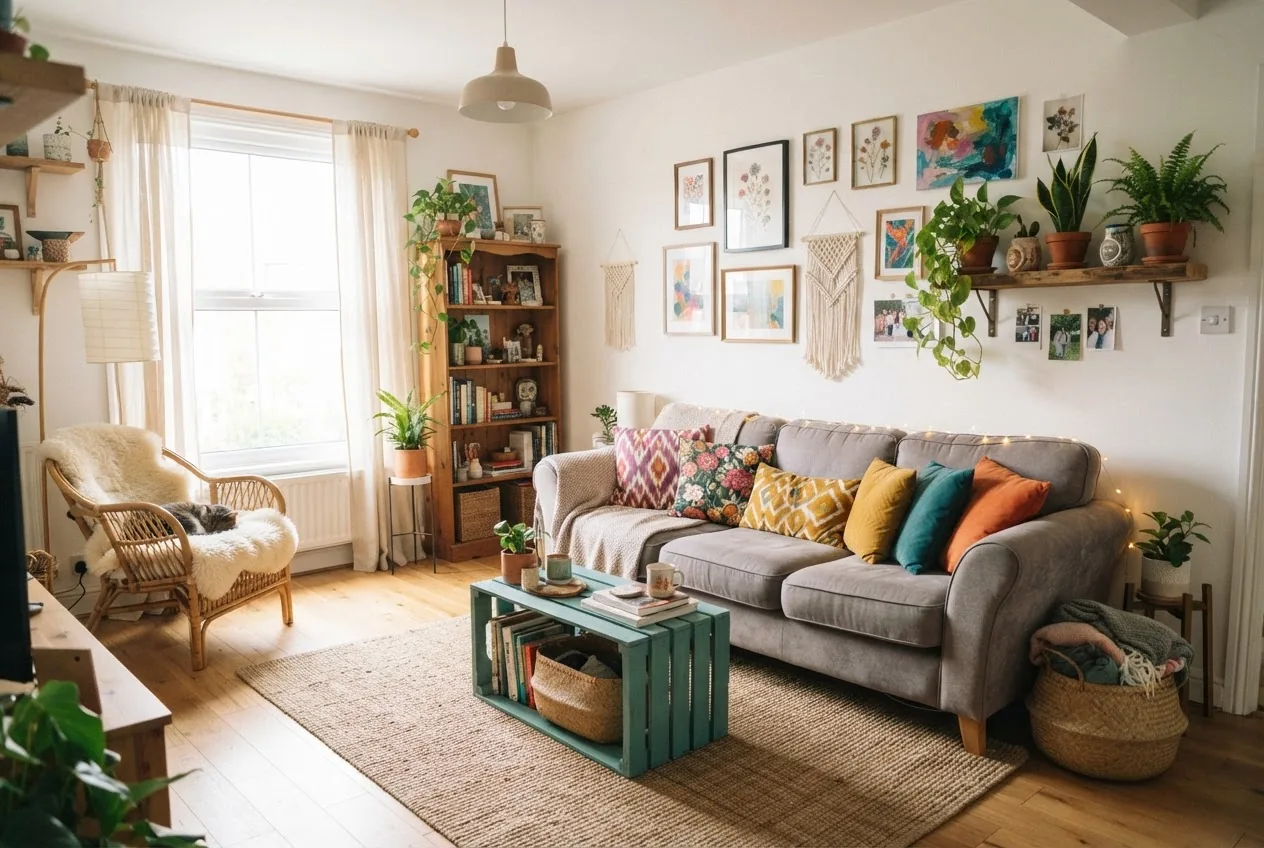
Below are targeted, inexpensive house decorating ideas by room. Each entry lists typical costs and quick wins you can finish in a weekend.
-
Living room
Ideas:
- Paint one wall or the ceiling around a focal point — cost: $25–$60 per gallon; one accent wall typically uses 1 gallon.
- Replace or rewire lamps with energy-efficient LED bulbs ($5 each) and dimmer switches ($15–$40) for mood lighting.
- Reupholster or recover an old side chair using $20–$40 of fabric and basic tools—see the DIY section for step-by-step.
- Layer inexpensive rugs: use a small patterned runner ($25) under a neutral indoor rug ($60) for texture.
Ideas Home Accessories Guide for Modern and Unique Room Decor
-
Bedroom
- Update bedding with a neutral duvet + two accent pillow covers ($25–$60 total).
- Hang a simple gallery of thrifted frames and printed photos for under $30.
- Swap hardware on dressers for $2–$6 per pull for a modern lift.
- modern and stylish bedroom decorations
-
Kitchen
- Open shelves with matched baskets ($10–$30 each) create consistent texture and storage.
- Peel-and-stick backsplash tiles can refresh a space for $40–$120 and are renter-friendly.
- Swap a single pendant light over a prep area ($40–$90).
- Farmhouse Kitchen Decor Guide for Vintage and Rustic Styling
-
Bathroom
- New shower curtain, 2 matching towels and a small plant — budget: $40–$80.
- Replace mirror or add a frame to an existing mirror for $15–$60.
- Refinish grout or use grout pens—cost $10–$25; saves on tile replacement.
-
Entryway and Hall
- Add a runner ($30–$80) and wall hooks (set $10–$30) to make the space functional and styled.
- DIY a repurposed console from a thrift table for $40–$90.
- Example project: Transform an entry for under $100 by painting, adding hooks, and styling with thrifted baskets.
-
Small spaces (nooks, home office)
- Use vertical shelving, pegboards ($12–$25), and multi-use furniture to maximize style and utility.
- Brighten with a task lamp ($20–$40) and inexpensive wall art or printable posters.
- adorable little decorations
-
Seasonal touches
For occasional seasonal decorating ideas, reuse core pieces and add small accents: throws, wreaths, or printable art—keep budget under $30 per season.
-
Living room (cozy fall upgrade)
If you want a seasonal living room refresh with layered textures and warm lighting, you can do a cozy fall decorating tips set for $80–$150.
-
Accent projects with modern finishes
Choose one modern finish to echo across rooms—matte black hardware, brass knobs, or wooden accents. Small hardware swaps ($2–$8 each) multiply perceived costliness.
Stylish Personalized Home Accessories Guide for Unique Room Decor
Transition: practical, hands-on DIY examples and upcycling methods next — detailed steps and exact materials follow.
DIY and Upcycling Ideas to Save Money
DIY and repurposing are at the heart of cheap decorating ideas that look bespoke. Below are step-by-step mini projects, including tools, safety notes, and an example bedroom renovation case study.
-
Upcycle a wooden chair (Budget: $25–$45; Time: 2–4 hours)
Materials: 1/2 pint chalk paint ($8), 120-grit sandpaper ($3), clear wax or satin water-based varnish ($10), foam brush ($2), drop cloth. Steps:
- Prep and sand: Remove loose finish and sand key areas (5–10 minutes per surface) to ensure paint adhesion.
- Prime if needed: If bare wood, use a shellac-based primer ($6) for tannin bleed protection.
- Paint two thin coats: Allow 45 minutes dry time between coats for chalk paint; total paint used: ~0.25 pint.
- Seal with wax or varnish: Apply 1 light coat and buff after 30 minutes to protect high-use areas.
Outcome: A durable, styled accent chair for $25–$45. For bedroom-specific renovation ideas see affordable and DIY bedroom renovations.
-
Paint an accent wall the smart way (Budget: $25–$80; Time: 4–6 hours)
Materials: 1 gallon paint for large walls ($25–$45 for economy latex), painter’s tape ($6), 9″ roller + tray ($12), 2” angled brush ($6). Steps:
- Measure and buy: Measure wall area (ft²) — one gallon covers ~350–400 ft²; buy 1 gallon for walls up to 350 ft². Leave a 10% margin.
- Prep: Clean, patch holes with spackle (1–2 hours including drying for small holes).
- Paint edges, then roll: Cut edges with brush (15–30 minutes), roll two coats (45–60 minutes drying between coats).
Tip: use a sample pot for a small focal wall to test color under your room’s light before committing to a full gallon.
-
Transform thrifted furniture into a statement piece (Budget: $40–$120; Time: 4–8 hours)
Example: re-stain or paint a thrifted dresser, replace hardware, and add contact paper to drawers. Safety: test for lead paint if the piece is older than 1978—consult EPA lead guidance at EPA lead safety.
-
Create affordable DIY wall art (Budget: $10–$60; Time: 1–3 hours)
Use inexpensive canvases ($5–$15), craft paints, or printable downloadable art framed in thrifted frames. Combine three small canvases for a triptych impact.
-
Case study: Transforming a living room for under $200
Breakdown: Paint accent wall $30, two throw pillows $30, secondhand side table $25 (repaint $10), floor lamp with LED bulb $35, plants $20. Total: $150. Outcome: refreshed focal wall, new light layering, and a cohesive color accent. Testimonial: “I followed the plan and finished in two weekends; guests thought I paid a lot more.” — Satisfied reader, urban apartment.
Transition: now that you can DIY, here’s where to find the pieces and how to judge quality when you shop cheap.
Where to Find Cheap and Inexpensive Home Decor Items
Sourcing smart is as important as the project itself. Below I compare common sourcing channels, list pros/cons, and give safety/quality checks.
| Source | Pros | Cons / Quality checks |
|---|---|---|
| Thrift stores / Charity shops | Lowest prices; unique finds; good for frames and furniture. | Inspect for structural damage, pests, odours; older paint may contain lead. |
| Online marketplaces (local) | Pick-up bargains; negotiate price; free items exist. | Check pickup logistics; ask for recent photos and measurements. |
| Discount home stores / outlet sections | Affordable mass-produced decor; consistent sizing. | Durability varies; inspect materials (solid wood vs. MDF). |
| DIY & craft stores | Supplies to make decor; good for upcycling. | Time investment required; some finishes need curing time. |
Pros and cons summary: thrift for uniqueness and low cost; discount stores for consistent, cheap basics; online marketplaces for negotiation; craft stores for making bespoke pieces. For safety and consumer protection, consult government consumer safety and budgeting resources at consumer budgeting guidelines.
Sourcing links to related guides and quick shopping tips:
- Colorful Home Decor Guide for Creative and Bold Interior Design
- Colorful Bedroom Ideas Guide for Bright and Vibrant Room Styles
- Cozy Apartment Living Room Ideas Guide for Warm Decor Solutions
- Decor Stand Guide for Stylish and Functional Home Display Ideas
- Fireplace Design and Decorating Ideas Guide for Cozy Home Styling
Shopping tips:
- Measure spaces precisely — use a tape measure and note length, width and clearance (±1/4″).
- Ask sellers about returns, restoration history, and prior use for secondhand items.
- Factor in delivery fees or pickup time when comparing online bargains to local thrift finds.
Transition: choose colors and textiles that amplify low-cost choices.
Color, Textiles, and Accessories for Budget Decorating
Color and textiles are the quickest way to change perceived value. Use affordable color schemes and inexpensive textiles to create cohesion across rooms. Trusted industry voices note that neutrals paired with a single saturated accent increase perceived costliness: see the American Society of Interior Designers for color and design principles at ASID design resources.
Practical tips:
- Choose a palette: two neutrals + one accent. Example: warm beige (#f2e9e4), charcoal, and teal accent. For a beige-focused scheme, consider resources on elegant beige bedroom decor.
- Textiles: buy pillow covers instead of full pillows ($8–$20 each) and layer with thrifted or discount inserts ($6–$12 each).
- Window treatments: clip-on curtains or tension rods cut cost; a single set of medium-weight curtains ($25–$60) can visually enlarge a room.
- Accessories: group small inexpensive objects in odd numbers (3 or 5) on a shelf for a curated look. For tiny accents, see adorable little decorations.
- For additional style inspiration that pairs well with budget choices, explore trendy and cute decor styles.
Quick material recommendations: cotton-linen blends for curtains and throws (washable, $20–$40), indoor/outdoor rugs for durable inexpensive options ($60–$120), and microfiber upholstery cleaner for thrift finds ($8).
Additional reading: modern and stylish bedroom decorations and elegant beige bedroom decor.
Transition: lighting creates atmosphere—next, affordable lighting tactics.
Lighting and Ambiance on a Budget
Lighting can elevate inexpensive decor. Use layered lighting (ambient, task, accent) with energy-efficient fixtures and bulbs. Interior design authorities recommend warm LED bulbs (2700–3000K) for a cozy look and cool whites for work areas; see design guidance at ASID.
Practical tactics:
- Ambient: replace one overhead bulb with a warm LED (800 lumens, 9–12W) — cost: $5–$12 per bulb.
- Task: use clamp or desk lamps (20–60 lux at workspace) for reading and cooking areas — $20–$40 each.
- Accent: string lights, up-lighters behind furniture, or picture lights ($15–$45) can highlight focal points inexpensively.
- Dimmer switches: add a dimmer to a main circuit for $15–$40 to increase mood control; ensure compatibility with LED bulbs.
- Energy saving: swapping to LEDs can cut lighting electricity by ~75% versus incandescents — according to a 2024 energy efficiency report from a recognized resource.
Example: Swap two incandescent bulbs for LEDs and add a floor lamp with a dimmer for under $80—instant ambience improvement and lower energy bills.
Transition: keep your new look durable with maintenance and minimalist styling strategies.
Tips for Maintaining a Stylish Home While Decorating on a Budget
Maintenance and editing keep a budget-styled home looking premium. Embrace decluttering, smart cleaning, and a few sustainable habits that extend the life of inexpensive items.
Decluttering and minimalism: Remove 30% of visible items from shelves to immediately increase perceived value. Use storage baskets to hide mismatched items ($10–$30 each).
Sustainable upkeeping: wash textiles on gentle cycles, re-seal painted surfaces yearly if in high-traffic zones, and repair small tears quickly (needle + thread or fabric glue $3–$8) to avoid replacement costs.
Common cost-saving habits: buy seasonal sales, sign up for store newsletters for first-order discounts, and set a simple “one-in, one-out” rule for decor to avoid clutter buildup.
Transition to wrap-up summary and next steps.
Conclusion: Achieving Stylish, Affordable Home Decor
You now have a step-by-step plan: set a budget, prioritize rooms, blend thrifted and new items, and complete targeted DIY projects. Start with one room, use the checklist below, and iterate. Small investments in paint, textiles and lighting give the highest return on style per dollar.
Next steps: pick a room, set a $200–$400 budget, and complete two weekend tasks: paint and a textile refresh. If you want curated accessory layouts, explore related styling guides linked in this article.
Common mistakes and how to avoid them (from my experience)
I once bought three rugs that clashed because I didn’t test them in-situ; now I mock up swatches on the floor for 24 hours before buying. I also under-budgeted painting because I ignored primer; I now always add 10% extra for materials. Finally, I learned to verify thrift furniture stability before hauling it home—inspect joints and underside for damage.
Quick verification checklist
- Measurements taken and written down (length, width, clearance)
- Budget set with 10% contingency and tracked
- One focal point chosen per room
- Paint sample tested under room light for 24 hours
- Secondhand items inspected for structural issues and lead (if built before 1978)
- Lighting updated with warm LEDs and dimmers where needed
- At least two DIY/upcycle projects planned and scheduled
When to call a professional
Call a professional if electrical work requires new circuits, plumbing is involved, structural repairs are needed, or lead/asbestos testing is required for older homes. If a project costs more than 30% of your home value for a single room, consult a licensed contractor.