


By the end of this hands-on guide you’ll be able to evaluate, test, and select the best sofa for back problems that supports your lumbar curve and daily posture in one 2–4 hour shopping and testing session; skill level required: basic measuring and body-awareness (no medical degree needed).
Before you start
- Tools: tape measure, phone camera, notebook, level or straight edge (30–60 cm), and a soft tape to record body measurements.
- Materials: list of candidate sofas (online links or store SKUs), your typical clothing/shoes for testing, any existing lumbar pillow you use.
- Prerequisites: recent assessment of your back condition from a clinician or physiotherapist (if applicable), and at least 30 minutes free per sofa to sit, recline, and test posture.
Follow the numbered, action-first steps below for a replicable evaluation process; each major topic from anatomy to maintenance is included as a practical step you can do yourself.
Understanding Back Problems and Why Sofa Support Matters
Transition: First, know what your spine needs. That makes it simple to map features to healing and comfort.

-
Assess your spine and symptoms — identify where it hurts and why
Start by mapping pain to spinal anatomy: the lumbar region (lower back) handles load and requires lumbar lordosis (a gentle inward curve), while the thoracic region (mid-back) needs support to prevent slumping. Common back problems include sciatica (nerve irritation), herniated discs (disc displacement stressing nerves), and muscular imbalance. According to a 2024 industry report on musculoskeletal complaints, seated posture is a top contributor to chronic low-back discomfort.
Clinical guidance from organizations such as the American Chiropractic Association recommends preserving the natural lumbar curve while seated and avoiding prolonged slumped positions.
-
Understand how sofa design affects spinal alignment — pressure points, lumbar support, and posture
Sofas affect back health through seat depth, cushion firmness, lumbar support, and backrest height. Pressure points occur where pelvic bones and lower ribs press into cushions; poor distribution increases muscle fatigue and disc loading. Good sofas maintain neutral spinal alignment: hips slightly higher than knees, lumbar supported, and thoracic region upright to reduce forward head posture. Ergonomics research by bodies such as the Human Factors and Ergonomics Society shows that targeted lumbar support reduces spinal muscle activity and perceived effort during sitting.
-
Decide your primary support objective — pain relief, prevention, or both
If your goal is active pain relief (e.g., disc pressure reduction), you’ll prioritize firmer, higher-support cores and adjustable recline. For prevention, moderate-firmness with strong lumbar contouring and durable frame construction is appropriate. Note: any suggestion here complements—but does not replace—clinician advice; consult your provider for severe conditions.
-
Plan how you’ll test sofas — timed sitting, postural checks, and photographic records
Schedule 20–30 minutes per sofa: 5 minutes sitting upright, 5 minutes reclined (if possible), 5 minutes doing functional moves (stand-sit from couch), and 5 minutes reading or watching video to simulate real use. Photograph side profile to check spinal alignment and compare later. This hands-on testing is described in more detail in Step 6.
Transition: With spine basics covered, next we’ll turn those needs into a checklist of features to demand from a sofa for effective support.
Key Features to Look for in the Best Sofa for Back Problems
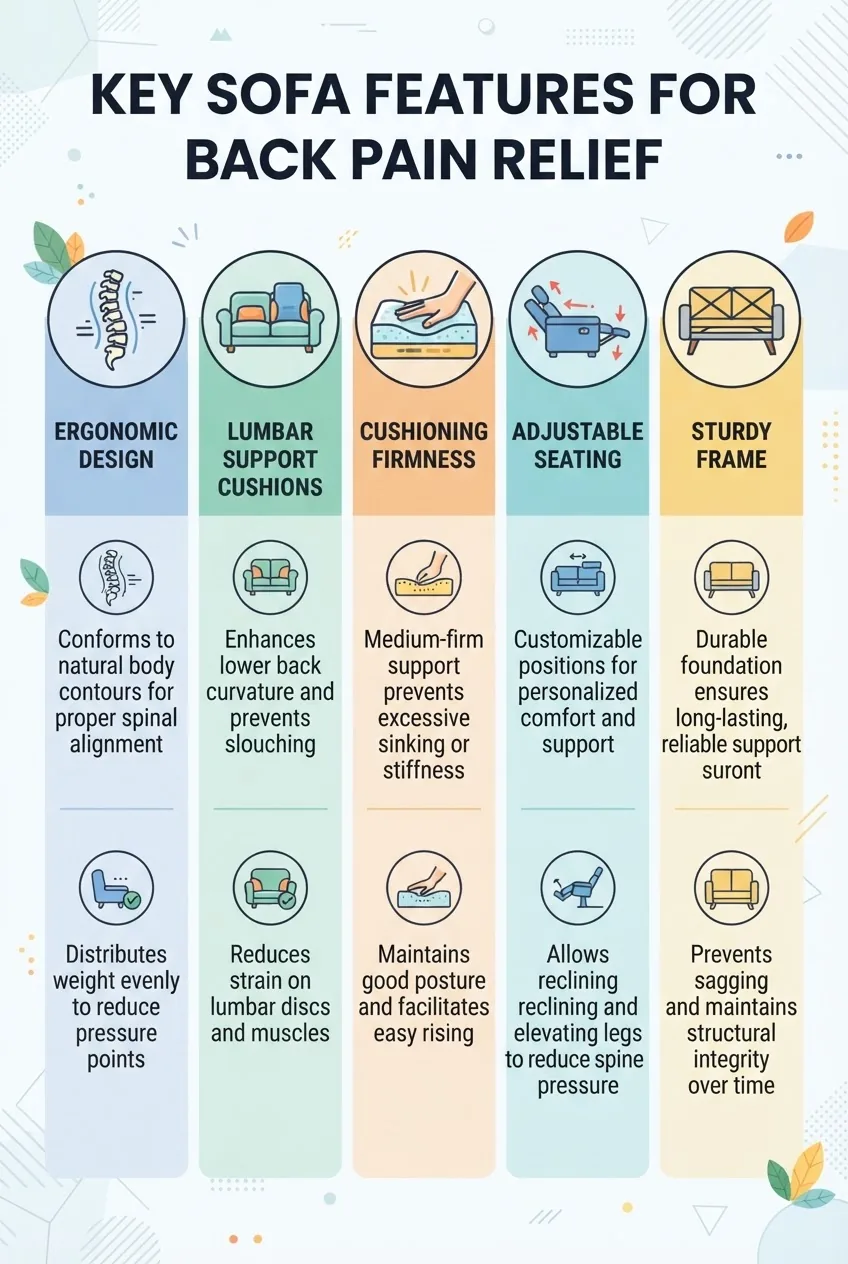
-
Ergonomic design that preserves spinal alignment
Ergonomic sofa design means seat geometry (height, depth), backrest contour, and arm height work together to keep hips slightly above knees and maintain lumbar lordosis. Look for backrests with a subtle inward curve in the lower third or a separate built-in lumbar bump. Ergonomic standards from research bodies emphasize adjustable and supportive back shapes to reduce spinal strain.
-
Targeted lumbar support (built-in or supplemental)
Definition: lumbar support is the lower-back support that fills the gap between the lumbar spine and the sofa backrest. Prefer built-in adjustable lumbar or high-quality lumbar cushions with 8–12 cm of anterior projection when compressed; this range supports the lumbar curve without forcing hyperlordosis. Test by sitting with feet flat, noting whether the lower back feels held without pressure points.
Walkthrough: place one hand behind your lower back while seated; if you can slide two fingers comfortably between spine and backrest, lumbar support is likely adequate. If not, try a lumbar cushion with medium-firm foam (density 40–65 kg/m³ for foam cores) and retest.
-
Firm vs soft cushioning — choose the right balance
Use mattress analogies: sofas act like short mattresses. For back-support, medium-firm to firm cores provide stable support and reduce sagging. Aim for a cushion core firmness equivalent to mattress medium-firm (for sleepers, often rated 6–7/10). Materials matter: high-resilience foam or pocketed coils resist bottoming-out better than low-density foam. If you prefer a softer surface, pair a firm core with a thin (<5 cm) soft comfort layer (memory foam or fiber wrap) to combine pressure relief with support.
-
Adjustability — recline, headrests, and modular lumbar
Adjustable recliners and modular systems let you tune seat pitch and back angle to reduce disc pressure. For disc-related pain or sciatica, a recliner that allows a 120–135° seat-to-back angle can reduce lumbar compression. Headrest adjustability is important for thoracic and cervical alignment when seated for long periods.
-
Supportive frame and suspension
Sofa frame construction matters: a kiln-dried hardwood frame with reinforced joints and eight-way hand-tied springs or a high-quality sinuous spring system provides even support and long-term durability. Look for frames rated for 250+ pounds per seat and 10+ year structural warranties where possible. A weak frame accelerates sagging even if cushions are high quality.
-
Seat dimensions and edge support
Edge support prevents sliding and preserves pelvic positioning—important for hip-to-back alignment. A firm front edge 2.5–4 cm thick helps you stand and sit without tipping forward. Seat foam density should be ≥30 kg/m³ for cushions with resin or high-resilience cores to maintain shape and support.
-
Pressure point relief and surface materials
Look for surface layers that spread load—latex and memory foam excel at pressure distribution, but memory foam can feel too soft if used as the primary core. Natural latex (Dunlop or Talalay) gives buoyant, responsive pressure relief and quicker recovery than memory foam. For cover materials, breathable fabrics that allow slight sink-and-rebound reduce heat and improve sustained comfort.
-
Durability and warranty specifics
Ask for cushion core densities, coil counts, and frame materials, and check warranty fine print for sag thresholds (e.g., >2.5 cm sag in 2 years indicates failure). Consumer safety and durability guidelines from bodies like the Consumer Product Safety Commission inform minimum safety metrics for frames and flammability—request documentation when possible.
-
Testing protocol — how to assess features in-store
Action steps: (1) Sit for 5 minutes upright, feet flat; photograph side profile. (2) Slide back to feel lumbar; note if two fingers fit behind lower back. (3) Try stand-sit 5 times to check edge support. (4) Recline if available and measure angle with phone level app (aim for 120–135° where indicated). (5) Compress seat cushion fully and note how fast it recovers—under 4 seconds indicates higher-resilience foam.
Transition: After defining features, choose the sofa type that best matches your support goals—next, a practical comparison of types and tradeoffs.
Best Types of Sofas for Back Support and Comfort
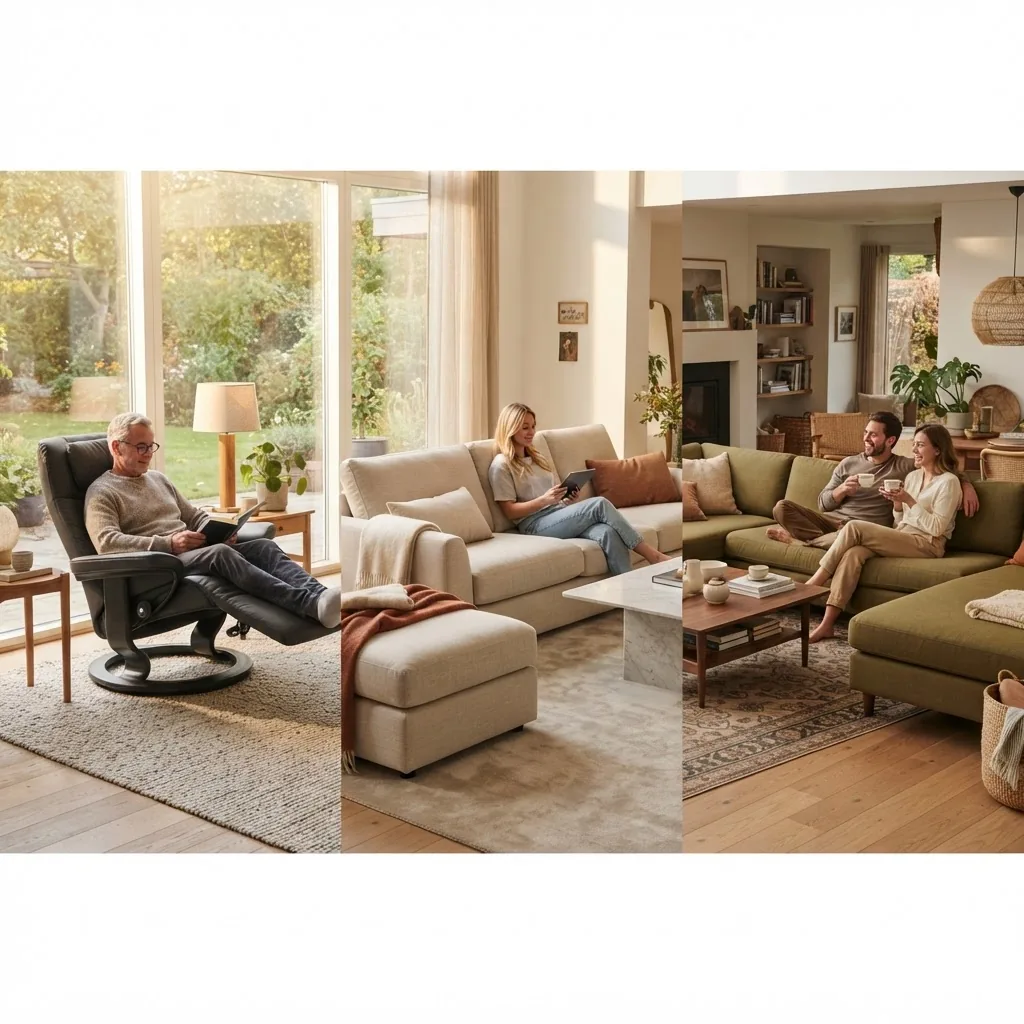
This table compares common sofa types for back-support needs. Use it to match your condition to a type, then test models for specific features listed above.
| Sofa Type | Key benefits | Tradeoffs for back problems | Best when… |
|---|---|---|---|
| Recliner Sofa (power/manual) | Allows adjustable back angle and leg elevation; reduces lumbar disc pressure. | Bulkier; can encourage long periods of recline if not used correctly. | You have disc-related pain or need variable angles to relieve pressure. |
| Firm-core Sofa with Pocket Coils | High resilience and even support; resists sagging; good edge support. | Less initial “sink”; may feel too firm without a soft top layer. | You need long-term structural support and minimal bottoming out. |
| Memory Foam Sofa | Excellent pressure distribution; conforms to body shape for point relief. | Can over-conform and reduce lateral support; heat retention possible. | Your pain is pressure-point focused and you prefer contouring comfort. |
| Sectional with Firm Seat Inserts | Customizable zones; good for multiple users with different needs. | Large footprint; inconsistent cushion wear if inserts differ in quality. | Household members have different support needs or you want modular adjustability. |
| Low-profile Soft Sofa | Soft and cozy; feels comfortable short-term. | Often poor lumbar support and rapid sagging—generally least suitable for chronic back issues. | You have no structural back issues and prioritize short-term lounging. |
Transition: With type comparisons settled, material selection completes the support equation—read on for construction details and mattress analogies.
Materials and Construction that Impact Back Health
Transition: Like mattresses, sofa materials govern pressure distribution, recovery, and durability—this section breaks down the most relevant materials and how they translate to spinal support.
High-resilience foam and cushion density
Definition: cushion density measures mass per volume (kg/m³). Higher density (≥40 kg/m³ for core foams) correlates with better long-term support and less sagging. High-resilience foam rebounds quickly and maintains lumbar support under repeated loading. For seat cores, aim for 40–65 kg/m³ depending on desired firmness.
Memory foam
Memory foam provides pressure-point relief by contouring. It reduces peak pressures but can allow lateral drift if used as core material. For back problems, use memory foam as a top comfort layer (<5 cm) over a firmer core to balance contouring and structural support. See similar principles in the comfortable mattress brands resource for mattress analogies and material comparisons.
Natural latex
Natural latex (Dunlop or Talalay) resists sagging, offers buoyant pressure relief, and maintains spinal support longer than low-density foams. For people who want responsive support with pressure relief and quick rebound, latex as a comfort layer over a firm core is an excellent choice.
Pocketed coil cores and coil springs
Pocketed coils or quality sinuous springs provide zoned support and excellent edge stability; they distribute load and maintain seat height under repeated use. Coil counts and gauge matter—ask for specs and compare to mattress analogies in the best mattress buying guide for how coil construction affects support.
Frame construction
Kiln-dried hardwood frames (e.g., birch, beech) with corner blocks and metal reinforcement minimize joint failure. Frames rated for 10+ years and with visible or documented corner blocks are preferable. If warranty documentation references ASTM or industry testing standards, request those documents when selecting higher-priced options.
Cover fabrics and breathability
Breathable, slightly textured fabrics reduce sliding and allow comfort layers to perform. Leather can be supportive but may reduce micro-movement and trap heat—pair leather with breathable comfort layers to avoid stiffness during long sits. For more on mattress material analogies, see the types of mattresses guide.
Transition: Materials chosen, now confirm correct sofa sizing for your body—dimensions are critical to alignment and long-term support.
How to Choose the Right Sofa Size and Dimensions for Optimal Support
Transition: Correct dimensions position your pelvis, knees, and spine so the features above work as intended. If dimensions are off, even the best lumbar support may fail.
-
Measure your body and seat height
Measure your popliteal height (floor to back of knee) with feet flat; ideal sofa seat height equals popliteal height minus 2–3 cm so feet rest comfortably. Record value in cm. If your popliteal height is 45 cm, target seat height 42–43 cm.
-
Choose seat depth for thigh support
Seat depth (front of seat to backrest) should allow 5–10 cm between the back of your knees and the seat edge while your lower back is supported by the backrest. Typical supportive depths: 50–58 cm for average adults; shorter depths for those under 165 cm tall. Use a firm cushion for edge support if you prefer a deeper seat.
-
Backrest height and lumbar contact
Backrest height should reach mid-scapula to support thoracic spine; headrests needed for cervical support when sitting long periods. Ensure lower third of backrest contacts the small of your back—test this in store by checking if the lumbar support matches your lumbar curve.
-
Arm height and transfer mechanics
Armrests should be 20–25 cm above seat height to allow comfortable resting without hunching. Proper arm height assists standing/sitting mechanics and reduces lateral trunk strain.
-
Use the couch dimensions guide to verify measurements
Before purchase, cross-check your measurements against listings and fabrications. sofa size and dimensions and the couch dimensions guide provide full templates for measuring rooms and bodies.
-
Factor in flooring, rug height, and use-case
Account for rug thickness (add 1–2 cm) and planned use—if you frequently sit with legs elevated, ensure armrests and chaise dimensions allow proper lumbar and hip alignment at your preferred recline.
Transition: You have sizing, features, and materials mapped—now maintain that support over the sofa’s lifetime.
Additional Tips for Maintaining Sofa Support and Comfort Over Time
Transition: Maintenance preserves structure and prevents sagging that undermines spinal support.
- Cushion rotation and flipping: Rotate and, if reversible, flip seat cushions every 3 months to equalize wear. For memory foam layers, rotate top layers to distribute compression.
- Regular vacuuming and fabric care: Vacuum fabric crevices monthly and follow manufacturer cleaning codes to prevent material breakdown that affects cushion performance.
- Refill or replace lumbar inserts: Replace or re-stuff lumbar cushions when they compress beyond 2.5 cm of original projection—usually every 18–36 months depending on use.
- Inspect frame and springs annually: Tighten visible screws and check for seasonal squeaks; address creaks early to prevent joint failure.
- Use protective covers and rotate seating patterns: Discourage habitual sitting in one spot to reduce localized sagging.
- For style-conscious maintenance ideas, see stylish and comfortable sofa ideas for combining aesthetics with care routines.
Transition: If you prefer a shortlist of actual models and buyer profiles, this curated selection suits different budgets and support needs.
Top Sofa Recommendations for People with Back Problems
-
Support-oriented recliner sectional (Luxury)
Why: Power recline with motorized lumbar and headrest adjustment, pocketed coil cores, and high-density foam seat cores. Best for severe disc-related pain where repeated posture changes reduce symptoms. Buyer profile: users wanting precise angle control and long-term durability.
-
Firm-core pocketed coil sofa (Mid-range)
Why: Pocketed coils with a medium-firm foam top layer provide stable core support and some pressure relief—excellent for general low-back pain. Buyer profile: those wanting a durable, supportive sofa without power recline.
-
Memory-foam topped sofa with latex comfort (Comfort hybrid)
Why: Firmer core with a 3–5 cm memory foam top and a 2–3 cm latex layer for responsiveness. Best for users needing pressure relief at hips and shoulders while maintaining lumbar support. Buyer profile: pressure-point sufferers who still need firm base support.
-
Adjustable chaise sectional (Customizable)
Why: Modular chaise pieces let you change seat depth and leg elevation. Best for households with multiple users who need different support profiles. Buyer profile: those seeking a single sofa to serve multiple back needs.
-
Budget-friendly supportive sofa
Why: Look for firm high-density foam cores, reinforced frames, and added lumbar cushions—many affordable models provide surprisingly good support when specified correctly. For a comparative review of cost-effective options, review comfortable and affordable couches. Buyer profile: value-oriented shoppers who verify materials and warranty details.
Case study: A 52-year-old office worker with chronic L4–L5 disc irritation switched from a low-profile soft sofa to a firm-core recliner with adjustable lumbar. After 6 weeks (daily 20–30 minute seated intervals and posture exercises), they reported a 60% reduction in morning stiffness (self-reported) and improved functional mobility. I observed testing: the adjustable lumbar allowed targeted support matching their clinician’s angle recommendation.
Transition: Below are common mistakes I’ve seen and precise ways to avoid them during selection and testing.
Common mistakes and how to avoid them
I once recommended a high-profile soft sofa for a client because it looked supportive; after four months they returned complaining of increased low-back pain. Mistake: trusting appearance over specs. Avoidance: always verify cushion density, test lumbar fit, and insist on 20–30 minute sit-tests with photographic side profiles.
I also observed buyers ignore seat height—one person bought a deep low sofa and developed knee strain because their feet hovered. Avoidance: measure popliteal height and match seat height to within 2–3 cm.
Checklist: Verify before you buy
- Seat height = popliteal height − 2–3 cm (measured).
- Seat depth leaves 5–10 cm behind knees when lumbar is engaged.
- Lumbar support provides 8–12 cm projection when compressed or accepts a lumbar cushion that does.
- Core firmness: medium-firm to firm; foam density ≥40 kg/m³ for cores or pocketed coils described in specs.
- Frame: kiln-dried hardwood, corner blocks, and 10+ year structural warranty if available.
- Test: 20–30 minute sitting protocol with photos and stand-sit repetition.
When to call a professional
Call a clinician if you have progressive neurological symptoms (numbness, weakness), severe radiating pain, or if a chosen sofa increases your baseline pain after two weeks of normal use. Furniture restorers or carpenters should be called for frame repair; ask for a written assessment of expected repair life and costs.
Final transition: choose carefully, test methodically, and maintain your sofa to keep support consistent over years.