


Mid century modern decor hands-on: by the end you’ll have a room-by-room plan, a shopping and maintenance checklist, and a staged layout you can implement in 2–8 hours per room depending on scope; skill level: beginner to intermediate DIY and shopper.
Introduction to Mid Century Modern Decor
This guide gives a deep, practical roadmap to mid century modern decor rooted in classic design principles, not seasonal trends. You’ll learn history context, materials and finishes, how to select authentic pieces versus reproductions, and step-by-step room plans that produce lasting, elegant interiors.
Before you start, gather the basics and check prerequisites below so your project runs smoothly.
- Prerequisites: clear floor plan, measuring tape, notebook or phone for photos, and a budget range per room (set low/medium/high).
- Tools & materials: tape measure, painter’s sample cards, furniture dolly, felt pads, mild wood cleaner, upholstery brush, digital camera or phone for layout photos.
- Time estimates per room: living room 4–8 hours, bedroom 2–5 hours, kitchen 6–12 hours for surface updates, dining room 3–6 hours.
For complementary accessories and curated accents refer to the pillar guide: Ideas Home Accessories Guide for Modern and Unique Room Decor.
Transition: the next section lays out the defining characteristics you’ll apply in the steps below.
Key Characteristics of Mid Century Modern Interior Decorating
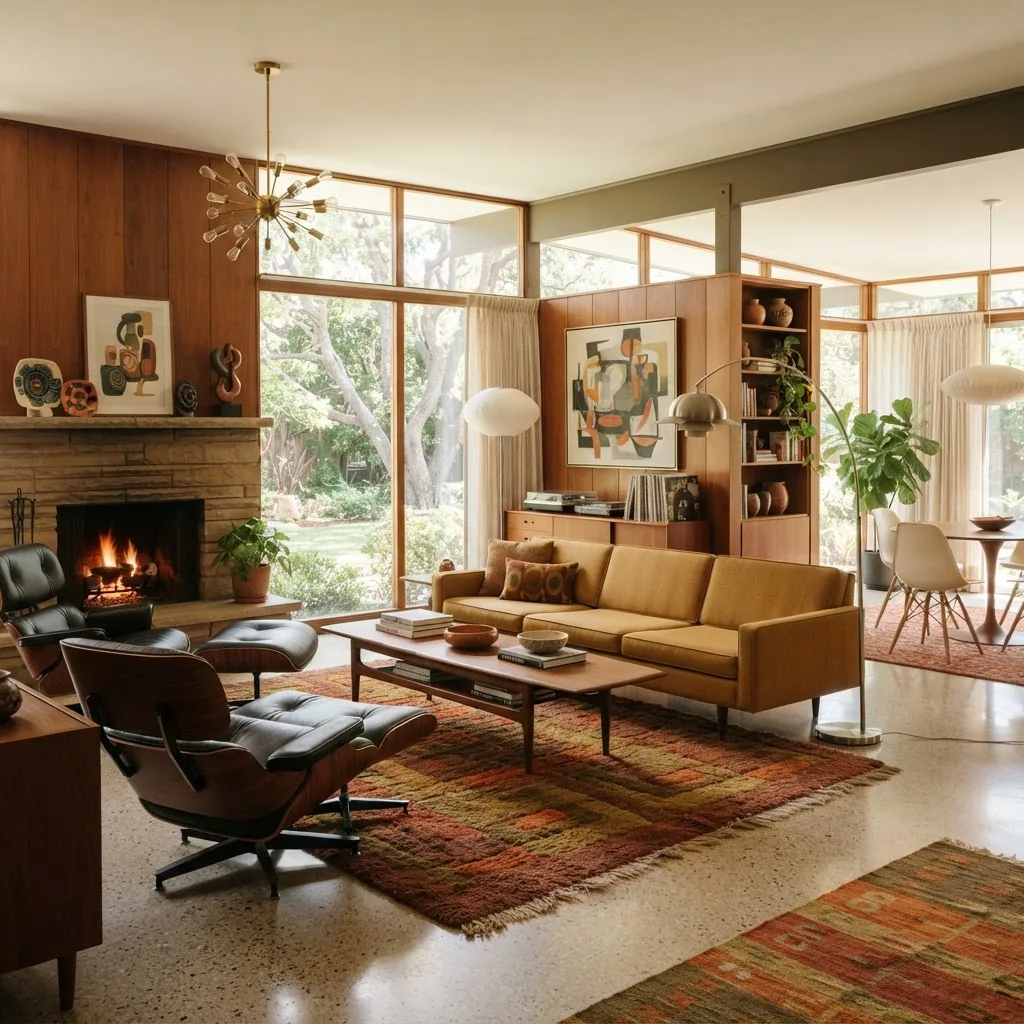
The defining grammar of mid century modern design principles is clarity: purposeful lines, honest materials, and human-scaled ergonomics. Below I break these into actionable features you can check when selecting furniture, finishes, textiles and lighting.
- Simplified silhouettes: low-slung sofas, tapered legs, and exposed joinery. Use proportions scaled to human dimensions—seat heights 15–17″ (38–43 cm).
- Integrated function: furniture often doubles as storage. Choose pieces where form supports utility—console tables with drawers, credenzas with adjustable shelving.
- Natural wood finishes: teak, walnut, oak and rosewood veneers are common. Aim for satin or low-sheen finishes—not high gloss. Typical stain tones: warm honey, mid walnut, and richer teak brown.
- Materials palette: warm woods, molded plywood, bent bentwood, metal tubular frames, leather and wool upholstery, and glass accents.
- Color palettes: anchored neutrals—beige, warm grey, and off-white—punctuated by saturated accents like mustard yellow, avocado green, burnt orange, or teal. Use a 60:30:10 rule: 60% neutrals, 30% secondary tones, 10% accent pops.
- Geometric patterns and textiles: repetitive, abstract motifs—chevrons, starbursts, atomic shapes—printed on wool or cotton-linen blends. Limit pattern scale: large-scale for upholstery, mid-scale for rugs, small-scale for cushions.
- Lighting design: sculptural floor lamps, arc lamps, and pendant lights with brass or matte black fittings. Prioritize layered lighting: ambient (pendant), task (floor/table lamps), and accent (wall or picture lights).
- Open floor plan friendly: avoid heavy visual partitions; use rugs and furniture groupings to define zones.
- Minimal ornamentation: decorative restraint—choose 3–5 curated accents per room instead of filling surfaces.
- Human-centered ergonomics: seat depth 20–22″ (50–56 cm), table heights 28–30″ (71–76 cm), good lumbar support in chairs designed for reading or lounging.
Transition: with this language of form and material clear, next we examine the iconic pieces and accents you can source or reproduce with intent.
Iconic Furniture and Home Accents for Authentic Mid Century Modern Decor
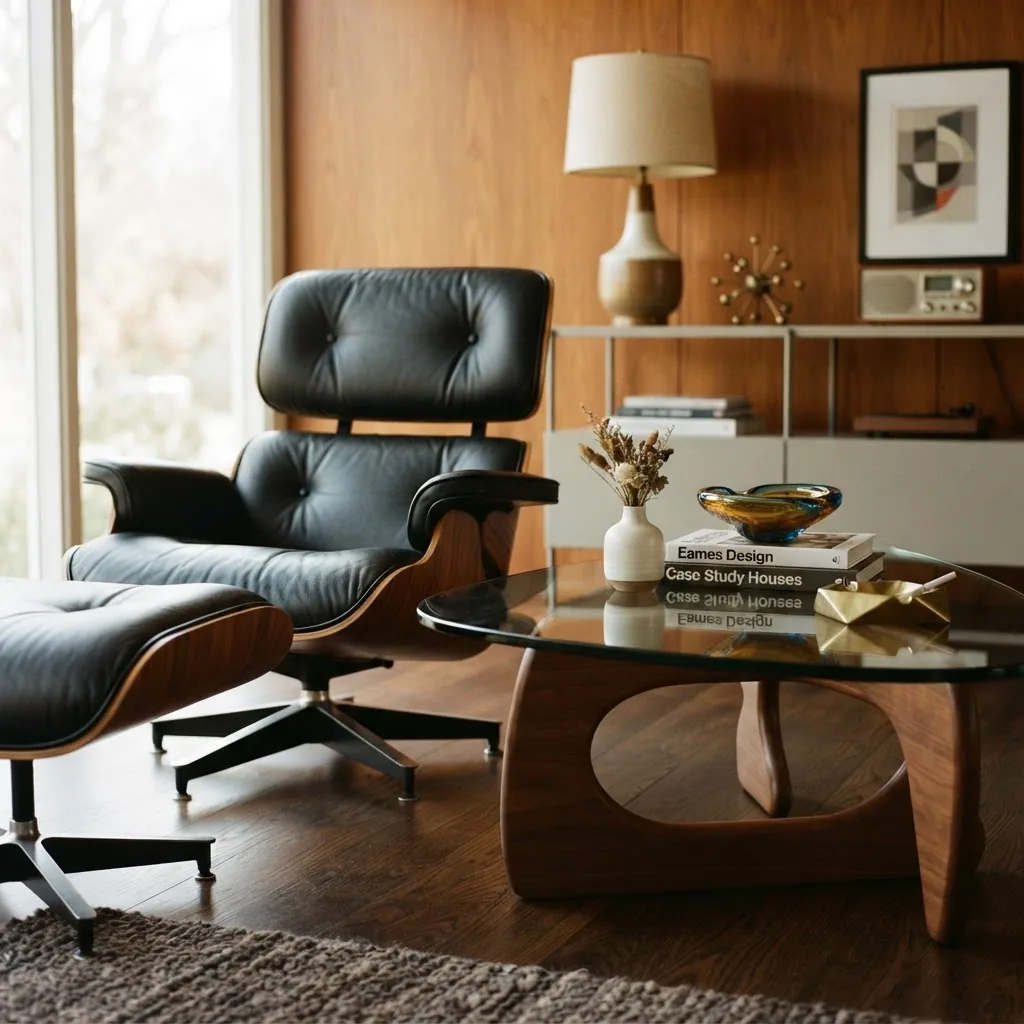
- Eames Lounge Chair and Ottoman (Charles and Ray Eames) — Description: molded plywood shell, leather upholstery, aluminum base. How to use: place as a focal reading chair in the living room or study. Walkthrough: leave 30–36″ clearance behind for visual balance; angle 10–15° toward the room’s seating group.
- Noguchi Coffee Table — Description: sculptural wood base with freeform glass top. How to use: pairs well with low-slung sofas; keep rugs and other patterns subdued so the table reads as sculpture. Walkthrough: choose a glass diameter 2/3 the sofa length for balanced proportion.
- Arne Jacobsen Egg/ Swan influence chairs (and similar organic silhouettes) — Description: continuous curved shells; ideal for creating sculptural corner seating. How to use: use one as a statement piece by a window or in a bedroom reading nook; provide a small side table at 20–24″ height.
- Teak Credenza / Sideboard — Description: long low storage with sliding doors and recessed pulls. How to use: entry console or dining storage. Walkthrough: mount art 6–8″ above the top to create a cohesive vignette.
- George Nelson Clocks and Wall Sunburst — Description: decorative timepieces and starburst mirrors. How to use: singular sculptural accent over mantels or hall consoles only—avoid cluster clutter.
- Scandinavian Solid Wood Dining Set — Description: tapered legs, warm wood tops, minimalist silhouettes. How to use: pair with mixed seating (wood chairs + upholstered bench) for visual texture and practicality.
- Lighting: Arco, Sputnik and Tripod Floor Lamps — Description: statement lighting that doubles as sculpture. How to use: Arco for large seating groups, Sputnik pendants for dining areas; keep color temperatures 2700–3000K for warm, period-appropriate light.
- Accent Tables: Kidney and Triangle Tables — Description: organic shapes and nested sets for flexible layout. How to use: use nested tables to maintain sightlines and create flexible surface areas for trays and books.
- Textiles & Rugs: Flatweave Wool and Geometric Patterns — Description: low-pile flatweave rugs with repeating motifs. How to use: anchor seating group with rug extending 18–24″ beyond furniture legs; choose 8–10 mm pile for durability in high-traffic rooms.
- Accessories: Ceramic Sculptures, Brass Trays, Glass Vases — Description: minimalist, tactile objects that nod to the era. How to use: limit to 3–5 objects per major surface; rotate seasonally or to refresh balance.
- Authenticity vs. Reproduction — Practical advice: authentic vintage pieces carry provenance and patina but often need restoration and may exceed budget. Reproductions offer consistent dimensions and finishes with warranties. Trade-offs: authenticity adds resale and historical value; reproductions provide reliability and sustainability if sourced responsibly.
- Selecting finishes and materials — Walkthrough: match wood tones by undertone (warm vs cool). Example: pair mid teak with walnut as complementary neutrals; avoid mixing more than two dominant wood tones in a room to prevent visual discord.
- Arrangement walkthrough — Real-life example: In my renovation of a 1958 bungalow, I placed an Eames lounge at 12′ from the TV and 6′ from the sofa to create a conversational triangle; the Noguchi table centered at 18″ from the sofa edge made movement efficient and visually balanced.
Transition: the next major section shows practical room-by-room implementation with specifics on layout, scale, and sourcing.
Mid Century Modern Decor Ideas for Different Rooms
Living Room
The living room is where mid century living design shows its full language—proportion, warmth, and sculptural accents.
- Plan seating zones: place a main sofa 8–12′ from the focal point (fireplace, TV, or large window). Ensure 18–24″ between coffee table edge and sofa for legroom.
- Choose a grounded rug: rug size guidance: for a three-seat sofa, choose 8’x10′ or large enough so front legs sit on the rug. Rug pile: low, 6–10 mm.
- Select statement lighting: use a floor arc lamp to extend light over seating; set bulb to 2700K–3000K, 800–1200 lumens for ambient lighting.
- Accent with sculpture and art: one oversized abstract print (24″x36″ or larger) above the sofa or a gallery of smaller works; mount art with center at 57″ from floor for average sightlines.
- Furniture layout example: sofa (84″ length) opposite two lounge chairs (each 30–32″ wide) with a Noguchi table centered—allow 36–42″ circulation path behind chairs where possible.
- Storage and surfaces: use a teak credenza for media storage; keep visible decor to three curated objects spaced with negative space.
To layer seasonal warmth onto these foundations, see cozy autumn living room decorating tips for complementary textiles and seasonal accents.
Kitchen
Kitchens adapt the mid century principle of efficient utility: clean cabinetry, warm woods, simple hardware and statement lighting.
- Start with cabinet fronts: choose flat-panel or slab doors in either warm wood veneer or matte-painted tones (sage, charcoal, or warm white). Hardware: simple pulls in brass or matte black 96 mm or 128 mm centers.
- Counter and backsplash: pair quartz or honed stone countertops with geometric tile backsplash—subway or hex tiles in a 1:2 scale ratio to cabinetry height to keep proportions period-appropriate.
- Lighting: install two pendant lights over an island at 30–34″ above surface; choose warm bulbs (2700–3000K) and ceramic or metal shades that match other metal finishes in room.
- Open shelving and storage: use floating teak shelf (max depth 10–12″) to display ceramics; keep dish stack heights below 12″ to maintain airy sightlines.
- Flooring: continuous wood or large-format tile works best—match wood tones to dining furniture or use a 2–3 tone contrast for visual depth.
Bedroom
Bedrooms translate MCM into restful compositions—low platform beds, uncluttered surfaces, and rich textiles.
- Bed and scale: choose a low platform bed (mattress height total 18–22″) with a wood headboard spanning 2/3 the bed width for balance. Nightstands 20–26″ high to align with mattress.
- Textiles: use a neutral duvet (60% of visual field) plus one accent throw or pillow in mustard, teal or rust for the 10% accent rule.
- Lighting: bedside lamps 24–28″ high from tabletop to bulb center; consider wall-mounted swinging sconces to free nightstand real estate.
- Closet and storage: add a low dresser in matching wood tone; position the dresser opposite the foot of the bed for optimal flow.
For small touches that add charm without diluting mid century integrity, see adorable and small bedroom decor.
To explore contemporary bedroom finishes that remain period-sensitive, consult modern and stylish bedroom ideas.
If you prefer a neutral approach, blend these techniques with ideas from modern and elegant bedroom designs.
Dining Room
Dining areas benefit from sculptural lighting and a focal table that invites conversation.
- Table proportions: allow 36–42″ from table edge to wall or nearest furniture. Drop-in leaf tables work well in narrow spaces; standard table heights: 28–30″.
- Seating mix: mix wood side chairs with one bench or upholstered end chairs for visual rhythm. Allow 24″ width per seat minimum.
- Lighting placement: Pendant centered over table at 30–34″ above the surface; choose fixture diameter equal to 1/2–2/3 table width.
- Storage: place a teak sideboard 30–36″ long for serving and display; top with two decorative objects and a tray for practical staging.
Transition: now that you have room-level instructions and specific furniture models in mind, I’ll show how to blend mid century modern with contemporary elements safely.
How to Blend Mid Century Modern Decorating Style with Contemporary Elements
Blending requires negotiation: keep the mid century framework while selectively inserting contemporary pieces to update function and feel. Think of MCM like a tailored classic suit—add one contemporary accessory rather than changing the cut.
- Identify the structural elements: keep key MCM anchors—sofa silhouette, wood credenza, sculptural lamp—and allow one or two modern inserts such as a minimalist sectional or a streamlined media console.
- Match proportions not finishes: pair a modern chrome-legged coffee table with warm wood side tables; ensure leg heights and seat heights align to avoid visual mismatch.
- Control the palette: extend the 60:30:10 rule across eras—if modern piece introduces cool grey, balance with warmer textiles or a wood tone to maintain mid century warmth.
- Use material bridges: metal finishes found in modern pieces (brushed brass or matte black) can harmonize with MCM lighting and hardware when repeated in small doses (lamp base, picture frames, cabinet pulls).
- Practical example: replace a period rug with a contemporary neutral flatweave—keep mid century furniture untouched, add a modern glass side table near the sofa to provide contemporary function without overpowering the scheme.
- Step-by-step integration: (1) Photograph your current room. (2) Select one modern piece to trial in the photo using an app. (3) Live with the change for 2 weeks before buying to verify daily comfort and sightline interactions.
For playful or more fashion-forward mixes, read about mixing with trendy and cute decor styles, but use restraint—limit playful pieces to 10% of the room’s visual weight.
Transition: if budget or sustainability are priorities, the next section offers concrete cost-saving and green options.
Sustainable and Budget-Friendly Mid Century Modern Decorating Ideas
Good design can be sustainable and affordable. This section gives step-by-step swaps and sourcing strategies that respect authenticity without breaking the bank.
- Source vintage locally: Check classifieds and estate sales; inspect joints and veneer. Look for teak and walnut solids; allow $200–$1,500 for good-condition sideboards depending on provenance. According to a 2024 industry report, online resale searches for mid century furniture rose markedly, improving supply for buyers.
- Prioritize restoration over replacement: repair swollen veneered surfaces by controlled drying and veneer consolidation—use a professional for complex repairs. For hardware, clean brass with 1:3 vinegar/water solution and cotton—do not sand aggressively.
- Choose quality reproductions carefully: buy reproduction seating with kiln-dried hardwood frames and top-grain leather or durable performance fabric—expect $700–$2,500 for high-quality reproductions; cheaper options often sacrifice frame longevity.
- Low-cost textile refresh: swap cushions and slipcovers—budget $50–$250 per cushion depending on fabric. Use performance blends (polyester-linen) for durability in high-traffic households.
- Green materials checklist: choose FSC-certified woods, low-VOC paints, and LED lighting. For sustainability standards see resources like U.S. Green Building Council guidance.
- DIY affordable updates: (1) Re-stain a table top: sand with 120–220 grit, wipe dust, apply two coats of satin oil-based stain, dry 6–8 hours between coats. (2) Reupholster seat cushions: remove old foam, measure seat depth/width, replace with high-density foam (ILD 30–40) and cover with mid-century pattern fabric.
- Budget breakdown example: living room refresh: vintage sofa $800 (used) or reproduction $1,200; rug $200–$800; lighting $150–$700; accessories $100–$300 — plan 30–40% of budget for upholstery/sofa.
For adding limited seasonal flourishes while staying classic, see seasonal decorating inspirations.
For hands-on bedroom projects on a budget, see affordable and DIY bedroom décor.
Transition: even with careful sourcing and upkeep, some maintenance and authenticity issues can arise—next I address those common problems and fixes.
Maintenance and Troubleshooting Common Issues with Mid Century Modern Home Decor
Below are common questions and hands-on answers based on restoration practice and furniture-care standards.
Q: How do I remove water rings from a teak table?
Use a paste of baking soda and water applied gently with a soft cloth; if marks persist, lightly sand with 320 grit and reapply teak oil. For antiques or costly pieces, consult a professional restorer first. Refer to restoration standards from furniture conservation bodies.
Q: How do I verify an authentic mid century piece?
Check maker’s labels, hardware, and joinery (dovetail/box joints). Research maker marks via museum catalogs or design monographs; provenance and consistent patina signal authenticity. If unsure, get a written appraisal for high-value items.
Q: When is a reproduction preferable?
Choose reproductions when structural integrity, warranty, or cost is a priority—especially for frequently used seating. High-quality reproductions with solid frames are a smart, sustainable choice over poorly repaired vintage pieces.
Transition: the hands-on core steps below consolidate all the above into an ordered process you can follow to complete a room makeover.
Hands-On Steps: Implementing a Mid Century Modern Room (Core Procedure)
Follow these numbered steps to execute a single-room mid century modern makeover. Each step lists quantities, measurements and timing.
- Survey and measure the room (30–60 minutes): Measure room length, width, window placements and note outlet positions. Photograph every wall and door. Record ceiling height—if >9′ plan for larger pendant scale.
- Create a budget and sourcing plan (30 minutes): Allocate funds: 40% seating, 20% textiles/rug, 20% lighting, 20% accessories and restoration. Set timeline: shopping 1–4 weeks, restoration 2–6 weeks.
- Select a focal furniture anchor (1–3 days for sourcing): Pick one investment piece (sofa, teak credenza, or Eames lounge). Sizing rule: anchor should occupy roughly 30–40% of the room’s visual weight. Example: in a 14’x16′ living room choose a sofa 78″–90″.
- Choose color palette and samples (1–2 hours): Pick three paint samples; paint 12″x12″ swatches and view at morning, noon, and evening light. Confirm accent color at 10% coverage—an accent pillow or lamp.
- Plan lighting hierarchy (2–4 hours): Calculate lumens: ambient 20 lumens per sq ft, task lighting 50 lumens per sq ft for reading areas. Select fixtures: one ambient pendant, two task lamps, one accent light.
- Place large pieces and test circulation (1–2 hours): Use furniture leg templates (newspaper or cardboard) to test placement. Maintain 36–42″ main circulation paths and 18–24″ around coffee tables.
- Layer textiles and patterns (1–2 hours): Place rug, then sofa, then cushions. Pattern rule: limit to 2 pattern scales—one large and one small. Cushion sizes: 20″x20″ or 22″x22″ for sofa; lumbar 12″x20″ or 14″x24″.
- Accessorize with restraint (1 hour): Add 3–5 curated objects on surfaces; use odd numbers and varying heights (6″, 12″, 18″). Keep 30–50% negative space on consoles.
- Photograph and live-test (2 weeks): Use the room daily, adjust lamp placement, cushion firmness, and accessory count. Change one variable at a time—e.g., move lamp 12″ closer—then observe light and flow.
Common mistakes and how to avoid them
I’ve seen these missteps in many projects. Below I describe them in first person and how I corrected them.
- I once bought a vintage sofa without checking frame integrity; it sagged within months. Lesson: always inspect for reinforced hardwood frames and ask the seller for any repair history; if buying online, request additional photos of underside and joints.
- I over-patterned a living room—three competing scale patterns made the space feel busy. Correction: I removed the smallest-scale pattern and replaced it with a neutral textured cushion to restore calm.
- I mixed three different wood tones across major furniture; the room felt disjointed. Solution: I re-stained one piece to harmonize undertones and limited future wood choices to two tones maximum.
Quick Checklist
| Item | Pass/Fail |
|---|---|
| Anchor piece selected and measured (30–40% visual weight) | ☐ |
| Rug size correct (18–24″ lead beyond front legs) | ☐ |
| Lighting plan calculated (lumens per sq ft) | ☐ |
| Two wood tones max | ☐ |
| Accessory count limited to 3–5 focal objects | ☐ |
When to call in a professional
- Structural restoration of valuable vintage furniture (cracked frames, loose mortise-and-tenon joints) — call a certified conservator or furniture-restoration expert.
- Electrical rework for period lighting fixtures — hire a licensed electrician for rewiring and code compliance.
- Major layout changes that affect load-bearing walls or HVAC — consult a licensed architect or contractor.
Mid Century Modern Decor vs. Other Styles
Here’s a direct comparison to help you differentiate MCM from closely related styles.
| Style | Key Differences |
|---|---|
| Mid Century Modern | Warm woods, tapered legs, organic shapes, functional minimalism. |
| Modern Classic | More ornamentation, classical proportions, symmetry—a more formal aesthetic. |
| Eclectic | Mixes eras freely; MCM elements can anchor eclectic spaces but need restraint. |
Historical context: mid century decorating style emerged mid-20th century with roots in Scandinavian simplicity and advances in industrial materials. According to a 2023 museum publication, designers like Charles and Ray Eames and George Nelson popularized furniture that paired new manufacturing techniques with human-centered ergonomics (Museum of Modern Art).
For authoritative preservation advice on furniture care and conservation practices consult restoration bodies like The Furniture Society. For sustainability criteria referenced above see the U.S. Green Building Council.
Transition: final section summarizes core takeaways and invites you to apply the checklist and steps.
Conclusion – Making Mid Century Modern Decor Work for Your Timeless Interior
By following this hands-on guide you’ll have: a photographed room survey, an itemized budget, a selected anchor piece, a lighting and textiles plan, and a staged finish that balances authenticity with modern comfort. Implement each step at the recommended times and measures, lean on the checklist, and iterate after two weeks of live use. Ready to get started? Choose one room, pick your anchor piece, and apply the steps above to create a durable, classic interior that ages like a well-tailored outfit.