


modern classic home decor: By the end of this hands-on guide you’ll be able to plan and execute a full-room refresh that blends timeless charm with contemporary flair. Expect about 4–6 weeks from planning to finishing touches for a single room; this guide assumes an intermediate DIY skill level (basic carpentry, upholstery knowledge, and lighting wiring familiarity).
What you will achieve: a cohesive, elegant room with balanced scale, a neutral-driven palette with deliberate accents, a lighting plan that flatters both antiques and modern pieces, and an accessorizing strategy that avoids clutter while expressing personality.
Before you start
- Practical tools: tape measure, stud finder, contractor-grade level, basic toolbox (screwdrivers, drill, socket set), painter’s tape, drop cloths.
- Materials list: sample paint chips (3–5), one yard each of primary upholstery fabric and accent fabric, 1–2 trim/moulding samples if applicable, lighting specs (lumens targets), hardware finishes.
- Budget and timeline: set a realistic budget (example: $3,000–$10,000 for a mid-range living room), schedule 4–6 weeks and book any trades (electrician, upholsterer, carpenter) 2–4 weeks in advance.
- Reference folder: save supplier links, photos of inspirational rooms, and notes on measurements and ceiling heights.
Understanding Modern Classic Home Decor
The first step is clarity: define the goal. Modern classic home decor is an intentional interior design blend that pairs classical architectural or furniture silhouettes with contemporary restraint and comfort. It’s about elegance without fussy excess — think piano-wire lines and carved legs, polished metal and warm wood, refined proportion and a calm, neutral backdrop that allows statement pieces to breathe.
Core characteristics include measured ornament (mouldings, paneling, or a refined fireplace surround), neutral color foundations, high-quality textiles, and a careful mix of vintage and contemporary furniture. This is not a historical reproduction; it’s a translation of classical detail through modern materials and function. The style emphasizes:
- Timeless silhouettes and symmetry—anchors like a tailored sofa framed by matching armchairs or balanced bookcases.
- Contemporary simplicity—clean upholstery, lean profiles, and minimal clutter.
- Textural layering—wool, linen, knits, and polished metals layered for depth without color chaos.
From an authority standpoint, leading industry bodies define and track the enduring appeal of balanced, transitional interiors; for foundational definitions and professional standards consult the American Society of Interior Designers for professional context. American Society of Interior Designers
Practical evidence: According to a 2024 industry report on interior trends, homeowners increasingly prioritize durable finishes and classic silhouettes updated with modern ergonomics—this is reflected in rising searches for transitional and modern-classic furnishings. For ongoing styling references and designer case studies, Architectural Digest and similar publications archive modern classic projects by prominent designers. Architectural Digest
Transition: With the big-picture intent clear, we move into the tangible components—furniture, finishes, and layout—that make modern classic spaces function and feel cohesive.
Key Components of Modern and Classic Interior Design
Breaking the style into actionable parts makes it easier to plan. Below are core components with examples you can apply room-by-room.
- Furniture styles — Transitional and mid-century classic pieces work well. Examples: a tailored English roll-arm sofa (classic silhouette) paired with a low-profile mid-century coffee table.
- Architectural details — Baseboard height 5–7″, crown moulding 4–6″ in living areas for scaled proportion in 8–10′ ceilings; consider picture rail height 7–8′ in taller rooms.
- Color schemes — Neutral grounds with calculated accent hues; keep high-traffic walls in washable eggshell or satin finishes for durability.
- Materials & textures — Solid wood floors (oak, walnut), brushed brass or nickel hardware, silk or linen curtains, velvet or wool upholstery for statement pieces.
- Lighting hierarchy — Ambient (ceiling fixtures), task (reading lamps), and accent (picture lights, uplights) in a 3-layer plan; aim for 20–30 lumens per sq ft for living rooms supplemented by task lights of 400–700 lumens where needed.
- Balance between old and new — Limit vintage statement pieces to 1–3 focal items per room; let modern furnishings provide negative space and function.
Examples by room:
- Living room: a curved classic settee + modern glass console behind it, flanked by symmetrical side tables and matching lamps.
- Dining room: antique table with reupholstered modern dining chairs to improve ergonomics and refresh style.
- Bedroom: classic four-poster or panel headboard paired with pared-back nightstands and contemporary task lighting.
Transition: Now that you know the components, the next section drills into color and material decisions that anchor elegance without feeling dated.
Color Palettes and Materials for Elegant Styling
Color and materials determine the felt personality of a modern classic room. Start with a neutral foundation, layer in texture, and add one or two accent colors for contrast. For research-backed color standards and material guidance consult Pantone and industry material spec sources. Pantone
Guidelines for palettes:
- Neutral foundation — warm off-white (e.g., Benjamin Moore OC-17), greige, soft taupe; these create a forgiving backdrop and highlight architectural details.
- Mid-tone anchors — muted navy, charcoal, or moss green on a single wall or cabinetry to ground the room.
- Accent colors — deep teal, oxide red, or burnished gold used sparingly in pillows, an art frame or a small chair (limit to 5–10% of visible surface area).
Material pairings to consider:
- Wood finishes: match undertones—warm oak with warm brass; cool walnut pairs well with brushed nickel.
- Metals: choose a primary metal (brass or nickel) and use a secondary sparingly for contrast (e.g., picture frames).
- Textiles: main upholstery in tightly woven linen or wool; accent pillows in silk or velvet for sheen; rugs in natural fiber or low-pile wool for longevity.
Color palette examples (practical sets):
| Palette | Base | Accent(s) | Materials |
|---|---|---|---|
| Warm Neutrals | Cream / Greige | Burnished gold, terracotta | Oak, brass, linen |
| Cool Classic | Soft gray | Muted navy, emerald | Walnut, nickel, wool |
| Neutral & Black Contrast | Warm white | Matte black, cinnamon | Stone, leather, cast metal |
For deeper guidance on beige and neutral treatments see the neutral and beige color palettes.
If you want to introduce brighter tones without losing elegance, use single-piece accents such as a velvet bench or art with coordinated mats. For ideas about bright accents and proportion, see advice on adding vibrant accents.
Transition: With palette and materials set, the next crucial skill is furniture selection and arrangement to ensure flow, proportion, and function.
Furniture Selection and Arrangement Tips
The right furniture choices and placement are where modern and classic principles meet function. Follow these step-by-step actions to select and lay out pieces that balance presence and space.
-
Measure and map the room first. Record room dimensions, window and door locations, outlet placement, and ceiling height. Draw a simple plan to scale (1:50 or 1/4″=1′) and mark traffic paths (minimum 30″ clear walking space; 36″ around dining tables).
Example: For a 14′ x 18′ living room, create a focal zone (conversation area) about 10′ x 12′ centered on the fireplace or TV. Keep at least 18″ between sofa and coffee table for comfortable reach.
-
Choose a dominant statement piece. Select one anchor item (sofa, dining table, or bed) in a classic silhouette with high-quality upholstery or finish. Budget guidance: allocate ~30–35% of your room budget to this piece (e.g., $900–$3,500 for a living room sofa in a $3,000–$10,000 budget).
Case example: I selected a charcoal, rolled-arm linen sofa (classic silhouette) and paired it with two low-profile mid-century armchairs to introduce modern proportions while retaining the sofa’s traditional presence.
-
Layer secondary seating and storage for balance. Add symmetric side chairs or a pair of bookcases to achieve harmony. Keep large storage on the same wall as other heavy elements to avoid visual imbalance.
Tip: Use an even number of repeat elements (2 lamps, 2 chairs) to convey classic symmetry; offset with one asymmetrical modern sculpture or plant for contrast.
-
Scale rugs and tables correctly. Rug rules: in living rooms, the front legs of all major furniture should sit on the rug. Rug size examples: for seating groups in a 14′ x 18′ room, use at least a 9′ x 12′ rug; for dining, allow 24″ beyond each chair when pulled out.
Practical measurement: choose coffee tables 2/3 the length of your sofa and side tables 1/2–2/3 the height of adjacent seating to maintain proportion.
-
Mix wood tones with intent. Keep 60–70% of visible wood in one undertone (warm or cool) and use remaining pieces as accents. If you have a walnut dining table, introduce a lighter oak console as the secondary tone rather than a clashing cherry finish.
Methodology: sample swatches in place under different lighting at morning and evening times before committing.
-
Place lighting for layers and focal emphasis. Install a central chandelier or pendant for ambient light; add two task lamps (400–700 lumens) and one accent light per major artwork. Use dimmers on main circuits and aim for color temperature 2700K–3000K for a warm, classic feel.
Example setting: In a dining room, a chandelier centered over the table at 30–36″ above the table top creates the right scale for 28–30″ high tables.
-
Function test the layout. Walk the plan physically or with cardboard templates before moving heavy pieces. Ensure TV sightlines and conversation distances are comfortable (8–10′ between TV and seating for a 55″ screen).
Practical step: place painter’s tape on the floor to mark sofa and table perimeters and live in the plan for 24–48 hours if possible.
Transition: With furniture placed, turn to finishing touches—artwork, mirrors, lamps, and decorative objects—that communicate the room’s character.
Decorative Accessories and Art for Modern Classic Spaces
Accessories are the punctuation marks of a modern classic room. Treat them with intention: group, scale, and repeat to create harmony.
Styling tips:
- Mirrors: Use one large mirror to double perceived space; position it to reflect a focal point or a window for daylight amplification. Choose frames that echo the room’s primary metal finish.
- Lighting fixtures: Select lamps with mixed materials—ceramic base with a brass neck or a marble base with a simple linen shade—to bridge classic and modern elements.
- Artwork: Scale matters—large abstract pieces (>36″ dimension) play well over mantels or sofas; smaller works should be grouped in odd-numbered arrangements (3 or 5) for dynamic balance.
- Decorative objects: Prioritize quality over quantity. Use a curated trio of objects on a coffee table rather than many small, competing items.
For those interested in elegant, petite decor pieces, see this guide on choosing adorable small decorative accents.
When introducing bold or colorful accents, balance is critical—anchor them near neutral areas or within a contained vignette. For methods that preserve classic balance while using color explosively, consult our notes on bold decorative accents.
If you prefer unique conversation pieces, layer one or two standout items—an Italian ceramic lamp or a contemporary blown-glass vase—with restrained supporting elements. Discover curated options in our guide to unique modern accessories.
Styling examples (practical):
- Vignette on console: tall mirror + pair of identical lamps + a stack of two books + single sculptural object (balance of symmetry and asymmetry).
- Coffee table: tray (anchor) + one low bowl + two small books + a single floral arrangement; keep total items under five to avoid clutter.
- Shelves: mix horizontal book stacks with vertical spines, interspersed with three to five objects—scale items up to the shelf height and repeat materials once per shelf run for rhythm.
Transition: Accessories must harmonize with overall proportions and composition. The next section gives the principles and warnings for mixing styles successfully.
Achieving Balance: Mixing Modern and Classic Elements Successfully
Mixing styles well follows clear design principles. Use these numbered rules and dos/don’ts as a checklist during selection and styling.

- Maintain harmony through repetition. Repeat a material or finish in 3 places (e.g., brass lamp, brass frame, brass hardware) to create a visual thread.
- Introduce contrast sparingly. Use one high-contrast element (black frame, deep accent chair) to energize a neutral field—avoid more than two strong contrasts per room.
- Respect scale and proportion. Large rooms need larger statement pieces; small rooms need compact silhouettes. Rule: ceiling height x 0.6 = recommended focal object height range (approximate).
- Layer textures deliberately. Combine at least three textures (smooth, nubby, shiny) within a seating composition to create depth without color traffic.
- Use transitional furniture to bridge eras. Transitional pieces like a tufted sofa with clean legs or a classic dining table with contemporary chairs ease stylistic shifts.
- Avoid visual clutter. If an area feels crowded, remove 30–40% of decorative items and keep one strong focal point per visual plane (wall, console, coffee table).
Dos and Don’ts:
- Do anchor rooms in neutrals and add texture and a single accent hue.
- Don’t mix more than two conflicting wood tones within a main sightline.
- Do keep symmetrical pairings for classic formality; use asymmetry to introduce modern casualness.
- Don’t force authenticity—if an antique is structurally compromised, replace with a high-quality reproduction or refinish for safety and function.
Analogy: Think of your room as a string quartet—each instrument (furniture, color, texture, light) plays a role; modern pieces are the woodwinds bringing clarity, classic pieces are strings providing warmth. If one section plays too loudly, the composition becomes unbalanced.
Transition: The principles guide choices; the final sections offer practical sourcing tips, a hands-on case timeline, and room-by-room examples you can implement.
Practical Styling Advice and Sourcing Tips
Supply-chain realities, budgets, and sourcing strategies make or break a plan. Below are hard-won tactics for achieving modern classic style within constraints.
- Budget allocation (typical): 30–35% statement seating, 10–15% rugs/curtains, 15–20% lighting, 10% accessories, remainder for finishes and labor.
- Where to source: mix retail (for new, warrantied pieces) and vetted vintage dealers (for unique chairs, mirrors). For curated accessories and sourcing guides see the Ideas Home Accessories Guide for Modern and Unique Room Decor.
- Seasonal refreshes: swap textiles and small accents; for exterior seasonal touches, browse our seasonal décor ideas to coordinate exterior and entry transitions.
- Vintage buying tips: inspect for structural integrity, check joints (dovetail drawers, mortise-and-tenon frames), confirm provenance when possible, budget 15–25% for restoration if necessary.
- DIY and cost-saving moves: reupholster frames rather than buying new; a professional reupholsterer typically charges $600–$1,200 for a sofa depending on fabric and labor. For room-specific affordable DIY strategies see affordable bedroom DIY tips.
- When shopping online: order 2–3 samples (fabric, paint, finish) and evaluate in situ at morning and evening light; expect shipping lead times of 2–8 weeks for quality upholstery.
Case study (timeline example — living room refresh):
- Week 1 — Measure, moodboard, and budget. Finalize floor plan, order 3 paint samples, choose rug size, and book trades.
- Weeks 2–3 — Procurement and prep. Order sofa and lighting, source vintage mirror, schedule upholstery and electrician. Allow 3–6 week lead time for custom upholstery.
- Week 4 — Installation and painting. Paint main walls (2 coats, each coat 4–6 hours drying at 70°F), install new moulding if applicable, and hang lighting (electrician).
- Week 5 — Furniture and styling. Bring in large furniture, layer rugs, install window treatments, and place accessories.
- Week 6 — Final tweaks and photography. Adjust lamp placements, test dimmers, and photograph the final room for reference.
Transition: With practical sourcing and timeline in place, apply these ideas to specific rooms with clear, inspired examples below.
Modern Classic Home Decor Room Ideas
Below are descriptive scenarios you can adapt to your square footage and taste. Each narrative includes concrete measurements, finishes, and styling cues.
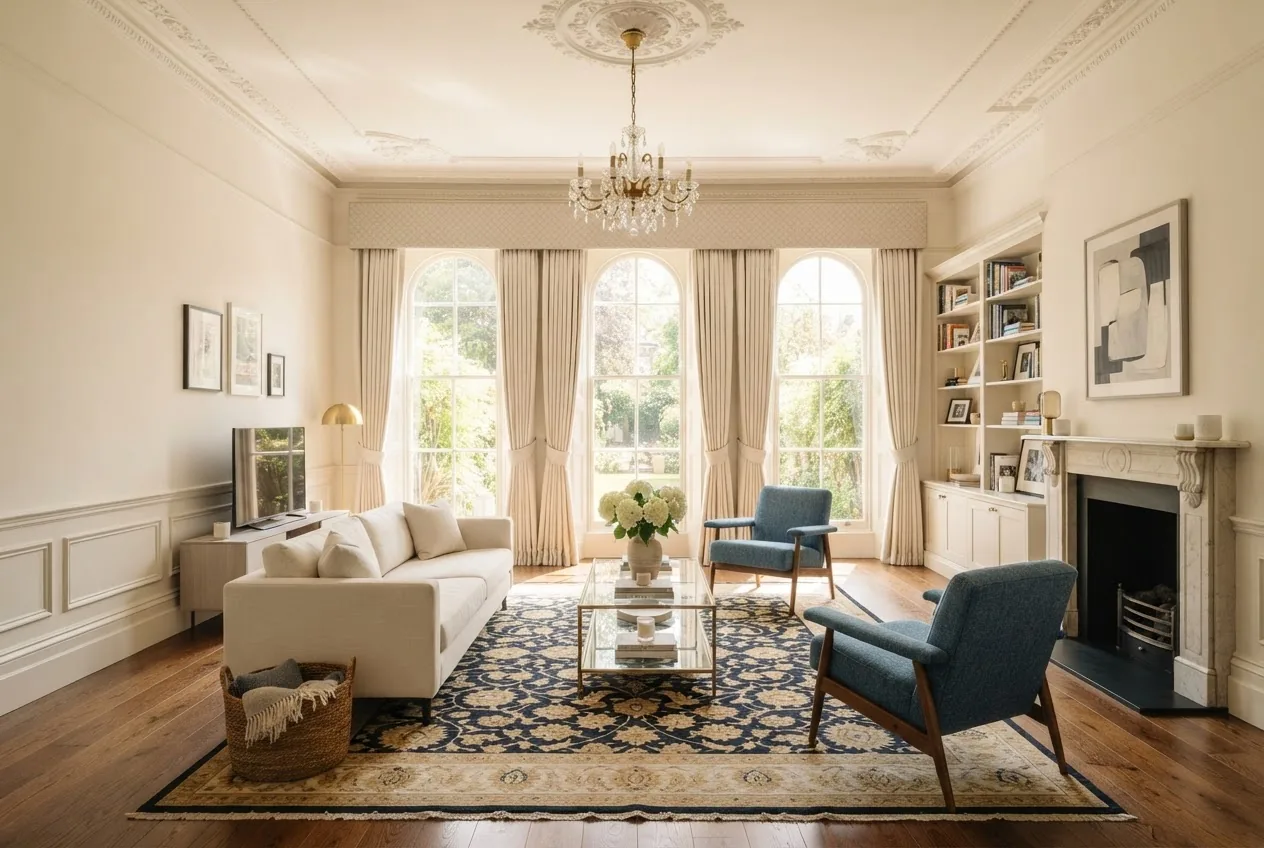
Anchor: 92″ three-seat sofa in warm linen placed 12″ from a 9′ x 12′ rug. Two 28″ wide mid-century armchairs face the sofa with a 36″ x 22″ coffee table centered. Add two 20″ diameter side tables and 60″ wide console behind sofa. Lighting: one 24–30″ diameter chandelier centered over seating at 8′ ceiling, plus two 18″ table lamps (450 lumens each) on side tables.
Accents: framed large abstract 48″ x 36″ above mantel; one potted fiddle leaf fig in corner. Materials: oak floors, taupe paint, nickel hardware, wool rug.
Anchor: 60″ upholstered headboard in a classic profile; bedside tables 24″ wide at 1/2 bed height; bench at foot of bed 48″ long; wardrobe or dresser on opposite wall. Lighting: two adjustable sconce lights for task reading (400 lumens each) and one soft ambient fixture (1400 lumens) with dimming.
Textiles: primary bedding in linen, layered with a 90″ x 90″ wool throw and two 20″ decorative pillows in velvet. For more modern bedroom decorating tips see our dedicated guide.
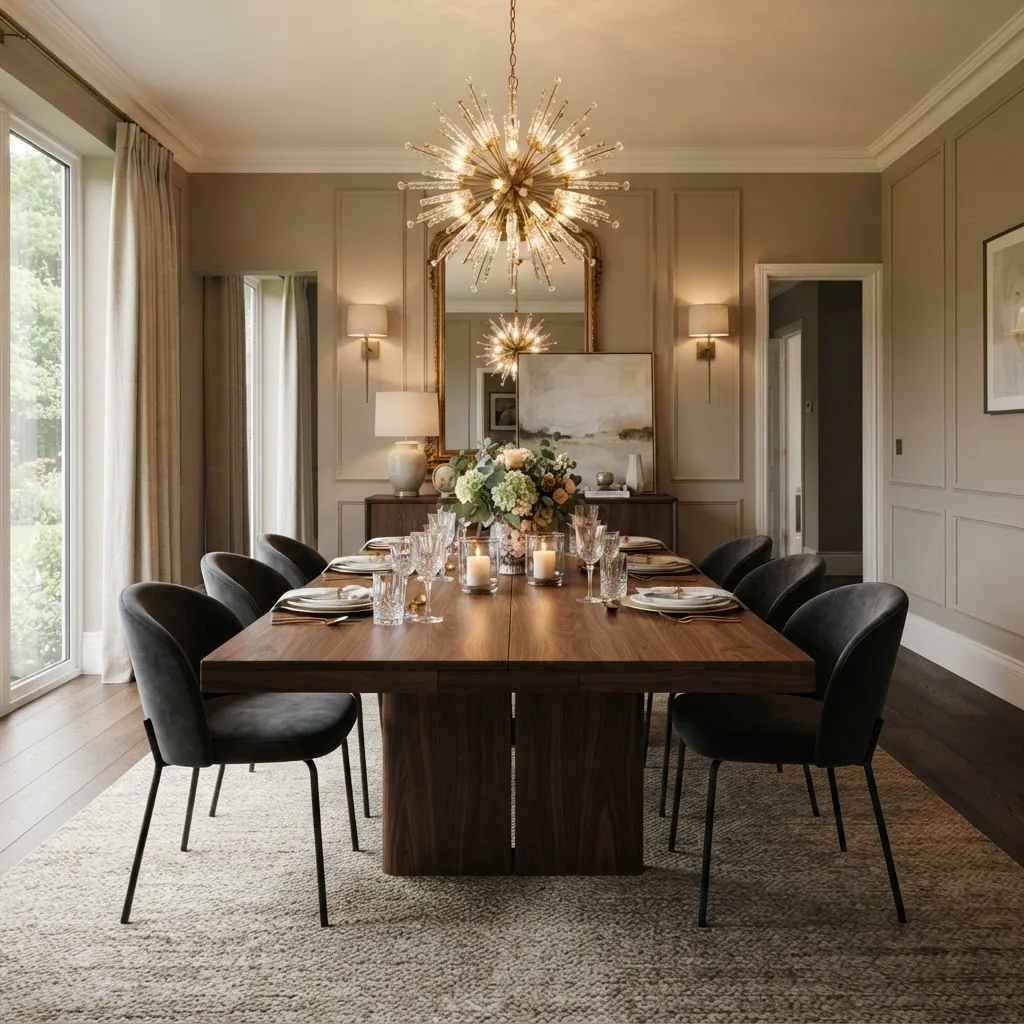
Anchor: 84″ solid wood table seating 6 comfortably. Chairs: modern upholstered chairs with classic proportions. Chandelier: 20–28″ diameter suspended 30–36″ above table. Rug: 8′ x 10′ allowing 24″ for chairs to remain on rug when pulled out.
Styling: mirrored sideboard, pair of framed prints in matching mats, two tapered candlesticks for evening ambiance.
Incorporate seasonal touches from cozy fall living room ideas for autumnal table styling.
For more aesthetic decor inspirations that align with modern classic sensibilities, explore this collection.
Need colorful living room ideas that still read classic? See our stylish colorful living room inspiration.
Small spaces: adapt the layout above with armless seating, a 7′ rug, and wall-mounted shelving; for compact cozy options see warm and cozy living room ideas.
Transition: Before you begin implementation, be aware of common practitioner mistakes and how to avoid them.
Common mistakes and how to avoid them
I’ve learned these the hard way:
- I once bought a “statement” antique sideboard without measuring and it blocked a utility access panel—always measure door swings and service points first.
- I layered too many small accessories on a coffee table and the composition read cluttered—now I limit myself to 3–5 items and use a tray as an anchor.
- I mixed warm and cool wood tones across a single sightline and the room felt disjointed—today I pick a dominant wood undertone and repeat it at least three times.
Final checklist
- Floor plan completed with measurements and traffic paths marked.
- Primary palette chosen and paint sampled at different times of day.
- Statement furniture ordered or sourced; secondary pieces scaled appropriately.
- Lighting plan implemented with dimmers and layered fixtures.
- Accessories curated: mirrors, artwork scaled correctly, a restrained set of objects on surfaces.
- Rug and textiles sized and layered per room use; at least three textures present in seating area.
When to call a professional
- Electrical changes beyond swapping fixtures (call a licensed electrician for wiring or new circuits).
- Structural alterations (moving walls, adding beams) require an architect or structural engineer.
- High-value antiques needing restoration—use a professional conservator for pieces over $2,000 or with fragile finishes.
- Custom upholstery or bespoke joinery when you need exact fit and warranty—hire reputable craftspersons with references.
Transition: Below are frequently asked questions to quickly solve common uncertainties and help you move from planning to polishing your space.