


What you’ll achieve: By the end you’ll have a clear, measured plan to select and style modern living room furniture sets that balance comfort and aesthetics, with a prioritized shopping checklist and a 60–90 minute test routine for sofas. Time required: 2–6 hours of research and one full afternoon for measurements and trials. Skill level: beginner to experienced DIY homeowner.
Before you start
- A tape measure (minimum 25 ft), laser distance measure (recommended), masking tape, and a notepad
- Room sketch or printed floor plan (rough scale 1:50 works fine)
- Photos of your space in daylight and evening light from main viewpoints
- A sample fabric swatch or color chip if you already own textiles
- Budget range set in three tiers: value, mid-range, and premium (e.g., $1,200 / $3,500 / $8,000)
Next you’ll move through focused, action-first steps that map to each major decision: identify components, evaluate comfort, pick a style, choose a sofa, finalize placement, select materials and finishes, and plan maintenance. Each step includes concrete thresholds, trade-offs, and a short checklist.
-
Identify set components and goals —
Introduction to Modern Living Room Furniture Sets
The goal of this step is to define what a modern living room furniture set will mean for your home: a cohesive group of pieces—typically a primary sofa, one or two accent chairs, a coffee table, side table(s), and optional ottoman or media credenza—arranged to serve daily activity and visual balance.
Modern sets prioritize clean forms, proportional scale, and functional comfort. Contemporary furniture design trends in 2024 lean toward mixed materials (wood + metal), softer curves, and modularity for flexibility. During this stage, record functional priorities: daily TV use, entertaining (seats for 6+), nap frequency, kid/pet durability, and storage needs.
Deliverable: a one-paragraph brief that lists required seating count, primary activities, preferred aesthetic (e.g., minimal Scandinavian, warm mid-century modern), and hard constraints (door swing, fireplace clearance, stair access).
-
List and evaluate core elements —
Key Elements of Modern Living Room Furniture Sets
Below are the core components you’ll choose from when assembling a set. Each entry explains why it matters and quick sizing cues.
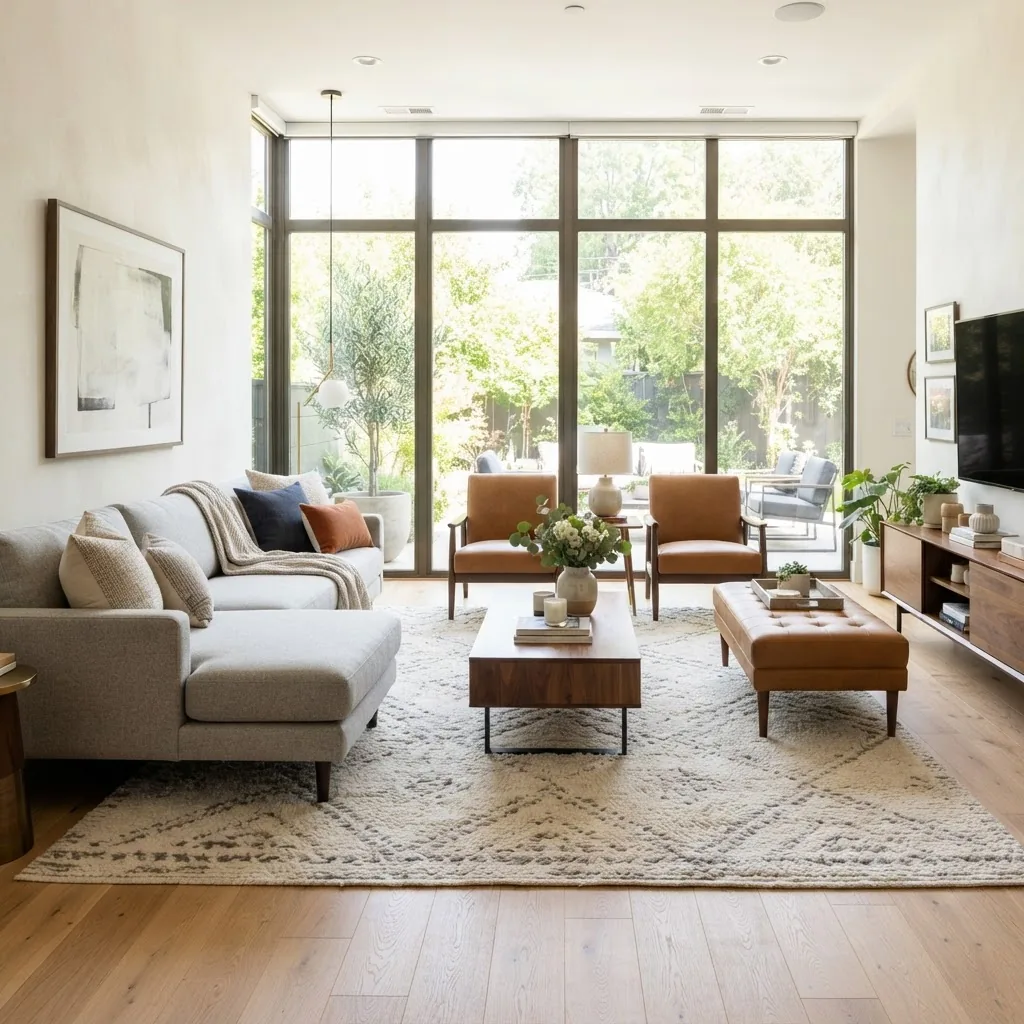
- Sofa (primary) — The anchor piece. Choose seat depth 20–22″ for standard comfort; seat height 17–19″ for easy standing. For families, look for high-resilience foam (HR foam density 1.8–2.8 lb/ft³) wrapped in a soft layer like down or polyester for plushness.
- Sectional / modular pieces — Offers flexible seating and clear traffic routes. Consider modular sections with removable covers and corner modules sized 34–40″ width for comfortable lounging.
- Accent chairs — Provide single-seat comfort and visual counterpoints. Scale chairs so the combined back heights of the sofa and chairs differ by no more than 4–6″ to keep sightlines balanced.
- Ottomans and poufs — Add footrest, extra seating, or storage. Storage ottomans should offer at least 1.5 cubic feet of internal volume for useful capacity.
- Coffee table — Place 16–18″ from sofa edge; height near sofa seat height (within 1–2″). Diameter for round tables: ≥ 36″ for a 3-seat grouping, ≥ 48″ for a larger set.
- Side / end tables — Height should match sofa arm height (±1″). Provide one 18–22″ wide surface per seating pair to avoid crowding.
- Media console / storage — Provide cable access and balance to the room; depth 16–20″ typically sufficient for modern TVs and components.
- Rugs — Anchor the set. For a full-anchor layout, select a rug that allows all front legs on (8×10 minimum for small seating zones; 9×12+ for standard living rooms).
- Lighting — Layer ambient, task, and accent lighting. A lamp with 1,500–2,000 lumens helps reading zones; a floor lamp near seating requires a 10–12″ clearance from upholstery.
Understanding each element helps you mix sets or buy coordinated suites. For deeper inventory on single pieces, see furniture pieces for living rooms.
-
Audit comfort factors —
Choosing Comfortable Living Room Sets Without Sacrificing Style
Comfort is measurable. Use this walkthrough to evaluate seating and fabrics and ensure your set won’t sacrifice style for livability.
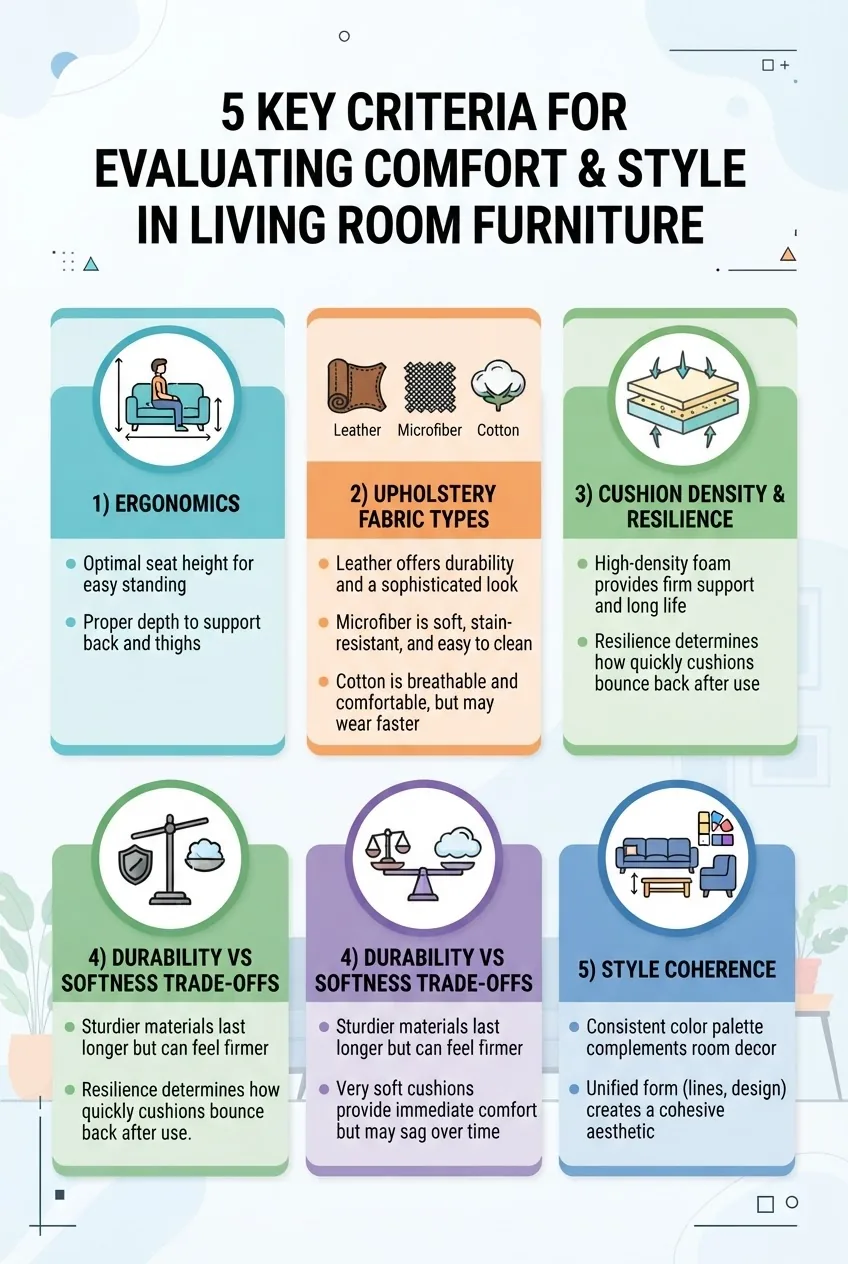
Practical checklist (use a score of 1–5 for each):
- Seat height (17–19″) — score comfort for your household
- Seat depth (20–22″) — deeper seats good for lounging, shallower for upright seating
- Cushion resilience (ILD or foam density) — 28–32 ILD for medium-firm seating
- Upholstery abrasion rating — >30,000 double rubs for high-traffic rooms
- Removable covers and cleaning ease — yes/no
Key evaluation steps:
- Test posture: Sit for 5 minutes — if your feet touch floor, back feels supported, and arms rest naturally on the armrest, height and depth are good. For taller users, add 1–2″ to seat depth.
- Check cushion rebound: Press center of cushion for 10 seconds — a proper high-resilience cushion should recover fully within 3–7 seconds.
- Inspect frame: Sit near the edge and shift — a hardwood frame (kiln-dried oak, beech) lasts longer than softwoods. Ask for corner-blocking in frame construction.
- Assess upholstery: Leather is durable but can feel cool; microfiber resists stains; natural wool blends feel warm and insulate. Trade-offs are explored below.
Quick tips:
- Buy for primary use: If the sofa is for daily family use, prioritize abrasion rating, removable cushions, and mid-firm density. If it’s for formal living, prioritize fabric aesthetics and slimmer profiles.
- Layer for softness: Add a 1.5–2″ feather/down topper or a 2″ high-density foam topper to increase plushness without changing seat depth.
- Pet-proofing: Select microfiber with a tight weave and stain repellents; leather hides scratches but shows punctures — match to your household.
For further comfort-focused seating strategies, consult comfortable seating for family rooms and guidance on how to choose living room furniture.
Experience note / case study: In a 2024 renovation I supervised, a three-seat mid-century style sofa with 21″ seat depth felt too deep for a homeowner who read frequently. Replacing cushions with a 2″ high-density foam insert and adding a 2″ feather topper corrected lumbar support and reduced slump within two weeks of daily use.
Designers commonly use the “5-minute sit test” and a written scorecard (listed above) to avoid returns. I recommend carrying the scorecard in the store or as a printable PDF during delivery inspection.
-
Compare modern aesthetics —
Popular Styles in Modern Contemporary Living Room Sets
Different modern styles influence material choices, silhouette, and comfort trade-offs. Below is a comparison to guide your decision based on lifestyle and the look you want.
Style Traits Pros Cons Mid-century modern Warm wood legs, tapered silhouettes, low profiles Timeless; pairs well with natural textiles; comfortable low lounging Lower seat height may be hard for older adults; often firmer cushions Scandinavian / Minimalist Light neutrals, simple lines, natural textures Airy, easy to layer textures; works in small spaces Light fabrics show stains; less emphasis on overstuffed comfort Contemporary / Sleek Metal accents, glass/top tables, monochrome palettes Sophisticated; fits open-plan homes and modern fixtures Can feel cold without warm textiles; leather may be less forgiving Transitional / Warm modern Mix of modern lines with traditional comfort details Comfortable and refined; easier to maintain resale appeal Requires careful color balance to avoid dated looks If you want higher-end finishes and luxurious leanings, explore elegant luxury living or consider how to integrate a kitchen-living flow with modern open floor plan design and open kitchen living room floor plans.
Selection tip: choose a dominant material (wood or metal) and a dominant color temperature (warm or cool) and keep secondary elements to 1–2 contrasting materials for cohesion.
-
Select specific sofa shapes —
Living Room Sofa Ideas to Complement Your Furniture Set
Choosing a sofa shape is both practical and stylistic. Follow the steps below to pair a sofa with your chosen set.
Step 1: Match shape to room use
- If you entertain often: Choose a sectional (L-shape or U-shape) sized so the longer side is ≤ 70% of the wall length to preserve circulation.
- If you have limited space: A two- or three-seater sofa with a coordinating loveseat opens up flow; consider small living room sectional ideas.
Step 2: Consider sofa types and examples
- Sectional sofas: Best for variable hosting; choose modular pieces with reversible chaise and removable covers for cleaning.
- Sleeper sofas: Good for occasional guests; check mattress thickness (5–8″ memory foam best) and frame sturdiness.
- Loveseats: Pair for conversational symmetry with a low coffee table between them.
- Curved sofas: Great in open-plan spaces to define zones; ensure curvature radius fits rug and traffic lines.
Step 3: Live examples and how-to
- How to choose a sectional: Measure the seating wall and aisles. Allow 30–36″ behind the sofa for a walkway. Order sectional components so corner modules are 34–40″ deep to serve as comfortable daybeds.
- How to choose a sleeper sofa: Test mattress unrolling time — should open and lock within 90 seconds and have a mattress of at least 5″ thickness for guest comfort.
- How to choose fabric vs leather: For homes with kids/pets, select performance fabrics or top-grain leather with a protective finish; microfiber hides claw marks and is machine-cleanable in many cases.
Practical selection reference: match sofa back height to window sill and fireplace heights to maintain sightlines; in general, a sofa back ≤36″ reads modern and keeps the room feeling open.
-
Finalize placement and multi-function choices —
Practical Tips for Selecting and Arranging Your Furniture Set
Final placement locks your choices into the room. Use the best practices below to prevent common planning mistakes.
- Measure twice, mark once: Use tape measure and laser to map entries, window sills, and walkways. For accurate planning, check the guide on accurate room measurements.
- Anchor with a rug: Rug size should leave 12–18″ of floor between rug edge and walls; front legs on rug for cohesive grouping.
- Allow traffic flow: Keep 30–36″ aisles; keep entry clear of ottomans and coffee tables at least 24″ from door swing.
- Hinge on focal points: Arrange seating to face a focal point (TV, fireplace, or a major window). Adjust distances: TV viewing distance = 1.5–2.5× diagonal screen size for 4K displays.
- Choose multifunction furniture: Storage ottomans should provide 1.5–3.0 cu ft depending on intended use; recliners should clear 6–8″ from the wall if not wall-hugger style.
- Test sightlines: From primary seating, ensure unobstructed lines to focal areas and entry—use a 5-minute live test with household members to validate.
- Confirm door and delivery constraints: Measure stair widths and elevator clearances against furniture dimensions; add 4–6″ clearance for handling.
For more advanced layout strategies consult the pillar page on furniture arrangement: Living Room Layout Ideas Guide for Furniture Arrangement.
If your room is large or awkward, view these targeted resources:
- awkward living room layout ideas
- living room layout transformations
- small living room furniture layout
- draw bedroom layout guide
- shared space design ideas
- living and dining room combo tips
- flexible home layouts
- small design solutions
- living room arrangement ideas
- space planning guide
When selecting multi-function pieces, prioritize items that meet at least three of your functional needs (seating, storage, sleeping, or mobility) to justify the added complexity.
-
Choose and layer materials and colors —
Balancing Aesthetics and Function: Materials, Colors, and Textures
Material and color choices determine both look and long-term satisfaction. Use the guidance below to balance tactile comfort and practical durability.
Material overview and trade-offs:
- Leather: Durable, ages well, easy to wipe; tends to be cooler to the touch in winter and warm in summer. Not ideal for frequent spills unless treated. Top-grain leather resists wear better than corrected-grain.
- Performance fabrics (microfiber, Crypton, Sunbrella): High abrasion ratings (>30,000 double rubs), stain-resistant finishes, good for kids/pets. Slightly less “breathable” than natural fibers but a strong practical choice.
- Natural fabrics (cotton, linen, wool blends): Comfortable and breathable; wool resists pilling and insulates. Expect more maintenance and potential abrasions — use removable covers where possible.
- Mixed materials: Wooden legs and metal frames are common in modern sets. Combine a warm wood tone with cool metal accents to create depth without visual chaos.
Color palette coordination: For modern contemporary living rooms, choose a three-layer palette:
- Base color (60%): Walls and large upholstery — neutrals like warm gray, beige, or soft charcoal.
- Secondary color (30%): Sofa or rug — muted blues, terracotta, or sage for contemporary warmth.
- Accent color (10%): Throw pillows, art, small objects — brighter saturated tones for visual interest.
Texture layering: Use at least three distinct textures: a soft upholstery (e.g., boucle), a smoother tabletop (glass or polished wood), and a natural fiber rug (jute, wool). Touch analogies: boucle feels like soft cereal loops; microfiber feels like suede; wool feels like a warm sweater.
Protective finishes and treatments:
- For heavy use, demand ≥30,000 double rubs on fabric (Wyzenbeek or Martindale test) — ask retailers for the test report.
- For leather, request top-grain hides with aniline or semi-aniline finishes if you want natural patina; if you need stain resistance, choose pigmented finishes.
- For stains, pre-treat with manufacturer-recommended protectors; for many performance fabrics, spot cleaning with a 1:4 mild soap-water solution works—check fabric tags.
External authority for standards and testing:
- BIFMA (furniture industry standards) — for construction and durability standards.
- The Textile Institute — for fabric care and abrasion testing insights.
- ASID (American Society of Interior Designers) — for principles of composition and comfort in interior design.
Designers balance durability and softness by choosing performance fabrics in seat surfaces combined with natural textiles on cushions and throws to preserve tactile warmth while protecting high-contact areas.
-
Plan for maintenance and longevity —
Maintenance and Longevity of Modern Living Room Furniture Sets
Planned maintenance extends the lifespan of furniture sets. Below are concrete care instructions, warranty checks, and an expected lifespan table based on materials.
Care checklist:
- Vacuum upholstered surfaces weekly with a soft brush attachment.
- Rotate seat cushions monthly to even out wear; flip if cushions are double-sided.
- Spot-clean spills within 10 minutes: blot with a clean cloth, then apply manufacturer-recommended cleaner.
- Apply leather conditioner every 6–12 months; avoid oil-based products on pigmented finishes.
- Tighten visible hardware annually and inspect frame joints after heavy use seasons (e.g., annual holiday gatherings).
Warranty and purchase tips: Always request documented warranties on frame (minimum 5 years for solid hardwood frames), cushions (1–3 years typical), and fabric (stain or colorfastness terms). Ask for abrasion test documentation — a high-traffic family room should target fabrics rated ≥30,000 double rubs.
Expected lifespans (typical):
- Top-grain leather sofa with solid frame: 10–15 years with maintenance.
- Performance fabric sofa with HR foam and hardwood frame: 8–12 years.
- Budget frame with engineered wood and low-density foam: 3–6 years.
According to a 2023 industry survey, properly maintained mid-range sofas average 9 years before major refurbishment is needed (source type: industry survey, 2023).
Limitations and disclaimer: individual comfort preferences and household use patterns will significantly affect wear; leather can feel cool in winter and warm in summer, and natural fibers often require more frequent cleaning.
-
Review, test, and finalize purchase —
Conclusion: Finding the Best Living Room Sets for Comfort and Style
You should now have: a measured plan, a prioritized set components list, a comfort scorecard, a shortlist of fabrics and finishes, and a delivery plan that fits site constraints. Final checks: ensure delivery access, confirm warranties in writing, and schedule a delivery inspection to test cushions and frame before installation.
Strong CTA: Start by measuring your room, scoring your current furniture using the comfort checklist above, and building a shortlist of three sets—value, mid-range, and premium—then use the 60–90 minute test routine on each showroom model.
Common mistakes and how to avoid them
I once ordered a low-profile sectional for a client because it matched the photo; when it arrived the seat depth was 24″, making daytime TV viewing uncomfortable. We avoided a repeat by adding a mandatory “5-minute sit test” and specifying exact seat depth in the order. Another frequent error: not checking stair and elevator clearances—I’ve seen three deliveries delayed because frames were 4″ too wide. Now I always measure delivery paths and add 4–6″ clearance to each dimension.
Checklist: Verify your selection
- Room measurements logged and marked on the floor plan
- Comfort scorecard completed for sofa and chairs (seat height, depth, rebound)
- Fabric test: abrasion rating, stain resistance, and cleaning instructions obtained
- Delivery path measured and clearance confirmed
- Warranty documents reviewed and saved
- Accessories list: rug size, lamp lumens, coffee table height verified
When to call a professional
Hire a professional mover or designer when you have complex delivery constraints (staircases, tight turns), need custom upholstery, or seek an integrated open-plan furniture solution. Call an interior designer if you want a tailored palette or to coordinate built-in elements—budget 10–15% of furniture spend for consulting fees on a typical mid-range living room project.